


Democratic Progressive Party (DPP) caucus whip Ker Chien-ming (柯建銘) yesterday defended the use of cross-party negotiations, which are often criticized for being non-transparent, as a necessary tool with a legal basis to facilitate political communication.
“Cross-party negotiation is actually regulated by Article 68 of the Act Governing the Exercise of Legislative Power (立法院職權行使法), and, while many people call it ‘secret chamber negotiation,’ there are actually quite a lot of people in the ‘secret chamber’ when a cross-party negotiation takes place,” Ker said during a talk with Taipei Mayor Ko Wen-je (柯文哲) at an event for National Hsinchu Senior High School alumni. Both men are alumni of the school.
Ker said that when cross-party negotiations take place, the legislative speaker, the three whips from each caucus and the relevant government officials are present, and “sometimes there can be between 30 and 40 people attending a cross-party negotiation session.”
He said that negotiations over a bill could go on for more than a year, and it is a test whether opposition parties can work with the ruling party.
“If you do not ‘give face’ to the Chinese Nationalist Party (KMT), why would it give you anything?” he said. “So do not stigmatize the system. It is a very difficult mission to have everyone sign on the conclusion.”
Ko agreed with Ko, saying that without negotiations under the table, the student occupation of the Yuan’s main chamber last year or of the Ministry of Education’s courtyard this month would have dragged on and could have intensified.
“Many people criticized me for not punishing the police chief [who arrested student protesters and journalists], but I had to try to keep officers calm,” Ko said. “In turn, I also talked the students into withdrawing before the typhoon struck.”
“This is a way to keep the two sides safe, and this is the importance of negotiations,” Ko said.

LOUD AND PROUD Taiwan might have taken a drubbing against Australia and Japan, but you might not know it from the enthusiasm and numbers of the fans Taiwan might not be expected to win the World Baseball Classic (WBC) but their fans are making their presence felt in Tokyo, with tens of thousands decked out in the team’s blue, blowing horns and singing songs. Taiwanese fans have packed out the Tokyo Dome for all three of their games so far and even threatened to drown out home team supporters when their team played Japan on Friday. They blew trumpets, chanted for their favorite players and had their own cheerleading squad who dance on a stage during the game. The team struggled to match that exuberance on the field, with
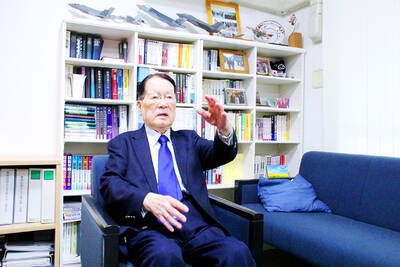
Whether Japan would help defend Taiwan in case of a cross-strait conflict would depend on the US and the extent to which Japan would be allowed to act under the US-Japan Security Treaty, former Japanese minister of defense Satoshi Morimoto said. As China has not given up on the idea of invading Taiwan by force, to what extent Japan could support US military action would hinge on Washington’s intention and its negotiation with Tokyo, Morimoto said in an interview with the Liberty Times (sister paper of the Taipei Times) yesterday. There has to be sufficient mutual recognition of how Japan could provide
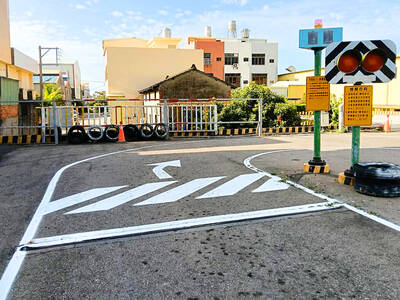
UPDATED TEST: The new rules aim to assess drivers’ awareness of risky behaviors and how they respond under certain circumstances, the Highway Bureau said Driver’s license applicants who fail to yield to pedestrians at intersections or to check blind spots, or omit pointing-and-calling procedures would fail the driving test, the Highway Bureau said yesterday. The change is set to be implemented at the end of the month, and is part of the bureau’s reform of the driving portion of the test, which has been criticized for failing to assess whether drivers can operate vehicles safely. Sedan drivers would be tested regarding yielding to pedestrians and turning their heads to check blind spots, while drivers of large vehicles would be tested on their familiarity with pointing-and-calling

A Taiwanese man apologized on Friday after saying in a social media post that he worked with Australia to provide scouting reports on Taiwan’s team, enabling Australia’s victory in this year’s World Baseball Classic (WBC), saying it was a joke and that he did not hold any position with foreign teams or Taiwan’s sports training center. Chen Po-hao (陳柏豪) drew the rage of many Taiwan baseball fans when he posted online on Thursday night, claiming credit for Australia’s 3-0 win over Taiwan in the opening game for Pool C, saying he worked as a physical therapist with the national team and


 RSS
RSS