


The legislature yesterday passed amendments to the National Intelligence Services Act (國家情報工作法) that would increase the penalties for military personnel convicted of espionage while working in national security or related intelligence services, and also for civilians who are convicted of assisting them.
The amended act says that intelligence personnel convicted of espionage are to receive a jail sentence 1.5 longer than civilians convicted of the same crimes. The amendments apply to officers within one year of retirement or those planning to leave their positions.
Under the new amendments those convicted of disclosing information about sources, or about the identity, activities and communication of intelligence officers and their assistants are subject to a minimum prison sentence of seven years.
For disclosing any other information, prison sentences range from three years to 10 years.
Those convicted of collecting sensitive information on the identity or activities of intelligence personnel would face imprisonment of five to 12 years, while those convicted of collecting information not directly related to intelligence agents would be subject to prison sentences of between one and seven years.
The increase in penalties has been passed, according to the legislature, following the relatively light sentence given to Lo Pin (羅斌), a China-based Taiwanese businessman, in the case involving Colonel Lo Chi-cheng (羅奇正), who had been spying for China.
The amendments also state that in order to encourage spies to reform and reduce harm to national security, those whose confessions have helped in the discovery of other spies or halted espionage activities harmful to national security could have their penalties commuted.
Additional reporting by CNA

SPACE VETERAN: Kjell N. Lindgren, who helps lead NASA’s human spaceflight missions, has been on two expeditions on the ISS and has spent 311 days in space Taiwan-born US astronaut Kjell N. Lindgren is to visit Taiwan to promote technological partnerships through one of the programs organized by the US for its 250th national anniversary. Lindgren would be in Taiwan from Tuesday to Saturday next week as part of the US Bureau of Educational and Cultural Affairs’ US Speaker Program, organized to celebrate the 250th anniversary of the signing of the Declaration of Independence, the American Institute in Taiwan (AIT) said in a statement yesterday. Lindgren plans to engage with key leaders across the nation “to advance cutting-edge technological partnerships and inspire the next generation of scientists and engineers,”

UNREASONABLE SURVEILLANCE: A camera targeted on an road by a neighbor captured a man’s habitual unsignaled turn into home, netting him dozens of tickets The Taichung High Administrative Court has canceled all 45 tickets given to a man for failing to use a turn signal while driving, as it considered long-term surveillance of his privacy more problematic than the traffic violations. The man, surnamed Tseng (曾), lives in Changhua County and was reported 45 times within a month for failing to signal while driving when he turned into the alley where his residence is. The reports were filed by his neighbor, who set up security cameras that constantly monitored not only the alley but also the door and yard of Tseng’s house. The surveillance occurred from July

A Japan Self-Defense Forces vessel entered the Taiwan Strait yesterday, Japanese media reported. After passing through the Taiwan Strait, the Ikazuchi was to proceed to the South China Sea to take part in a joint military exercise with the US and the Philippines, the reports said. Japan Self-Defense Force vessels were first reported to have passed through the strait in September, 2024, with two further transits taking place in February and June last year, the Asahi Shimbun reported. Yesterday’s transit also marked the first time since Japanese Prime Minister Sanae Takaichi took office that a Japanese warship has been sent through the Taiwan
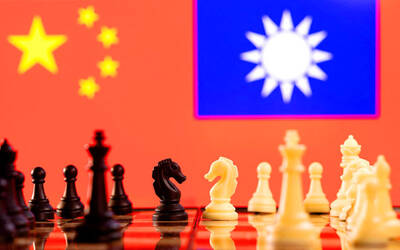
‘SAME OLD TRICK’: Even if Beijing resumes individual travel to Taiwan, it would only benefit Chinese tourism companies, the Economic Democracy Union convener said China’s 10 new “incentives” are “sugar-coated poison,” an official said yesterday, adding that Taiwanese businesses see them clearly for what they are, but that Beijing would inevitably find some local collaborators to try to drums up support. The official, speaking on condition of anonymity, made the remark ahead of a news conference the General Chamber of Commerce is to hold today. The event, titled “Industry Perspectives on China’s Recent Pro-Taiwan Policies,” is expected to include representatives from industry associations — such as those in travel, hotels, food and agriculture — to request the government cooperate with China’s new measures, people familiar with


 RSS
RSS