


The Chinese Nationalist Party (KMT) and the Democratic Progressive Party (DPP) caucuses yesterday unveiled their respective proposed amendments to the Constitution.
The Constitutional Amendment Committee is expected to commence the review of various versions of a constitutional amendment bill in the middle of this month after the remaining three scheduled public hearings.
KMT caucus whip Lai Shyh-bao (賴士葆) said that, as the legislature is set to go on recess on June 16, the process of amending the Constitution would have to be divided into different stages. The KMT hopes to be able to work on the following in the first stage: lower the voting age from 20 to 18, establish absentee voting and lower the threshold for parties to name legislators-at-large from 5 percent of total party votes to 3 percent.
In addition, the legislature’s power to approve the premiership would have to be written into the Constitution, he said.
The DPP caucus was in sync with the KMT on the issues of lowering the voting age and the party ballot threshold to 3 percent for small parties to appoint legislators-at-large. It also proposed the abolition of the Control Yuan and the Examination Yuan, the lowering of the threshold for constitutional amendments and complementary revisions to guarantee basic human rights.
Regarding the KMT’s proposal on absentee voting, the DPP said it is a legislative rather than a constitutional issue, adding that all of the DPP’s five proposals are related either to the electoral system or the constitutional political system.
The DPP caucus also agreed that the constitution-amending process would have to be broken up into stages: The proposals could be made this year and then put to a referendum alongside next year’s presidential and legislative elections, with second-stage constitutional amendments to be decided in 2018, when local elections are scheduled to take place.
After negotiations on Wednesday, a cross-party agreement was reached to extend the current plenary session until June 16, the last day on which the legislature can pass the constitutional amendment bill for a referendum alongside next year’s presidential and legislative elections, which are to take place on Jan. 16.
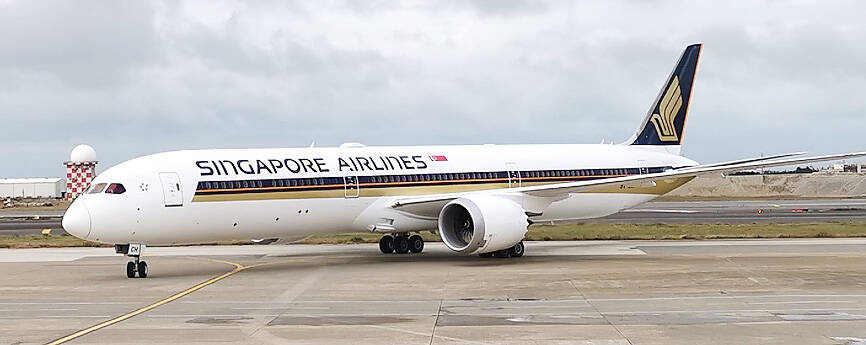
INCREASED CAPACITY: The flights on Mondays, Wednesdays, Fridays and Sundays would leave Singapore in the morning and Taipei in the afternoon Singapore Airlines is adding four supplementary flights to Taipei per week until May to meet increased tourist and business travel demand, the carrier said on Friday. The addition would raise the number of weekly flights it operates to Taipei to 18, Singapore Airlines Taiwan general manager Timothy Ouyang (歐陽漢源) said. The airline has recorded a steady rise in tourist and business travel to and from Taipei, and aims to provide more flexible travel arrangements for passengers, said Ouyang, who assumed the post in July last year. From now until Saturday next week, four additional flights would depart from Singapore on Monday, Wednesday, Friday

WATCH FOR HITCHHIKERS: The CDC warned those returning home from Japan to be alert for any contagious diseases that might have come back with them People who have returned from Japan following the World Baseball Classic (WBC) games during the weekend are recommended to watch for symptoms of infectious gastroenteritis, flu and measles for two weeks, the Centers for Disease Control (CDC) said. Flu viruses remain the most common respiratory pathogen in Taiwan in the past four weeks and the influenza B virus accounted for 55.7 percent of the tested cases, exceeding the percentage of influenza A (H3N2) infections and becoming the local dominant strain, CDC Epidemic Intelligence Center Deputy Director Lee Chia-lin (李佳琳) said at a news conference on Tuesday. There were 82,187 hospital visits for

Alumni from Japan’s Kyoto Tachibana Senior High School marching band, widely known as the “Orange Devils,” staged a flash mob performance at the Grand Hotel in Taipei yesterday to thank Taiwan for its support after the Great East Japan Earthquake. The show, performed on the earthquake’s 15th anniversary, drew more than 100 spectators, some of whom arrived two hours before the show to secure a good viewing spot. The 26-member group played selections from “High School Musical,” “Beauty and the Beast,” and their signature piece “Sing Sing Sing” and shouted “I love
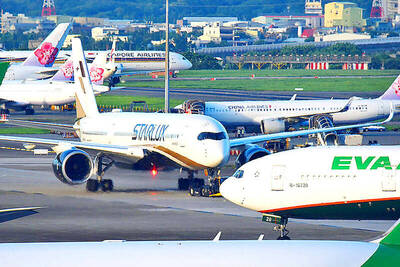
Taiwan’s three major international carriers are increasing booking fees, with EVA Airways having already increased the charge to US$28 per flight segment from US$25, while China Airlines (CAL) and Starlux Airlines are set to follow suit. Booking fees are charged by airlines through a global distribution system (GDS) and passed on to passengers. Carriers that apply the fees include CAL, EVA, Starlux and Tigerair Taiwan. A GDS is a computerized network operated by a company that connects airlines with travel agents and ticketing platforms, allowing reservations to be made and processed in real time. Major players include Amadeus, Sabre and Travelport. EVA Air began


 RSS
RSS