

Thirteen pharmaceutical companies in Taiwan have been ordered to recall products and are facing fines for using food-grade ingredients instead of pharmaceutical-grade ingredients in stomach medicines, the Food and Drug Administration (FDA) said yesterday.
In an inspection of 27 pharmaceutical firms over the past three days, 13 could not prove that magnesium carbonate or calcium carbonate used in a total of 23 products were certified pharmaceutical ingredients, the agency said.
When magnesium carbonate and calcium carbonate are used as the major ingredients in pharmaceutical products, they must be of pharmaceutical grade, which requires a certificate from their suppliers, the agency said.
It said the 13 companies were using food-grade compounds as the major ingredients in their stomach medicines, in violation of FDA regulations.
FDA Director-General Chiang Yu-mei (姜郁美) said the 13 companies have been given an order to recall all of the problematic products within 30 days, but must ensure that they are removed from store shelves by midnight on Wednesday.
The agency also issued an order to seal the companies’ inventories and suspend their shipments, Chiang said.
Under the Pharmaceutical Affairs Act (藥事法), the companies are to be fined between NT$60,000 and NT$300,000, the agency said.
Earlier this month, the agency began inspecting pharmaceutical companies in the wake of reports that some of them were using magnesium carbonate and calcium carbonate intended for industrial use only.
Magnesium carbonate is widely marketed as a health supplement and is also used to make medicines for stomach ailments.
Its active ingredient, magnesium, is a mineral required for efficient functioning of the body.
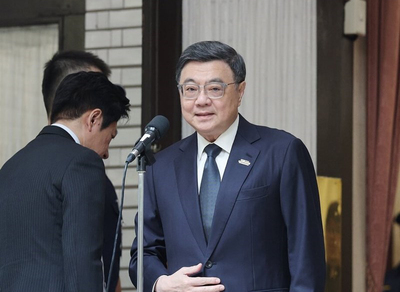
The government would continue monitoring online rumors that a pneumonic plague outbreak has spread from Russia into China and could enhance existing quarantine measures, Premier Cho Jung-tai (卓榮泰) said today. During a legislative meeting, Democratic Progressive Party Legislator Wang Ting-yu (王定宇) said rumors were circulating that the disease had spread across several Chinese provinces. He asked Cho whether the government was prepared to prevent the disease from spreading to Taiwan, given the frequent exchanges between Taiwan and China, and how concerned the government was about the alleged outbreak. The Ministry of Health and Welfare implemented border quarantine measures after briefing the Executive Yuan
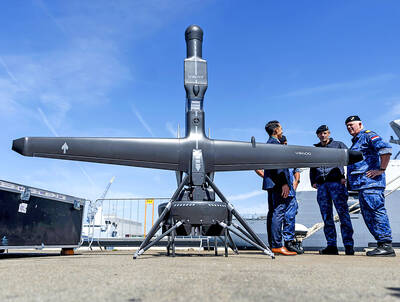
DEFENSE PROCUREMENT: Taiwan could become the largest operator of V-BAT drones outside the US once they are delivered, the Ministry of National Defense said The navy and the coast guard are acquiring 292 units of MQ-35A V-BAT vertical takeoff and landing (VTOL) surveillance drones manufactured by US-based defense technology company Shield AI, making Taiwan one of the largest buyers of the drone. The Coast Guard Administration budgeted NT$1.2 billion (US$37.1 million) to buy 12 drones, which have been delivered, Shield AI said in a report on Oct 13. The navy is planning to spend NT$36 billion under a four-year program code-named Project Yuan Xiao (遠鴞) to acquire 280 V-BAT drones, the Ministry of National Defense’s fiscal 2027 report showed. The combined procurement is expected
A Chinese People's Liberation Army (PLA) Navy aircraft carrier group was being monitored after entering the western Pacific, the Ministry of National Defense said today, after Beijing yesterday criticized Taiwan for using a water cannon against a Chinese fishing boat near the Pratas Islands (Dongsha Islands, 東沙群島). A Chinese naval task group led by the aircraft carrier Liaoning (遼寧) yesterday sailed to the western Pacific for training, Chinese state-run Xinhua news agency quoted the PLA Navy as saying. “The drill is part of the annual routine training plan aimed at testing and improving the troops’ combat readiness and enhancing their ability to

MAYORAL RACE: Su Chiao-hui made gains by persuading undecided voters and winning over voters in KMT-leaning districts, a pollster said Legislator Su Chiao-hui (蘇巧慧), the Democratic Progressive Party’s (DPP) candidate for New Taipei City mayor, has a 13.1 percentage point lead over her Chinese Nationalist Party (KMT) rival Lee Shu-chuan (李四川), a poll released yesterday showed. The poll, commissioned by the Taipei Trust in Democracy Association, showed that 43.1 percent of respondents said they would vote for Su, up 7.9 percentage points from a poll conducted in late August, while support for Lee was at 30 percent, down 4.7 percentage points. It showed that 48.6 percent of respondents thought Su would make a suitable mayor, compared with 35.9 percent for Lee. Independent candidate


 RSS
RSS