

Scores of Puyuma people from Taitung County’s Paposong village protested outside the local police station on Wednesday over the detainment of Puyuma hunters on charges of violations of the Controlling Guns, Ammunition and Knives Act (槍砲彈藥刀械管制條例) late on Tuesday night, a day before the Puyuma people’s public holiday and amid the tribe’s mangayaw hunting festival, which is held each year from Dec. 29 to 31.
More than 100 Puyuma men went into the Taiyuan Mountains in Taitung on Monday for the hunting festival. However, nine of them were arrested by police during the hunt late on Tuesday night on charges relating to the gun control act.
Four of the nine were released the next morning, while the remaining five hunters were detained until Wednesday afternoon, after police handed them over to the Taitung District Prosecutors’ Office, which later freed them.
Scores of Puyuma people gathered in front of the Chenggong Police Precinct, in the county’s Chenggong Township (成功), to protest the arrests on Wednesday and even tried to block a patrol car carrying the five detained hunters to the prosecutors’ office.
The people stressed that the hunting had been preregistered with the local government and questioned the arrests.
“The activity was legal and taking place in a legal place with legal guns. Why do we still have to face [the police’s] abuse of power? This is a violation of the Puyuma people’s human rights, which is why we came here to voice our discontent,” Association for the Development of Pinuyumayan People’s Self-Governance chairman Agilasay Pakawyan (林志興) said.
The Puyuma people’s mangayaw, or hunting festival, is an annual ritual ceremony that is “as important as the Han people’s Lunar New Year,” Yapasuyongu Akuyana (陳旻園), Association for Taiwan Indigenous Peoples’ Policy chief executive, and Tu Yu-wen, Environmental Jurists Association board member, wrote in an article published online protesting the arrests and alleging disrespect of the culture of the Puyama people.
“Imagine that you [Han] are arrested by the police when you’re burning joss paper during the Lunar New Year on the charge of arson. How would you feel?” they wrote.
The arrest of the Puyuma hunters was the second of its type in a week. On Thursday night last week, a group of Atayal people who went hunting during a festival were detained by the police on similar charges.
The two international human rights covenants that have been passed by the legislature state that all peoples have the right to enjoy their own cultures and the right to self-determination, and the Aboriginal Basic Act (原住民族基本法) also grants Aborigines the right to hunt wild animals for traditional rituals or consumption.
“Even the gun control act has a decriminalizing article for Aboriginal people, and these edicts, abstract or concrete, have all affirmed Aborigines ’ rights to hunt based on their own traditions,” Akuyana and Tu said.
They excoriated the police for what they called their “abuse of power in order to boost their performance records” and their superiors for allowing the conflicts to repeatedly occur, and accused the “Han regime” of disrespecting cultural diversity and slighting its own laws.
Chenggung Police Precinct Chief Chang Pei-ming (張沛銘) said the group was detained for carrying “unregistered shotguns and ammunition.”
A dead muntjac, a protected species, was found in their possession, he added.
Council of Indigenous Peoples Minister Lin Chiang-yi (林江義) yesterday affirmed that the hunting was pre-registered and said that while some Puyuma people carrying unregistered shotguns did run afoul of the law, “the fact that the police arrested them as criminal suspects in their legal hunting area has caused the Puyuma people to suspect that law enforcement was targeted against them.”
“The police’s way of enforcing the law was indeed questionable and has seriously impeded the procession of the ritual,” Lin said, adding that the council would soon hold discussions with the Ministry of Justice and the National Police Agency to avoid similar confrontations.

Ocean Affairs Council (OAC) Minister Kuan Bi-ling (管碧玲) on Wednesday said decommissioned coast guard vessels were given to the Philippines to enhance regional rescue capacity and would not affect Taiwanese fishers’ rights and benefits. Kuan made the remarks after confirmation on Tuesday that a 500-tonne Coast Guard Administration (CGA) patrol and rescue vessel would be given to the Philippine Coast Guard. The donation ceremony was reportedly done in Manila, but whether the vessel — previously numbered “CG123” and named Kinmen (金門) — has been handed over has yet to be confirmed. China’s Taiwan Affairs Office (TAO) on Wednesday criticized the donation for “taking
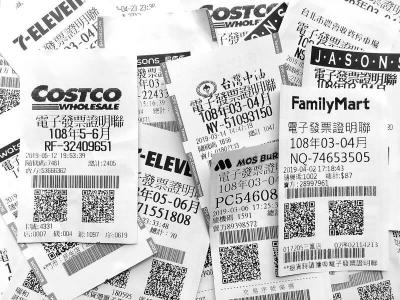
The Ministry of Finance today announced the winning numbers for the July-August uniform invoice lottery. The winning number for the NT$10 million (US$314,663) special prize is 89996565, while the winning number for the NT$2 million grand prize is 91098182. Three numbers were drawn for the NT$200,000 first prize: 54348835, 44991397 and 06595111. Those with receipts matching the last seven digits of any of the first-prize numbers can claim the NT$40,000 second prize, while those matching the last six digits qualify for the NT$10,000 third prize. Those whose receipts match the last five digits of the first-prize numbers are eligible for the NT$4,000 fourth prize,

The National Police Agency’s Third Special Police Corps yesterday said that from May to July, it intercepted five smuggling operations from China, seizing more than 70,000 counterfeit Beyblades with an estimated infringement value of NT$34.45 million (US$1.08 million). It added that any bootleg unit that reached the local market could present hidden health hazards to players. Beyblades, a line of spinning toy tops used in competitive gaming and developed in Japan by toy company Takara Tomy, have become popular in Taiwan, making them a target for fraudsters. The Third Special Police Corps, dedicated to safeguarding maritime borders and trade lines,
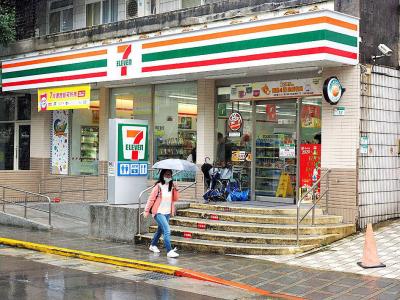
Five customers who made purchases at 7-Eleven stores across Taiwan won the top NT$10 million (US$313,716) special prize in the July-August uniform invoice lottery, including one who spent just NT$27 on photocopying, the convenience store chain said today. The five special prize winners made their purchases at stores in Taoyuan, Taipei, Taichung and Kaohsiung, 7-Eleven operator President Chain Store Corp said. The five winning purchases included NT$29 spent on snacks at a store in Taoyuan's Zhongli District (中壢), NT$27 on photocopying at a store in Taipei's Zhongzheng District (中正), NT$139 on City Cafe coffee and daily necessities at a store in Taipei's


 RSS
RSS