

The Tainan District Prosecutors’ Office has filed corruption charges to invalidate the victory of Chinese Nationalist Party (KMT) Tainan City Councilor Lee Chuan-chiao (李全教) in the Nov. 29 election, while prosecutors also began investigating the Greater Tainan City Council speaker’s election amid allegations of vote-buying involving some Democratic Progressive Party (DPP) city councilors.
Lee was elected as speaker for the council on Dec. 25, with the DPP alleging that some DPP city councilors voted for Lee in return for money offered by the KMT, which holds only 19 seats in the 57-seat city council.
Lee called the move a political one spurred by the DPP due to the party’s loss of the speaker’s position.
The office filed the charges on the same day the DPP’s Central Review Committee expelled five Tainan city councilors for voting against the party line in last week’s council speaker election.
The office on Wednesday said that prosecutors have secured evidence that Lee’s campaign director, Huang Cheng-ching (黃澄清), and campaign chief executive, Yeh Chih-cheng (葉枝成), had held meetings and distributed NT$2 million (US$63,000) from campaign activity funds to local vote brokers before the election.
Huang had provided NT$300,000 to warden candidate Lee Li-hua (李麗華), who then gave out NT$5,000 per household as bribes for votes, the office said.
Prosecutors filed corruption charges against Lee Chuan-chiao seeking to invalidate his victory in the city councilor election.
The Civil Servants Election and Recall Act (公職人員選舉罷免法) stipulates that “a lawsuit claiming an electee is invalid” must be filed in the governing court within 30 days after the list of electees is announced.
The court would have to close the case in its first and second instances within six months, and “[the election lawsuit] shall be adjudicated conclusively in the second instance, and no lawsuit of rehearing may be filed,” it says.
In other words, it could take up to a year before there is a decision on whether Lee can keep his councilor seat.
The office asked the council for the ballots used in the speaker election on Wednesday night, but that was rejected on the grounds that, according to the council, the responsible official was out of the country and that the party caucuses’ ballot monitors were absent.
The prosecutors said that they would visit the council again on Monday and that they have stationed police at all of the building’s entrances to make sure that the sealed ballot box is not tampered with.
As of Wednesday, the district prosecutors’ offices in Greater Tainan, Greater Taoyuan and Changhua, Taitung and Nantou counties have filed lawsuits to invalidate the elections of city councilors, township councilors and village wardens.

Ocean Affairs Council (OAC) Minister Kuan Bi-ling (管碧玲) on Wednesday said decommissioned coast guard vessels were given to the Philippines to enhance regional rescue capacity and would not affect Taiwanese fishers’ rights and benefits. Kuan made the remarks after confirmation on Tuesday that a 500-tonne Coast Guard Administration (CGA) patrol and rescue vessel would be given to the Philippine Coast Guard. The donation ceremony was reportedly done in Manila, but whether the vessel — previously numbered “CG123” and named Kinmen (金門) — has been handed over has yet to be confirmed. China’s Taiwan Affairs Office (TAO) on Wednesday criticized the donation for “taking

The Ministry of Finance today announced the winning numbers for the July-August uniform invoice lottery. The winning number for the NT$10 million (US$314,663) special prize is 89996565, while the winning number for the NT$2 million grand prize is 91098182. Three numbers were drawn for the NT$200,000 first prize: 54348835, 44991397 and 06595111. Those with receipts matching the last seven digits of any of the first-prize numbers can claim the NT$40,000 second prize, while those matching the last six digits qualify for the NT$10,000 third prize. Those whose receipts match the last five digits of the first-prize numbers are eligible for the NT$4,000 fourth prize,

The National Police Agency’s Third Special Police Corps yesterday said that from May to July, it intercepted five smuggling operations from China, seizing more than 70,000 counterfeit Beyblades with an estimated infringement value of NT$34.45 million (US$1.08 million). It added that any bootleg unit that reached the local market could present hidden health hazards to players. Beyblades, a line of spinning toy tops used in competitive gaming and developed in Japan by toy company Takara Tomy, have become popular in Taiwan, making them a target for fraudsters. The Third Special Police Corps, dedicated to safeguarding maritime borders and trade lines,
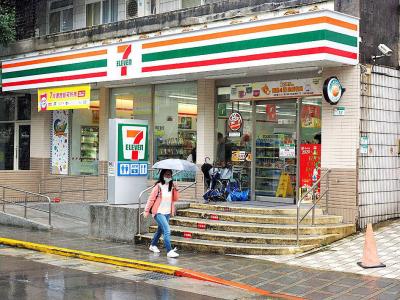
Five customers who made purchases at 7-Eleven stores across Taiwan won the top NT$10 million (US$313,716) special prize in the July-August uniform invoice lottery, including one who spent just NT$27 on photocopying, the convenience store chain said today. The five special prize winners made their purchases at stores in Taoyuan, Taipei, Taichung and Kaohsiung, 7-Eleven operator President Chain Store Corp said. The five winning purchases included NT$29 spent on snacks at a store in Taoyuan's Zhongli District (中壢), NT$27 on photocopying at a store in Taipei's Zhongzheng District (中正), NT$139 on City Cafe coffee and daily necessities at a store in Taipei's


 RSS
RSS