


Research by the Shu Te University of Science and Technology in Greater Kaohsiung recently found that Mercedes-Benz and BMW car owners in Taiwan vastly prefer the numbers five, six, eight and nine on their license plates, while they seek to avoid the numbers zero, one, two and four.
Su Teng-hu (蘇登呼), a professor in the university’s Department of Marketing Management, and some of his students said they were interested in the phenomenon of the public’s obsession over the numbers on their license plates, causing the sale of license plate numbers by the Directorate-General of Motor Vehicles to rake in extra income for the national coffers every year.
Su said Chinese culture favored certain numbers, as the pronunciations of the numbers are almost direct homonyms to Chinese words symbolizing luck or auspiciousness.
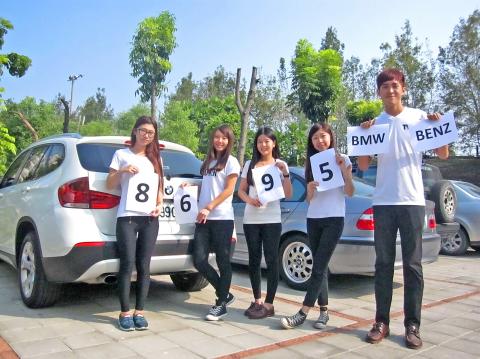
Photo: Su Fu-nan, Taipei Times
The number six, for instance, represents being auspicious, while the number four is similar to the word “death” (死), Su said, adding that the number eight sounds like the Chinese word fa (發), which is often seen in auspicious phrases such as fa cai (發財) — to wish someone greater wealth.
The number nine, which sounds like the Chinese word jiu (久), is representative of longevity, Su said.
Real-estate agents have also discovered that apartment buildings on the eighth floor or with the number eight in the address usually sell six or seven days more quickly than others, Su said, adding that they also often sell for slightly higher prices as well.
The research showed that many car owners prefer the number five over the number seven, as five is usually synonymous with good luck, especially as it is similar to the pronunciation of the word “I” or “me” (我) in Chinese.
The similarity in pronunciation plays a great part in the number’s appreciation, especially when it is in sequence with other numbers, Su said, pointing to sequences such as 5889, which could be taken to mean “I will make money for a long time” (我發發久); 8585, meaning “Make me rich, Make me rich” (發我發我); and 5666, meaning “I’m on a smooth streak” (我順順順).
Of the interviewees, 1.7 percent disliked the number four, while the numbers one and two were disliked as well.
BMW and Mercedes-Benz owners had different preferences over the second digit on their license plate, with Benz owners having a higher preference for the number five, which is less popular with BMW owners, Su said.
BMW owners, on the other hand, favor the number seven for their second digit, while Benz owners rarely choose the number, Su said.
Meanwhile, the research has piqued the interest of car lot managers, who said they would be using the research as case material when teaching their sales agents how to formulate their sales strategies, adding that they would consider using the research to choose the license plates for sale cars.
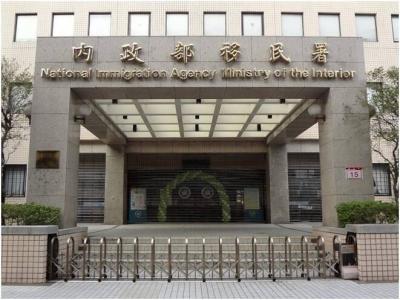
A small number of Taiwanese this year lost their citizenship rights after traveling in China and obtaining a one-time Chinese passport to cross the border into Russia, a source said today. The people signed up through Chinese travel agencies for tours of neighboring Russia with companies claiming they could obtain Russian visas and fast-track border clearance, the source said on condition of anonymity. The travelers were actually issued one-time-use Chinese passports, they said. Taiwanese are prohibited from holding a Chinese passport or household registration. If found to have a Chinese ID, they may lose their resident status under Article 9-1
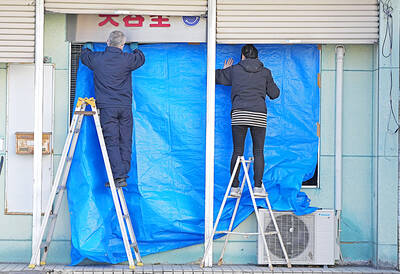
Taiwanese were praised for their composure after a video filmed by Taiwanese tourists capturing the moment a magnitude 7.5 earthquake struck Japan’s Aomori Prefecture went viral on social media. The video shows a hotel room shaking violently amid Monday’s quake, with objects falling to the ground. Two Taiwanese began filming with their mobile phones, while two others held the sides of a TV to prevent it from falling. When the shaking stopped, the pair calmly took down the TV and laid it flat on a tatami mat, the video shows. The video also captured the group talking about the safety of their companions bathing

PROBLEMATIC APP: Citing more than 1,000 fraud cases, the government is taking the app down for a year, but opposition voices are calling it censorship Chinese Nationalist Party (KMT) Chairwoman Cheng Li-wun (鄭麗文) yesterday decried a government plan to suspend access to Chinese social media platform Xiaohongshu (小紅書) for one year as censorship, while the Presidential Office backed the plan. The Ministry of the Interior on Thursday cited security risks and accusations that the Instagram-like app, known as Rednote in English, had figured in more than 1,700 fraud cases since last year. The company, which has about 3 million users in Taiwan, has not yet responded to requests for comment. “Many people online are already asking ‘How to climb over the firewall to access Xiaohongshu,’” Cheng posted on

A classified Pentagon-produced, multiyear assessment — the Overmatch brief — highlighted unreported Chinese capabilities to destroy US military assets and identified US supply chain choke points, painting a disturbing picture of waning US military might, a New York Times editorial published on Monday said. US Secretary of Defense Pete Hegseth’s comments in November last year that “we lose every time” in Pentagon-conducted war games pitting the US against China further highlighted the uncertainty about the US’ capability to intervene in the event of a Chinese invasion of Taiwan. “It shows the Pentagon’s overreliance on expensive, vulnerable weapons as adversaries field cheap, technologically


 RSS
RSS