

President Ma Ying-jeou (馬英九) yesterday urged lawmakers to set aside their political differences and pass a proposed cross-strait service trade agreement.
At a meeting with Lions Club International members at the Presidential Office, Ma defended the government’s efforts to sign the agreement with China, saying that Taiwan’s major trade partners are aggressively pursuing free-trade pacts to boost their economies and that failure to pass the agreement could undermine the nation’s economic outlook.
“We finally made progress by signing the agreement, but the pact is now stuck in the Legislative Yuan. Why can we sign economic pacts with Singapore and New Zealand, but not with the mainland [China]? I hope there won’t be any political bias,” he said.
The proposed agreement has been stalled since it was signed by Taiwanese and Chinese government representatives in June, as the Legislative Yuan continues to organize public hearings and seek consensus on the agreement.
The transparency of the service trade agreement has been questioned by the opposition camp, while some industry groups have voiced concern over potential negative repercussions on domestic businesses.
Ma yesterday accused the Democratic Progressive Party (DPP) of delaying the review process, as the public hearings it organized will not be completed until next year.
“Other countries are watching us. They want to see if we really mean to open our markets and move toward liberalization,” he said.
While pushing the legislature to approve the agreement, the Ma administration denies that China has been pressuring Taiwan to implement it.
Association for Relations Across the Taiwan Straits (ARATS) Chairman Chen Deming (陳德銘) joined the Ma administration in promoting the agreement during his eight-day trip in Taiwan.
He said that follow-up negotiations on the cross-strait Economic Cooperation Framework Agreement (ECFA), including the trade of goods across the Taiwan Strait and a trade dispute-resolving mechanism, would proceed as scheduled.
Concluding his trip yesterday, Chen said that he expected Taipei and Beijing to enhance cooperation in economics and other fields, adding that he hoped to visit Taiwan more often.
“The two sides of the Taiwan Strait can join efforts and enter the global market together. By working together we can profit more from the global market,” he said.
Several Falun Gong protesters unfurled banners at Taiwan Taoyuan International Airport yesterday, but were kept at a distance from Chen’s trade delegation by police officers.
Straits Exchange Foundation Deputy Chairman Kao Koong-lian (高孔廉) saw Chen’s delegation off at the airport.
Additional reporting by CNA
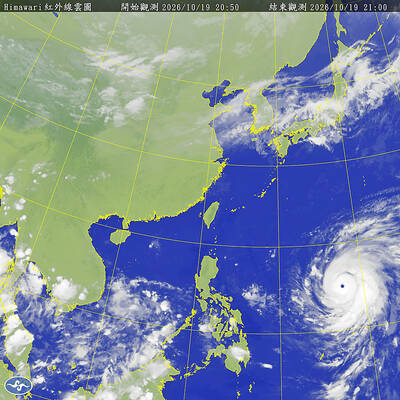
Typhoon Champi is forecast to turn northward earlier than previously expected, sparing Taiwan a direct hit but still bringing heavy rain to the north of the country on Friday and Saturday, the Central Weather Administration (CWA) said yesterday. Typhoon Champi had strengthened and increased in size over the past 12 hours, and as of yesterday afternoon, was packing sustained winds of 198kph near its center, CWA forecaster Cheng Chieh-jen (鄭傑仁) said. However, due to the weakening of a Pacific high-pressure system the storm is now expected to turn northward earlier than initially forecast, likely around Japan’s Ishigaki Island, Cheng said. As Champi brushes

MAYORAL RACE: Su Chiao-hui made gains by persuading undecided voters and winning over voters in KMT-leaning districts, a pollster said Legislator Su Chiao-hui (蘇巧慧), the Democratic Progressive Party’s (DPP) candidate for New Taipei City mayor, has a 13.1 percentage point lead over her Chinese Nationalist Party (KMT) rival Lee Shu-chuan (李四川), a poll released yesterday showed. The poll, commissioned by the Taipei Trust in Democracy Association, showed that 43.1 percent of respondents said they would vote for Su, up 7.9 percentage points from a poll conducted in late August, while support for Lee was at 30 percent, down 4.7 percentage points. It showed that 48.6 percent of respondents thought Su would make a suitable mayor, compared with 35.9 percent for Lee. Independent candidate
A Chinese People's Liberation Army (PLA) Navy aircraft carrier group was being monitored after entering the western Pacific, the Ministry of National Defense said today, after Beijing yesterday criticized Taiwan for using a water cannon against a Chinese fishing boat near the Pratas Islands (Dongsha Islands, 東沙群島). A Chinese naval task group led by the aircraft carrier Liaoning (遼寧) yesterday sailed to the western Pacific for training, Chinese state-run Xinhua news agency quoted the PLA Navy as saying. “The drill is part of the annual routine training plan aimed at testing and improving the troops’ combat readiness and enhancing their ability to
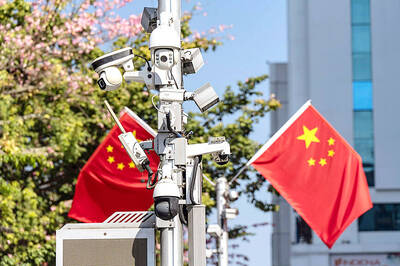
Pulled aside onto the balcony of an empty hotel room by Chinese state security officers, a Taiwanese tourist on a trip to Tibet described facing an unnerving barrage of questions about his military background and political loyalties. The man surnamed Lin (林) reported his experience in a viral post on Threads before accepting an interview with the Central News Agency (CNA) yesterday. Lin, who works as a nurse, told CNA that he knew some Taiwanese had run afoul of Chinese law enforcement, but he thought he would be safe, as he did not post much about his personal political views online. It came


 RSS
RSS