


Premier Jiang Yi-huah (江宜樺) yesterday praised the recently signed cross-strait service trade agreement as reducing trade barriers on both sides, adding that the trade pact heralds an era of “cross-strait economic and trade interaction in full scale.”
On returning from Shanghai where the agreement was inked on Friday, Straits Exchange Foundation Chairman Lin Join-sane (林中森) briefed Jiang on the pact in the company of Mainland Affairs Council Wang Yu-chi (王郁琦) and Vice Minister of Economic Affairs Cho Shih-chao (卓士昭).
At a press conference, Executive Yuan spokesperson Cheng Li-wun (鄭麗文) said Jiang gave “high recognition and praise” for the objectives accomplished: the signing of the agreement and a consensus that China would help Taiwan tackle water shortages on the outlying island of Kinmen.
Jiang instructed officials to explain the agreement to the public so they can understand its positive effects, Cheng said.
According to the agreement — a follow-up to 2010’s Economic Cooperative Framework Agreement (ECFA) — Taiwan agreed to open 64 service categories to Chinese investment. In return, China gave the green light to opening up 80 categories in its service sector.
“During negotiations, we have upheld the principle of maximizing benefits and minimizing downsides based on assessments by government agencies,” Lin said.
Lin termed the agreement a “win-win” situation for both sides of the Strait.
The signing of the agreement has aroused concerns over a lack of public consultation and assessments of the impact on local industry and employment.
At the request of lawmakers at a meeting of the legislature’s Internal Administration Committee on May 30, the Ministry of Economic Affairs and the Mainland Affairs Council agreed to present an assessment report by September.
Asked how they came to the conclusion that the pact will bring more positive than negative effects, given the lack of assessment, Cho said officials from both sides had met dozens of times to discuss the agreement over the past two years.
Cho said the government not holding public discussions while the agreement was being negotiated was “in line with international practices” that such negotiations are kept confidential.
Several lawmakers, including Legislative Speaker Wang Jin-pyng (王金平), said last week that they had no idea what the agreement would cover because they were not briefed by the Mainland Affairs Council on progress in the negotiations.
However, Wang Yu-chi dismissed the allegations.
He said he briefed Wang Jin-pyng on April 19, Chinese Nationalist Party (KMT) caucus whip Lai Shyh-bao (賴士葆) on April 23 and KMT Policy Committee chief Lin Hung-chih (林鴻池) on May 2 and that he also explained the progress of negotiations to lawmakers on the legislature’s Internal Administration Committee and Economic Committee.

Kenting National Park service technician Yang Jien-fon (楊政峰) won a silver award in World Grand Prix Photography Awards Spring Season for his photograph of two male rat snakes intertwined in combat. Yang’s colleagues at Kenting National Park said he is a master of nature photography who has been held back by his job in civil service. The awards accept entries in all four seasons across six categories: architectural and urban photography, black-and-white and fine art photography, commercial and fashion photography, documentary and people photography, nature and experimental photography, and mobile photography. Awards are ranked according to scores and divided into platinum, gold and

More than half of the bamboo vipers captured in Tainan in the past few years were found in the city’s Sinhua District (新化), while other districts had smaller catches or none at all. Every year, Tainan captures about 6,000 snakes which have made their way into people’s homes. Of the six major venomous snakes in Taiwan, the cobra, the many-banded krait, the brown-spotted pit viper and the bamboo viper are the most frequently captured. The high concentration of bamboo vipers captured in Sinhua District is puzzling. Tainan Agriculture Bureau Forestry and Nature Conservation Division head Chu Chien-ming (朱健明) earlier this week said that the
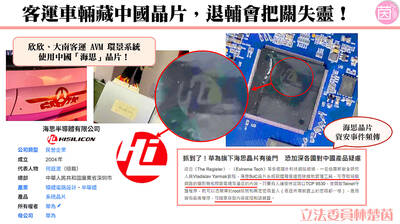
BREACH OF CONTRACT: The bus operators would seek compensation and have demanded that the manufacturer replace the chips with ones that meet regulations Two bus operators found to be using buses with China-made chips are to demand that the original manufacturers replace the systems and provide compensation for breach of contract, the Veterans Affairs Council said yesterday. Democratic Progressive Party Legislator Michelle Lin (林楚茵) yesterday said that Da Nan Bus Co and Shin-Shin Bus Co Ltd have fielded a total of 82 buses that are using Chinese chips. The bus models were made by Tron-E, while the systems provider was CYE Electronics, Lin said. Lin alleged that the buses were using chips manufactured by Huawei subsidiary HiSilicon Co, which presents a national security risk if the

The National Immigration Agency has banned two Chinese from returning to Taiwan, after they published social media content it described as disrespectful to national sovereignty. The agency imposed a two-month ban on a Chinese man surnamed Liang (梁) and a permanent ban on a woman surnamed Yang (楊), an influencer with 23 million followers, in October last year and last week respectively. Minister of the Interior Liu Shyh-fang (劉世芳) yesterday said on the sidelines of a legislative meeting that Chinese visitors to Taiwan are required to comply with the rules and regulations governing their entry permits. The government has handled the ban and


 RSS
RSS