


The first Taiwanese patient to be hospitalized with H7N9 avian influenza has recovered and was discharged after 35 days in hospital, National Taiwan University Hospital (NTUH) said at a press conference yesterday.
The imported infection is the only instance of H7N9 avian flu reported so far outside of China, where 130 confirmed cases causing 36 deaths have been reported to date, the hospital said.
“The patient, Mr Lee, developed symptoms of fever, night sweats and fatigue, but did not suffer respiratory tract or gastrointestinal problems, a few days after returning from China on April 9,” NTUH deputy superintendent Chang Shan-chwen (張上淳) said.
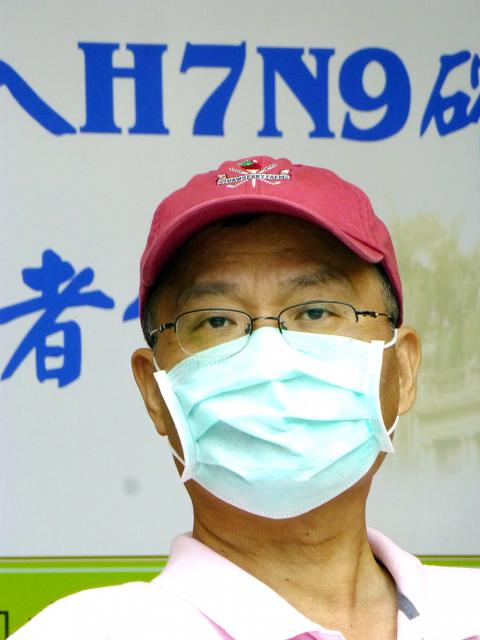
Photo: David Chang, EPA
“On April 16 he had a temperature of 40oC and was hospitalized and treated with Tamiflu [at Taipei Medical University Hospital],” Chang added.
“On the night of April 19 the patient started to experience shortness of breath,” Chang said.
“The next day a chest X-ray showed he had pulmonary infiltrates in both of his lungs and he was immediately referred to NTUH, where he was treated with a double dose of Tamiflu, intubated for respiratory failure and quarantined in a negative-pressure room,” Chang added.
The patient then received extracorporeal membrane oxygenation (ECMO) treatment on April 22 due to the deterioration of his breathing and was given an intravenous injection of peramivir on April 24, the hospital said.
Lai Hong-shiee (賴鴻緒), director of the hospital’s surgery department that was responsible for the ECMO treatment, said that similar to SARS, H7N9 can cause a “cytokine storm,” in which immune cells signaled by cytokine to fight invading pathogens go out of control and overreact.
“A cytokine storm occurred in the patient and anti-cytokine drugs were administered,” Chang said, while emphasizing that as this is the nation’s only reported H7N9 infection, there is insufficient evidence to conclude that anti-cytokine therapy was key to Lee’s recovery.
As a result, no standard operating procedure for the treatment of H7N9 has yet been established, Chang said.
Despite once being in critical condition and requiring dialysis, the patient was taken off ECMO on May 2, was decannulated and taken off a ventilator on May 7, and was transferred to a general ward two days later, NTUH said.
The hospital again confirmed that two throat swabs collected before the patient was sent to NTUH tested negative for the H7N9 virus, and it was not until an endotracheal aspirate was collected during intubation that the H7N9 infection was confirmed, first by NTUH medical technologists, and later by the Centers for Disease Control.
Lee, who was also present at the press conference, expressed his appreciation to medical staff and to his family for their support, and apologized “for having caused a scare due to my lack of care that led to the infection.”
Meanwhile, in Washington, Taiwan’s representative to the US King Pu-tsung (金溥聰) yesterday expressed his appreciation to the US for helping Taiwan in its efforts to produce a vaccine against human infection by the H7N9 virus.
The US Centers for Disease Control and Prevention (CDC) promised last month to share its results in developing a H7N9 vaccine with Taiwan.
In line with that commitment, a H7N9 master donor virus provided by the CDC was delivered to Taiwan recently, King said.
The cooperative effort was part of the Pandemic Influenza Preparedness Framework under the WHO.
King said such cooperation is helpful in expanding Taiwan’s participation in the operations of the WHO.
Earlier this month, King visited Nils Daulaire, assistant secretary for global affairs at the US Department of Health and Human Services, to discuss the possibility of future bilateral and multilateral cooperation, with a view to expanding Taiwan’s involvement in the global disease control and prevention network.
Additional reporting by CNA

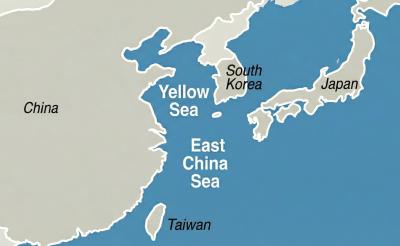
China has reserved offshore airspace in the Yellow Sea and East China Sea from March 27 to May 6, issuing alerts usually used to warn of military exercises, although no such exercises have been announced, the Wall Street Journal (WSJ) reported yesterday. Reserving such a large area for 40 days without explanation is an “unusual step,” as military exercises normally only last a few days, the paper said. These alerts, known as Notice to Air Missions (Notams), “are intended to inform pilots and aviation authorities of temporary airspace hazards or restrictions,” the article said. The airspace reserved in the alert is
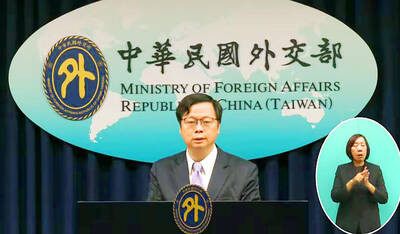
NAMING SPAT: The foreign ministry called on Denmark to propose an acceptable solution to the erroneous nationality used for Taiwanese on residence permits Taiwan has revoked some privileges for Danish diplomatic staff over a Danish permit that lists “Taiwan” as “China,” Eric Huang (黃鈞耀), head of the Ministry of Foreign Affairs’ Department of European Affairs, told a news conference in Taipei yesterday. Reporters asked Huang whether the Danish government had responded to the ministry’s request that it correct the nationality on Danish residence permits of Taiwanese, which has been listed as “China” since 2024. Taiwan’s representative office in Denmark continues to communicate with the Danish government, and the ministry has revoked some privileges previously granted to Danish representatives in Taiwan and would continue to review

More than 6,000 Taiwanese students have participated in exchange programs in China over the past two years, despite the Mainland Affairs Council’s (MAC) “orange light” travel advisory, government records showed. The MAC’s publicly available registry showed that Taiwanese college and university students who went on exchange programs across the Strait numbered 3,592 and 2,966 people respectively. The National Immigration Agency data revealed that 2,296 and 2,551 Chinese students visited Taiwan for study in the same two years. A review of the Web sites of publicly-run universities and colleges showed that Taiwanese higher education institutions continued to recruit students for Chinese educational programs without

A bipartisan group of US senators has introduced a bill to enhance cooperation with Taiwan on drone development and to reduce reliance on supply chains linked to China. The proposed Blue Skies for Taiwan Act of 2026 was introduced by Republican US senators Ted Cruz and John Curtis, and Democratic US senators Jeff Merkley and Andy Kim. The legislation seeks to ease constraints on Taiwan-US cooperation in uncrewed aerial systems (UAS), including dependence on China-sourced components, limited access to capital and regulatory barriers under US export controls, a news release issued by Cruz on Wednesday said. The bill would establish a "Blue UAS


 RSS
RSS