


The Department of Health (DOH) yesterday said its amended draft regulation, which lowers nuclear radiation tolerance limits in food, actually broadens the scope of its control.
The agency made the remarks in response to concerns raised by legislators and civic groups over its plan to amend the Standard of Safety Tolerance of Nuclear Fallout or Radioactivity Contamination for Food, which included revising safety tolerance limits for radioactive isotopes Cesium-134 and Cesium-137 in food from 370 becquerels per kilogram (Bq/kg) to 600Bq/kg.
The revised levels led to concerns from several civic groups, who questioned why the new permitted level of Cesium-134 and Cesium-137 in food fell below the standard set in Japan, where food is more likely to be contaminated by radiation due to the Fukushima Dai-ichi nuclear power plant crisis.
Some group members raised concerns that the change in standards could result in Taiwan importing radiation-contaminated food from Japan.
At a public hearing held by legislators on Thursday, Food and Drug Administration (FDA) Director-General Kang Jaw-jou (康照洲) said assessment on revising standards began in 2010.
During the assessment, the department referred to international scientific evaluations and found that the draft regulation listed more the types of radioactive isotopes listed for control than the previous regulation.
The revised regulation actually broadens the scope of control and is not intended to benefit particular countries, Kang said, adding that “imported food from five prefectures in Japan is still prohibited in Taiwan.”
Kang said the FDA would consider the suggestions from civic groups and also communicate with them on the standards.
In a new statement, the FDA said that imports of food from five prefectures in Japan — Fukushima, Ibaraki, Tochigi, Gunma and Chiba — remained suspended, and eight types of food produced in other parts of Japan must go through lot-by-lot inspections for radiation levels, according to the same standards as those used in Japan

Considering that most countries issue more than five denominations of banknotes, the central bank has decided to redesign all five denominations, the bank said as it prepares for the first major overhaul of the banknotes in more than 24 years. Central bank Governor Yang Chin-lung (楊金龍) is expected to report to the Legislative Yuan today on the bank’s operations and the redesign’s progress. The bank in a report sent to the legislature ahead of today’s meeting said it had commissioned a survey on the public’s preferences. Survey results showed that NT$100 and NT$1,000 banknotes are the most commonly used, while NT$200 and NT$2,000

The Centers for Disease Control (CDC) yesterday reported the first case of a new COVID-19 subvariant — BA.3.2 — in a 10-year-old Singaporean girl who had a fever upon arrival in Taiwan and tested positive for the disease. The girl left Taiwan on March 20 and the case did not have a direct impact on the local community, it said. The WHO added the BA.3.2 strain to its list of Variants Under Monitoring in December last year, but this was the first imported case of the COVID-19 variant in Taiwan, CDC Deputy Director-General Lin Ming-cheng (林明誠) said. The girl arrived in Taiwan on
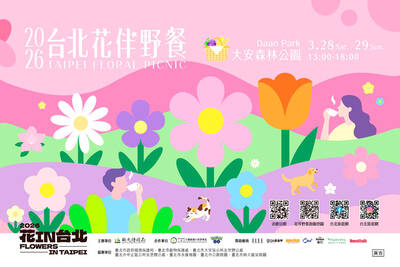
ANNUAL EVENT: Two massive Pokemon balloons are to be set up in Daan Park, with an event zone operating from 10am to 6pm This year’s Taipei Floral Picnic is to be held at Daan Park today and tomorrow, featuring an exclusive Pokemon Go event, a themed food market, a coffee rave picnic area and stage performances, the Taipei Department of Information and Tourism said yesterday. Two massive Pokemon balloons are to be set up in the park as attractions, with an exclusive event zone operating from 10am to 6pm, it said. Participants who complete designated tasks on-site would have a chance to receive limited-edition souvenirs, it added. People could also try the newly launched game Pokemon Pokopia in the trial area, the department said. Three PokeStops are
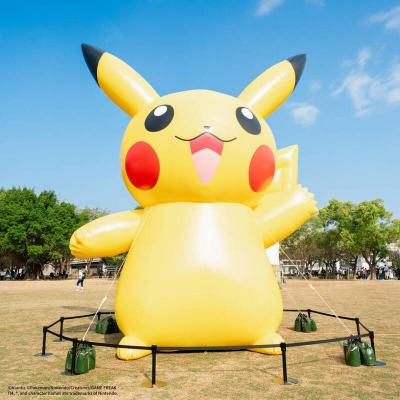
This year’s Taipei Floral Picnic is to be held at Daan Park this weekend, featuring an exclusive Pokemon Go event, a theme food market, a coffee rave picnic area and stage performances. Pokemon Go Two massive Pokemon balloons are to be set up in the park as photo attractions, with an exclusive event zone operating from 10am to 6pm. Participants who complete designated tasks on-site would have a chance to receive limited-edition souvenirs. Pokemon trainers could also experience the newly launched game Pokemon Pokopia in the trial area. Three PokeStops are to be set up in the park. Trainers are invited to take


 RSS
RSS