


The Executive Yuan yesterday passed a bill entitling the nation’s Aborigines to establish self-governing dominions parallel to county or city governments.
The bill, which had already been described by some Aboriginal groups as a political tool of the Chinese Nationalist Party (KMT) ahead of special municipality elections in November, has now been sent to the legislature for approval.
If the bill passes the legislature, each tribe living in different administrative districts or different tribes living in neighboring areas could initiate plans to establish self-governing dominions and councils.
Aboriginal self-governing dominions established across the borders of administrative districts, however, would not invalidate the current demarcation of the districts.
“Once a self-governing dominion is established, it would help a dispersed group of people unite together, an impetus for them to continue their traditional and culture,” Minister of the Council of Indigenous Peoples Sun Ta-chuan (孫大川) said.
“I know the bill is not to everybody’s satisfaction, but we’re trying to at least get it started,” Sun said. “The practicability of the bill will ensure its implementation and will be to the benefit of Aborigines.”
Under the bill, Aborigines would have the right to handle matters to meet the needs of their communities, subject to the nature, jurisdiction and powers of the self-governing institutions and through negotiation with county and city governments.
The draft stipulates that disputes stemming from overlapping jurisdiction between Aboriginal self-governing dominions and county and city governments would be referred to the Executive Yuan for negotiation.
At a press conference following the Cabinet meeting, Sun said the council made a great effort to communicate with county and city governments as well as government agencies and “made some concessions.”
Some country and city governments would not have agreed if the council had insisted that Aboriginal dominions receive a share of tax revenue from the central government, as county and city governments do, Sun said.
“We cannot reverse history. If Aboriginal autonomous regions took budgets or land from existing counties and cities, we wouldn’t get any support,” Sun said, adding that it was “unrealistic” to expect Aborigines to see their traditional land returned to them from non-Aborigines or the government.
Several Aboriginal activists expressed their discontent with the proposed regulations yesterday.
“The government never consulted us when they were drafting the bill. It’s a bill for fake autonomy,” said Wutu Micyang, a member of the Indigenous Peoples’ Action Coalition of Taiwan.
“A request for autonomy submitted by Aborigines would have to be approved by local township offices and city or county councils,” Wutu said. “These clauses are roadblocks to our goal of realizing real autonomy.”
Other clauses, he said, grant the government the power to oversee farming activity by Aboriginal farmers to prevent overexploitation of land.
“The people who are overexploiting the land are non-Aboriginal developers and tourism operators who build large hot spring resorts, create theme parks or large farms for high-altitude fruits and vegetables, not individual Aboriginal farmers,” Wutu said.
Hsiao Shih-huei (蕭世暉), a member of the Association for Taiwan Indigenous Peoples’ Policies, said the bill could actually reduce the degree of Aboriginal autonomy.
“For example, Atayal Aborigines live in more than 10 townships in various counties,” Hsiao said. “Would they have to get approval from each township to create an Atayal autonomous region?”
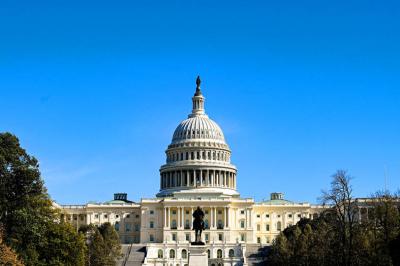
The US House of Representatives yesterday passed the PROTECT Taiwan Act, which stipulates that Washington would exclude China from participating in major global financial organizations if its actions directly threaten Taiwan’s security. The bill, proposed by Republican US Representative Frank Lucas, passed with 395 votes in favor and two against. It stipulates that if China’s actions pose any threat to Taiwan’s security, economic or social systems, the US would, “to the maximum extent practicable,” exclude China from international financial institutions, including the G20, the Bank for International Settlements and the Financial Stability Board. The bill makes it clear that China

Taiwan’s Li Yu-hsiang performs in the men’s singles figure skating short program at the Milano-Cortina Winter Olympics, in Milan, Italy, on Tuesday. Li finished 24th with a score of 72.41 to advance to Saturday’s free skate portion of the event. He is the first Taiwanese to qualify for the free skate of men’s singles figure skating at the Olympics since David Liu in 1992.
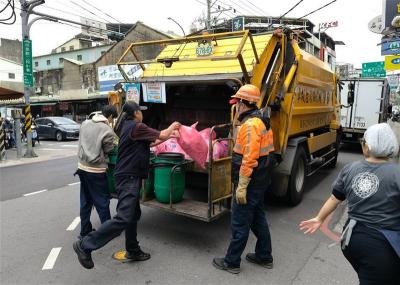
Garbage and recycling schedules are to vary from Saturday through Sunday next week over the Lunar New Year holiday period. The following collection information is from the governments of the six special municipalities. Taipei Regular service: Sunday to Monday next week. No service: Tuesday to Thursday next week. Extra service: Friday next week. Regular service resumes: Saturday next week. New Taipei City Extra service: Sunday. Adjusted collection time: Monday next week — garbage collection is to begin in the morning and end at 6pm. No service: Tuesday to Thursday next week. Regular service resumes: Friday next week. Note: Garbage can be dropped off at 70

The Coast Guard Administration (CGA) yesterday held a ceremony marking the delivery of its 11th Anping-class offshore patrol vessel Lanyu (蘭嶼艦), saying it would boost Taiwan’s ability to respond to Beijing’s “gray zone” tactics. Ocean Affairs Council Deputy Minister Chang Chung-Lung (張忠龍) presided over the CGA event in the Port of Kaoshiung. Representatives of the National Security Council also attended the event. Designed for long-range and protracted patrol operations at sea, the Lanyu is a 65.4m-long and 14.8m-wide ship with a top speed of 44 knots (81.5kph) and a cruising range of 2,000 nautical miles (3704km). The vessel is equipped with a


 RSS
RSS