


Researchers from Academia Sinica's Institute of Biomedical Sciences have identified a protein that carries vitamin C to muscle cells of the body to help repair damage and protect against deterioration.
The researchers said that the findings gave them a better understanding of an inherited connective tissue disorder called arterial tortuosity syndrome.
The study was published online in the journal Human Molecular Genetics on July 24 and has been highlighted as a “must read” paper by the influential “Faculty of 1000 Biology” research service.
The findings of the study may explain long-standing questions about how vitamin C enters mitochondria, which are the power centers of cells. Mitochondria provide the energy a cell needs to move, divide, produce secretory products and contract.
They are also known to take up and recycle vitamin C, but until now, the molecular mechanism of vitamin C uptake by mitochondria has been poorly understood.
The research team, led by Chen Yuan-tsong (陳垣崇), identified a carrier protein called GLUT 10, which is found predominantly in the mitochondria of smooth muscle cells and insulin-stimulated fat cells.
They found that GLUT 10 transports oxidized vitamin C to mitochondria, and also increases their uptake, which strengthens the cells’ ability to detoxify and repair damage.
These findings provide a mechanism to explain how vitamin C enters mitochondria and show how abnormalities in GLUT 10 may lead to the abnormalities found in arterial tortuosity syndrome, the researchers said.
The results also provide new insights into the relationship between GLUT 10 and type 2 diabetes and underline the importance of vitamin C in fighting degenerative diseases.
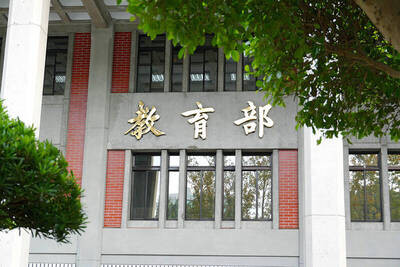
The Ministry of Education (MOE) is to launch a new program to encourage international students to stay in Taiwan and explore job opportunities here after graduation, Deputy Minister of Education Yeh Ping-cheng (葉丙成) said on Friday. The government would provide full scholarships for international students to further their studies for two years in Taiwan, so those who want to pursue a master’s degree can consider applying for the program, he said. The fields included are science, technology, engineering, mathematics, semiconductors and finance, Yeh added. The program, called “Intense 2+2,” would also assist international students who completed the two years of further studies in

Former president Tsai Ing-wen (蔡英文) departed for Europe on Friday night, with planned stops in Lithuania and Denmark. Tsai arrived at Taiwan Taoyuan International Airport on Friday night, but did not speak to reporters before departing. Tsai wrote on social media later that the purpose of the trip was to reaffirm the commitment of Taiwanese to working with democratic allies to promote regional security and stability, upholding freedom and democracy, and defending their homeland. She also expressed hope that through joint efforts, Taiwan and Europe would continue to be partners building up economic resilience on the global stage. The former president was to first
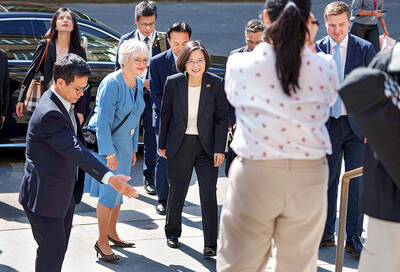
Former president Tsai Ing-wen (蔡英文) on Monday called for greater cooperation between Taiwan, Lithuania and the EU to counter threats to information security, including attacks on undersea cables and other critical infrastructure. In a speech at Vilnius University in the Lithuanian capital, Tsai highlighted recent incidents in which vital undersea cables — essential for cross-border data transmission — were severed in the Taiwan Strait and the Baltic Sea over the past year. Taiwanese authorities suspect Chinese sabotage in the incidents near Taiwan’s waters, while EU leaders have said Russia is the likely culprit behind similar breaches in the Baltic. “Taiwan and our European

The Taipei District Court sentenced babysitters Liu Tsai-hsuan (劉彩萱) and Liu Jou-lin (劉若琳) to life and 18 years in prison respectively today for causing the death of a one-year-old boy in December 2023. The Taipei District Prosecutors’ Office said that Liu Tsai-hsuan was entrusted with the care of a one-year-old boy, nicknamed Kai Kai (剴剴), in August 2023 by the Child Welfare League Foundation. From Sept. 1 to Dec. 23 that year, she and her sister Liu Jou-lin allegedly committed acts of abuse against the boy, who was rushed to the hospital with severe injuries on Dec. 24, 2023, but did not


 RSS
RSS