


Residents of Mailiao Township (麥寮) in Yunlin County yesterday staged another protest by blocking three major roads leading to a petrochemical complex owned by the Formosa Plastics Group, but dispersed after drawing complaints from motorists about traffic disruption.
Dissatisfied with the county government’s role in compensation talks, the protesters shouted: “Yunlin County Commissioner Su Chih-feng [蘇治芬], step down,” and complained of “under-the-table operations.”
Formosa Plastics’ management urged the protesters to respect its employees’ right to work, while using shuttle buses to transport its employees. The protest, which began at about 6:30am and caused traffic jams, ended by 9am.
Residents in Mailiao have demanded compensation after a major fire at one of the complex’s oil refining plants broke out on July 25, contaminating nearby farms and fish farms. The fire was the second at the complex in three weeks.
They demanded that the conglomerate pay NT$1.8 billion (US$53 million) for polluting the area and allegedly harming their health, and demanded that Formosa promise to relocate the complex within 10 years. The company said it was only willing to pay NT$500 million, which residents have rejected.
Discussing the “public welfare losses” engendered by the plant, Environmental Protection Administration Minister Stephen Shen (沈世宏) said the protests showed that problems at two levels would have to be resolved — compensation to residents for damages and losses caused by last month’s fire, and public welfare losses engendered by the plant, including potential air and groundwater pollution residents have had to live with for the past decade.
“The first part will be handled by Yunlin County’s environmental protection bureau. So far, about 1,300 Mailiao Township residents have registered losses [caused by the fire] and the bureau will determine appropriate compensation for each based on inspections and evaluations,” Shen said.
“The second part will require objective quantitative data and different methodologies will lead to different results,” Shen said. “The EPA can provide the Yunlin County Government with the techniques needed to calculate public welfare losses.”
The administration said it was assessing the impact of the naphtha cracker plant on the environment in the past 10 years. Preliminary results are expected in October.

Yangmingshan National Park authorities yesterday urged visitors to respect public spaces and obey the law after a couple was caught on a camera livestream having sex at the park’s Qingtiangang (擎天崗) earlier in the day. The Shilin Police Precinct in Taipei said it has identified a suspect and his vehicle registration number, and would summon him for questioning. The case would be handled in accordance with public indecency charges, it added. The couple entered the park at about 11pm on Thursday and began fooling around by 1am yesterday, the police said, adding that the two were unaware of the park’s all-day live
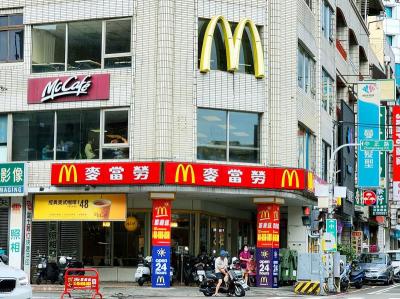
Fast food chain McDonald's is to raise prices by up to NT$5 on some products at its restaurants across Taiwan, starting on Wednesday next week, the company announced today. The prices of all extra value meals and sharing boxes are to increase by NT$5, while breakfast combos and creamy corn soup would go up by NT$3, the company said in a statement. The price of the main items of those meals, if ordered individually, would remain the same. Meanwhile, the price of a medium-sized lemon iced tea and hot cappuccino would rise by NT$3, extra dipping sauces for chicken nuggets would go up

Yangmingshan National Park’s Qingtiangang (擎天崗) nature area has gone viral after a park livestream camera observed a couple in the throes of intimate congress, which was broadcast live on YouTube, drawing large late-night crowds and sparking a backlash over noise, bright lights and disruption to wildlife habitat. The area’s livestream footage appeared to show a couple engaging in sexual activity on a picnic table in the park on Friday last week, with the uncensored footage streamed publicly online. The footage quickly spread across social media, prompting a tide of visitors to travel to the site to “check in” and recreate the

Minister of Digital Affairs Lin Yi-ching (林宜敬) yesterday cited regulatory issues and national security concerns as an expert said that Taiwan is among the few Asian regions without Starlink. Lin made the remarks on Facebook after funP Innovation Group chief executive officer Nathan Chiu (邱繼弘) on Friday said Taiwan and four other countries in Asia — China, North Korea, Afghanistan and Syria — have no access to Starlink. Starlink has become available in 166 countries worldwide, including Ukraine, Malaysia, the Philippines and Vietnam, in the six years since it became commercial, he said. While China and North Korea block Starlink, Syria is not


 RSS
RSS