


The Consumers’ Foundation yesterday criticized the government’s plan to inform consumers about US beef, saying about half of the restaurants it investigated did not inform customers about the origin of the beef they used.
The foundation said it had surveyed 50 restaurants across the country and 26 of them, or 52 percent, did not display information at their entrances on the origin of the beef they serve.
Twelve restaurants served US beef to customers, but did not disclose information about the origin of the meat, it said.
The foundation singled out two restaurants, Yayan Japanese Yakiniku Restaurant (野宴) and Very Thai (非常泰), which it said served bone-in US beef, but did not disclose this information to customers.
Twenty-four of the restaurants surveyed, or 48 percent, did not list on their menu the origin of the beef they used, the foundation said. Of these, five restaurants were found to serve US beef. Another 13 restaurants, or 26 percent, failed to provide documents to prove the origin of their beef imports.
Taiwan allows imports of bone-in beef from the US, but the recently revised Act Governing Food Sanitation (食品衛生管理法) blocks imports of offal and ground beef. The act stipulates that all beef imports must clearly show the country of origin, but the foundation urged the government to extend this requirement to cover restaurants and retail stores.
“The government only ‘encourages’ businesses to label the origin of their beef imports, but does not punish them if they do not comply,” foundation vice chairperson Joann Su (蘇錦霞) said.
“Consumers’ rights are still unprotected because they do not know whether they are eating foods that could potentially be at risk of mad cow disease,” she said.
The foundation urged the public not to expose themselves to unnecessary risks and to choose only food that they have confidence in.
In response to the foundation’s survey, Yayan issued a statement saying it uses beef from New Zealand. It said the foundation made mistakes in its investigation and demanded that it correct these errors.
Very Thai, owned by Tai Tong Food and Beverage Group, said that contrary to the foundation’s claims, the US beef that the restaurant uses is boneless and has passed all necessary inspections. Very Thai added that it was in the process of adding information about the origin of its beef on the menu and expects to complete the task today.
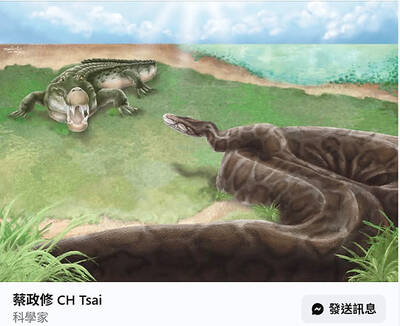
Taiwanese paleontologists have discovered fossil evidence that pythons up to 4m long inhabited Taiwan during the Pleistocene epoch, reporting their findings in the international scientific journal Historical Biology. National Taiwan University (NTU) Institute of Ecology and Evolutionary Biology associate professor Tsai Cheng-hsiu (蔡政修) led the team that discovered the largest snake fossil ever found in Taiwan. The single trunk vertebra was discovered in Tainan at the Chiting Formation, dated to between 400,000 and 800,000 years ago in the Middle Pleistocene, the paper said. The area also produced Taiwan’s first avian fossil, as well as crocodile, mammoth, saber-toothed cat and rhinoceros fossils, it said. Discoveries

WATCH FOR HITCHHIKERS: The CDC warned those returning home from Japan to be alert for any contagious diseases that might have come back with them People who have returned from Japan following the World Baseball Classic (WBC) games during the weekend are recommended to watch for symptoms of infectious gastroenteritis, flu and measles for two weeks, the Centers for Disease Control (CDC) said. Flu viruses remain the most common respiratory pathogen in Taiwan in the past four weeks and the influenza B virus accounted for 55.7 percent of the tested cases, exceeding the percentage of influenza A (H3N2) infections and becoming the local dominant strain, CDC Epidemic Intelligence Center Deputy Director Lee Chia-lin (李佳琳) said at a news conference on Tuesday. There were 82,187 hospital visits for

Alumni from Japan’s Kyoto Tachibana Senior High School marching band, widely known as the “Orange Devils,” staged a flash mob performance at the Grand Hotel in Taipei yesterday to thank Taiwan for its support after the Great East Japan Earthquake. The show, performed on the earthquake’s 15th anniversary, drew more than 100 spectators, some of whom arrived two hours before the show to secure a good viewing spot. The 26-member group played selections from “High School Musical,” “Beauty and the Beast,” and their signature piece “Sing Sing Sing” and shouted “I love
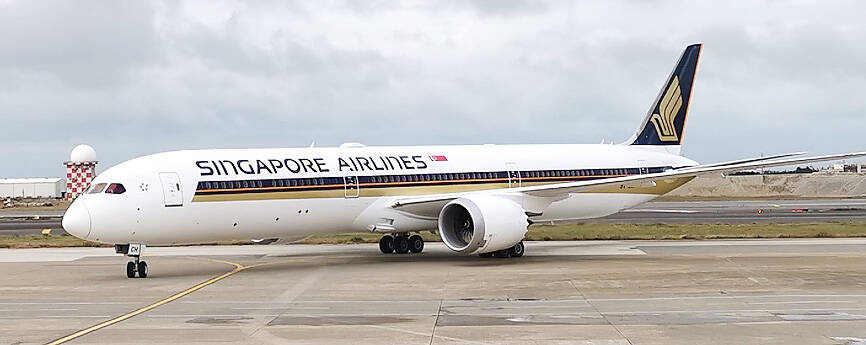
INCREASED CAPACITY: The flights on Mondays, Wednesdays, Fridays and Sundays would leave Singapore in the morning and Taipei in the afternoon Singapore Airlines is adding four supplementary flights to Taipei per week until May to meet increased tourist and business travel demand, the carrier said on Friday. The addition would raise the number of weekly flights it operates to Taipei to 18, Singapore Airlines Taiwan general manager Timothy Ouyang (歐陽漢源) said. The airline has recorded a steady rise in tourist and business travel to and from Taipei, and aims to provide more flexible travel arrangements for passengers, said Ouyang, who assumed the post in July last year. From now until Saturday next week, four additional flights would depart from Singapore on Monday, Wednesday, Friday


 RSS
RSS