


On a sweltering summer afternoon, Pan Kun-ti (潘坤地) is perched 8m above ground on the roof of the Shefu Temple in Taipei City's riverside Shezi District (社子).
The master of jiannian (剪黏) — a traditional mosaic-like art form — has been working in the scorching sun for several hours, decorating the ridge of the 40-year-old Taoist temple dedicated to the Earth God.
He is in the most laborious stage of his job — cutting up ceramic bowls and trimming the shards into the desired shapes before fitting them into the surface of a pre-sculpted dragon that appears to breathe fire.
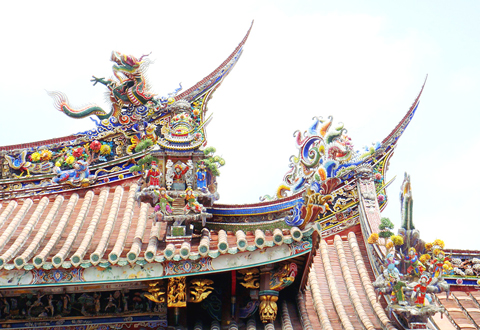
PHOTO: CNA
The figure is just one of an elaborate series of birds, flowers, beasts and characters from folk legends that the 56-year-old artist has been working on in recent months.
“Creating jiannian pieces is very demanding,” Pan said after climbing down the scaffolding. “Apart from the long hours of indoor work, it also means toiling on the roof in the summer heat or winter chill.”
Pan’s skills, perfected over 40 years in the trade, are widely recognized, and his creations can be seen on temples throughout the nation.
One of the highlights of his career came in 2003 when the restoration of Taipei City’s 204-year-old Dalongdong Baoan Temple, which he participated in, won the annual UNESCO Asia-Pacific Heritage Award for Cultural Heritage Conservation.
ENDANGERED ART
While Pan continues to refine his skills, however, the traditional art form, literally translated as “cut and paste,” is in danger of extinction because of its high cost and labor-intensive nature.
“The craft of cutting and pasting assorted ceramic shards to create elaborate ornaments on temple roofs and eaves is fading and may become a lost art due to government ignorance and unreasonable regulations governing historic site restoration projects,” said Wang Ching-tai (王慶台), a National Taiwan University of the Arts professor.
The Cultural Heritage Preservation Act (文化資產保護法) states that the restoration of historic sites requires a survey, design submission, cost estimate and open bidding to qualify for government funds.
In the process, Wang said, architects play a dominant role while traditional craftsmen are often ignored and denied access to the overall design work.
Temple decoration is incorporated into restoration projects that are often awarded to the contractor that offers the lowest price, he said.
BUDGET CUTS
“With project budgets cut to the bone, the winning bidders tend to allocate only a tiny share of the overall budget to decorations,” Wang said. “As a result, cheaper materials and methods requiring less labor are used and second-rate craftsmen are hired to do the job.”
This leads to poor quality work, including the use of low-cost pottery shards or pre-molded pieces rather than mosaic collages to form, for example, the heads of phoenixes on many temple roofs.
Unlike the figures made with colorful ceramic shards affixed with a sticky mixture of glutinous rice and lime, which can remain vivid for more than 30 years, “the jiannian pieces made by cheaper methods fall apart quite easily,” Pan said.
Sensitive to the criticism over preservation law, a council spokesman surnamed Huang said the agency was holding a series of forums to solicit opinions on how the law could be amended to encourage the preservation and evolution of traditional crafts.
When the forums conclude at the end of the year, an amendment to the law will be drafted, he said.
However, by the time the proposed amendment passes the legislature, there may not be many jiannian masters left, he said.
A 2004 survey found 37 jiannian registered craftsmen, and the question of how many remain will not be known until late next year, when a nationwide census of traditional craftsmen is completed, Huang said.
Pan is worried about what the census will find, especially considering the impact of the global economic recession on the temple renovation business.
There used to be a constant stream of work, Pan said, but that began changing about two years ago as temples became more reluctant to commission handmade pieces for their roofs and eaves.
“With the economy mired in recession, fewer people are making donations to temples. Consequently, fewer temple restoration or maintenance projects are being launched,” said Pan, who has had periods of enforced idleness recently.
But even when the trade was at its peak, Pan trained only one apprentice. Few people are now drawn to it because of the harsh working conditions and focus on minute details.
TOUGH CONDITIONS
“It is an art form that is learned through patience and years of practice. Craftsmen have to endure the toil of working outdoors on rooftops under the scorching sun and put up with injuries from smashing pottery and trimming ceramic shards,” Pan said. “The current business environment does not leave much room for lengthy and meticulous learning processes.”
Private temple operators could play an important role in preserving traditional crafts and cultural heritage, Pan said, citing Baoan Temple as an example.
The temple raised its own funds to pay for the seven-year restoration project that emphasized historical authenticity and tried to preserve as much of the site’s original layout, style, materials and construction methods as possible.
Baoan Temple chairman Liao Wu-chih (廖武治) supported using original materials and techniques, including replicating the jiannian art on the rooftops, Pan said.
He is urging the government to hire skilled and experienced masters to work on publicly funded restoration projects to preserve the detail-oriented art form.
ORIGINS
Composing a jiannian figure begins with a stainless steel wire skeletal sculpture that is then fleshed out with sticky rice lime. Ceramic bowls are cut or broken into pieces that are shaped and embedded into the surface of the sculptures.
Jiannian originated in Chaozhou in Guangdong Province during the Ming Dynasty’s Wanli period (circa 1600). One of China’s most important ceramic capitals for centuries, Chaozhou had plenty of broken ceramics to use.
Brought to Taiwan by immigrants, the jiannian art form developed its own local style, presenting the blessings and teachings of Taoism, wishes for good luck and traditional aesthetics.
That tradition and religious context is what ultimately motivates Pan, who accepts his tough working conditions not only give him the chance to create something beautiful and long-lasting, but also fulfill his responsibility to the gods.
“I often remind myself of the importance of keeping a loving heart and tending toward goodness. I firmly believe that as long as I am truly devoted to my work, the gods will bless me,” he said.
Like many artists, Pan hopes to leave his mark on the future.
“I hope I can leave behind creations that will be remembered and praised after I retire,” he said.
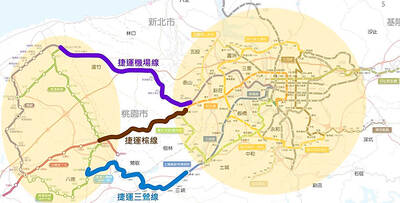
The Executive Yuan yesterday approved a southwestern extension of the Sanying MRT Line from New Taipei to Bade District (八德) in Taoyuan, with a goal of starting construction by late 2026. The 4.03-kilometer extension, featuring three new stations, will run from the current terminus at Yingtao Fude Station (LB12) in New Taipei City to Dannan Station (LB14), where it will connect with Taoyuan’s Green Line, New Taipei City Metro Corp said in a statement. This extension will follow the completion of core Sanying Line, a 14.29-kilometer medium-capacity system linking Tucheng (土城), Sansia (三峽)
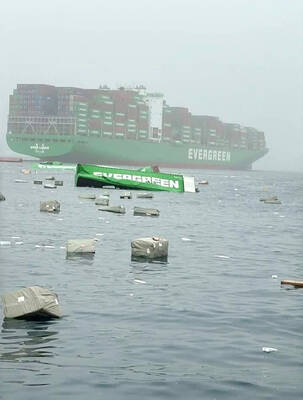
CARGO LOSS: About 50 containers at the stern of the ‘Ever Lunar’ cargo ship went overboard, prompting the temporary closure of the port and disrupting operations Evergreen Marine Corp, Taiwan’s largest container shipper, yesterday said that all crew members aboard the Ever Lunar (長月) were safe after dozens of containers fell overboard off the coast of Peru the previous day. The incident occurred at 9:40am on Friday as the Ever Lunar was anchored and waiting to enter the Port of Callao when it suddenly experienced severe rolling, Evergreen said in a statement. The rolling, which caused the containers to fall, might have been caused by factors including a tsunami triggered by an earthquake in Russia, poor winter sea conditions in South America or a sudden influx of waves,
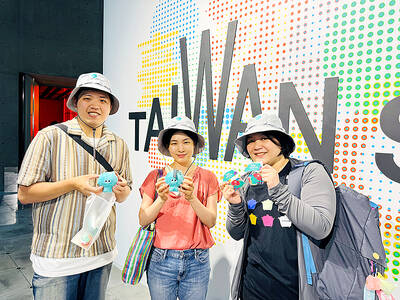
The Ministry of Culture yesterday officially launched the “We TAIWAN” cultural program on Osaka’s Nakanoshima sandbank, with the program’s mascot receiving overwhelming popularity. The cultural program, which runs from Aug. 2 to 20, was designed to partner with and capitalize on the 2025 World Expo that is being held in Osaka, Japan, from April 13 to Oct. 13, the ministry said. On the first day of the cultural program, its mascot, a green creature named “a-We,” proved to be extremely popular, as its merch was immediately in high demand. Long lines formed yesterday for the opening
BE CAREFUL: The virus rarely causes severe illness or death, but newborns, older people and those with medical conditions are at risk of more severe illness As more than 7,000 cases of chikungunya fever have been reported in China’s Guangdong Province this year, including 2,892 new cases last week, the Centers for Disease Control (CDC) yesterday said it is monitoring the situation and considering raising the travel notice level, which might be announced today. The CDC issued a level 1 travel notice, or “watch,” for Guangdong Province on July 22, citing an outbreak in Foshan, a manufacturing hub in the south of the province, that was reported early last month. Between July 27 and Saturday, the province reported 2,892 new cases of chikungunya, reaching a total of 7,716


 RSS
RSS