

The construction of a Mass Rapid Transit (MRT) maintenance depot in Sinjhuang City (新莊), Taipei County, has damaged neighboring houses and some Lo Sheng Sanatorium buildings, Lo Sheng activists and local residents alleged yesterday.
“We have warned that the geological composition [of the site selected for the maintenance depot] is not suitable for such a large-scale construction, but the Department of Rapid Transit Systems [DORTS] ignored us,” Youth Alliance for Lo Sheng member Wang Hao-chung (王顥中) said as activists staged a demonstration outside DORTS headquarters in Taipei yesterday.
“Now that damage has occurred, we demand that DORTS stop the construction, investigate how it happened, and explain the results of the investigation to the public honestly,” Wang said.
Pictures taken by activists and displayed at the demonstration showed cracks in the walls of residence halls at Lo Sheng that run from the ground up to the ceiling.
Similar cracks have appeared in houses bordering the construction site as well. Pictures showed that the roof of a traditional brick house — the house that has been most seriously damaged — had completely collapsed.
“You can see in the picture that the roof collapsed because the wall on one side moved because of subsidence caused by the construction, while the wall on the other side did not move, and therefore the two walls could no longer hold up the roof,” Wang said while pointing at the picture.
Unable to take part in the protest because of a prior engagement, neighborhood supervisor (鄰長) Wu Wan-yi (吳萬益) confirmed the situation by phone.
“Cracks in the walls and other damage began to appear as soon as construction started,” Wu said. “About 10 houses are being impacted.”
Located on a hill in Sinjhuang, the Lo Sheng Sanatorium complex was built during the Japanese colonial period to isolate people with Hansen’s disease — also known as leprosy — because the disease was believed to be highly contagious and incurable at the time.
A decision by DORTS to demolish the sanatorium and flatten part of the hill to make way for the maintenance depot was met with opposition from activists who believe that the building is of important historical value and that it was a violation of Lo Sheng residents’ human rights to force them to leave their families and live in life-long isolation decades ago, and then force them to leave Lo Sheng in their old age.
While the government came up with a compromise in 2007 to preserve buildings on the site in response to the opposition, several activists with geological and engineering backgrounds believe that there are problems with DORTS’ geological assessment of the location and have warned that the construction may cause damage in the surrounding area.
“I warned DORTS several times, but they never did anything to fix the problems,” civil engineer Wang Wei-min (王偉民) said by phone. “One DORTS official actually admitted to me in private that there were inaccuracies in the data they collected, but they still didn’t do anything about it.”
Wang said the site has a very large underground water reserve.
“The water is held underground because it’s covered by a layer of rock that serves as sort of a lid over a pot of boiling water,” he said. “So the digging causes the lid to lift up and of course it is causing problems.”
DORTS yesterday denied that damage to buildings near the site had anything to do with the construction.
“Construction has been suspended for almost two years, so the damage should not have anything to do with the work,” said North District Project Office deputy director Fang Chuang-lih (方壯勵), who came out to meet with the protesters. “If the construction does cause any damage, we have a set of procedures to handle it.”


Two executives of drone supplier Jiin Ming Industry Co (錦明實業) have been detained and held incommunicado over the company's alleged use of prohibited China-made chips and camera lenses in drones supplied under recent military contracts, the Taoyuan District Prosecutors' Office said today. In a statement, prosecutors said they raided the offices of Jiin Ming — headquartered in Taoyuan — as well as those of its subsidiaries and its suppliers on Thursday last week. The raids followed a report that the company had breached its procurement contracts by putting the prohibited components into drones delivered to the military. During the raids, prosecutors summoned
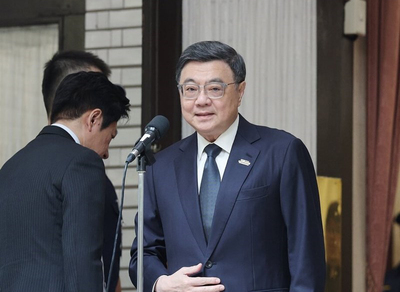
The government would continue monitoring online rumors that a pneumonic plague outbreak has spread from Russia into China and could enhance existing quarantine measures, Premier Cho Jung-tai (卓榮泰) said today. During a legislative meeting, Democratic Progressive Party Legislator Wang Ting-yu (王定宇) said rumors were circulating that the disease had spread across several Chinese provinces. He asked Cho whether the government was prepared to prevent the disease from spreading to Taiwan, given the frequent exchanges between Taiwan and China, and how concerned the government was about the alleged outbreak. The Ministry of Health and Welfare implemented border quarantine measures after briefing the Executive Yuan

South Korean boy band BigBang drew 120,000 fans to three concerts at Taipei Dome from Friday through yesterday, as the band thanked them for their support over their 20-year career. The Taipei Dome concerts were part of BigBang's "2026-2027 World Tour XX: Cosmos." Friday's concert was BigBang's first performance in Taiwan in 11 years. During the encore, group leader G-Dragon (GD) shouted "I love you" in Chinese and said he was especially happy to perform in Taiwan with bandmates Taeyang and Daesung. "Taipei, I'm very grateful to you all," GD said in Chinese, asking fans to wait for the band's return. Daesung thanked
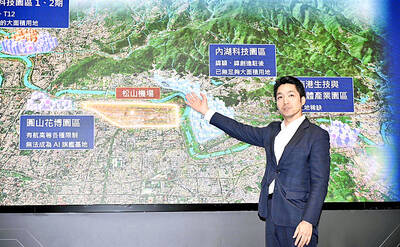
DETAILED PLAN NEEDED: Relocating the airport would affect not just travelers, but also undermine national defense and emergency medical services, a legislator said Taipei Mayor Chiang Wan-an (蔣萬安) yesterday proposed relocating Taipei International Airport (Songshan airport) and turning the site into an artificial intelligence (AI) park, drawing opposition from politicians across party lines. Chiang’s plan would turn the 300 hectares into an AI park featuring tech clusters, residential communities and green space. The industrial cluster would host 200 domestic enterprises, generate NT$12 trillion (US$376.47 billion) in output, and accommodate 65,000 jobs and 35,000 residents, he said. Cabinet spokeswoman Michelle Lee (李慧芝) said the Executive Yuan was surprised by the announcement, as the Taipei City Government did not discuss the proposal with the central government before making


 RSS
RSS