


Butterfly orchid producers have introduced radio frequency identification (RFID) technology in a move that is expected to raise productivity, agricultural researchers said on Thursday.
As competition in the global orchid market becomes increasingly fierce, research fellows at the Taiwan Agriculture Research Institute said the nation needs to introduce new technology to sharpen its competitive edge in the sector.
Saying that RFID is a powerful emerging technology that enables companies to keep better track of their assets, tools and inventories, the researchers said introduction of the technology to the orchid business will help improve the accuracy of order delivery dates and quantities, thereby increasing customer satisfaction.
If RFID technology is integrated with other automated production and management systems, local orchid productivity could also be raised significantly, the researchers said.
Saying that orchid cultivation — and butterfly orchids in particular — plays a very important role in the nation’s agricultural sector, an official from the Council of Agriculture’s (COA) Taiwan Agriculture Research Institute said Taiwan must pull out all the stops to breed new orchid hybrids and develop new cultivation know-how to maintain its market niche.
The latest statistics released by the council show Taiwan’s flower acreage totals about 13,475 hectares, with an annual production value of about NT$12.36 billion (US$374 million).
The figures account for only about 1.78 percent of Taiwan’s total agricultural production acreage and 7.34 percent of the total annual farming production value, respectively.
Despite the relatively small share of horticulture in terms of acreage and total production value, the official said the unit production value in the sector is about NT$918,000 per hectare.
Among the various floral species cultivated commercially, orchid farms cover about 592 hectares, but their combined annual production value amounts to NT$2.874 billion, representing a unit production value of NT$4.86 million per hectare and indicating that orchids are a high-yielding cash crop.
In comparison, butterfly orchids occupy an even more central role in terms of economic advantage. Butterfly orchids account for only 33.8 percent of the total orchids farmed but export value accounts for 75.2 percent of the total orchid production value.
These figures signify the importance of breeding new butterfly orchid cultivars and developing new cultivation technologies, the official said.
Through years of strenuous efforts, Taiwan has managed to develop greenhouses that suit the nation’s climatic conditions and has established a cultivation system that can ensure perennial blooming of orchids, the official said.
While local butterfly orchid production acreages and values have continued to increase, with Japan and the US serving as the principal export markets, the official said locally produced orchids have been facing ever fiercer competition from the Netherlands, China and Southeast Asia in recent years.
Against this backdrop, the official said, continued quality improvement and upgrading of productivity has become very important in the effort to sustain Taiwan’s butterfly orchid industry.

LOUD AND PROUD Taiwan might have taken a drubbing against Australia and Japan, but you might not know it from the enthusiasm and numbers of the fans Taiwan might not be expected to win the World Baseball Classic (WBC) but their fans are making their presence felt in Tokyo, with tens of thousands decked out in the team’s blue, blowing horns and singing songs. Taiwanese fans have packed out the Tokyo Dome for all three of their games so far and even threatened to drown out home team supporters when their team played Japan on Friday. They blew trumpets, chanted for their favorite players and had their own cheerleading squad who dance on a stage during the game. The team struggled to match that exuberance on the field, with
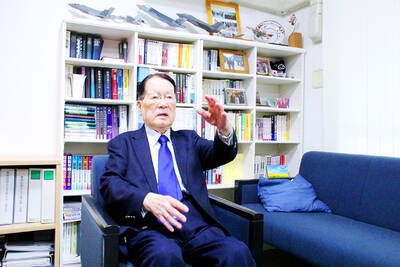
Whether Japan would help defend Taiwan in case of a cross-strait conflict would depend on the US and the extent to which Japan would be allowed to act under the US-Japan Security Treaty, former Japanese minister of defense Satoshi Morimoto said. As China has not given up on the idea of invading Taiwan by force, to what extent Japan could support US military action would hinge on Washington’s intention and its negotiation with Tokyo, Morimoto said in an interview with the Liberty Times (sister paper of the Taipei Times) yesterday. There has to be sufficient mutual recognition of how Japan could provide

UPDATED TEST: The new rules aim to assess drivers’ awareness of risky behaviors and how they respond under certain circumstances, the Highway Bureau said Driver’s license applicants who fail to yield to pedestrians at intersections or to check blind spots, or omit pointing-and-calling procedures would fail the driving test, the Highway Bureau said yesterday. The change is set to be implemented at the end of the month, and is part of the bureau’s reform of the driving portion of the test, which has been criticized for failing to assess whether drivers can operate vehicles safely. Sedan drivers would be tested regarding yielding to pedestrians and turning their heads to check blind spots, while drivers of large vehicles would be tested on their familiarity with pointing-and-calling

A Taiwanese man apologized on Friday after saying in a social media post that he worked with Australia to provide scouting reports on Taiwan’s team, enabling Australia’s victory in this year’s World Baseball Classic (WBC), saying it was a joke and that he did not hold any position with foreign teams or Taiwan’s sports training center. Chen Po-hao (陳柏豪) drew the rage of many Taiwan baseball fans when he posted online on Thursday night, claiming credit for Australia’s 3-0 win over Taiwan in the opening game for Pool C, saying he worked as a physical therapist with the national team and


 RSS
RSS