


President Ma Ying-jeou’s (馬英九) approval rating sank to a new low this month as economic confidence indices continue to drop, a poll released yesterday by Global Views (遠見雜誌) magazine showed.
The poll, conducted by the Global Views Survey Research Center (遠見民調), gauges what it calls the Taiwan public mood index (TPMI), which draws from a political confidence index (PCI) and an economic confidence index (ECI).
On a scale from zero to 100, the survey found that the TPMI was 42.6, the PCI was 50.1 and the ECI was 35. The figures represented a drop from last month ranging between 0.3 percentage points and 1.9 percentage points.
On the political front, respondents’ confidence in Ma was only 49.4, a drop of 3.2 percentage points from last month. Premier Liu Chao-shuan’s (劉兆玄) confidence index was 46.6 and that of the Chinese Nationalist Party (KMT) was 43.2.
Democratic Progressive Party (DPP) Chairperson Tsai Ing-wen (蔡英文) received 40.6 in the confidence index, a 0.1 decline. The DPP’s confidence index climbed by 3.6 percentage points to 36.2.
Pollsters attributed the DPP’s growth to Kaohsiung Mayor Chen Chu’s (陳菊) ice-breaking visit to China last month, which won much acclaim after she referred to Ma as “President Ma of the central government” in front of Chinese officials.
Although a majority of respondents expected to see cross-strait detent continue next month, the score for political stability for next month was 48.7. The figure was still an increase from last month.
Pollsters said that the incresase might have something to do with the summer lull in the legislature.
Ma’s announcement that he would run for KMT chairman was likely to have played a role in boosting public confidence in next month’s political prospects, they said.
The economic index was 26.5, a drop of 0.9 percentage points from last month. The economic optimism index plunged by 2.9 percentage points to 43.6.
The lackluster performance of the local and international stock markets might have contributed to the decline, pollsters said. Compounding the problem were price hikes for utilities, food and commodities, they said.
Most respondents said they were pessimistic about next month’s economic prospects, with the economic improvement index scoring 45.9 and the index for individual finances at 41.2.
The poll, conducted on June 16 and June 17, questioned 1,004 adults across the country. Meanwhile, Ma yesterday vowed to continue with his economic policies and increase domestic demand.
Ma said the economic downturn could drag on for a long period of time, adding he understood the opposition had different ideas about his economic and cross-strait policies.

Yangmingshan National Park authorities yesterday urged visitors to respect public spaces and obey the law after a couple was caught on a camera livestream having sex at the park’s Qingtiangang (擎天崗) earlier in the day. The Shilin Police Precinct in Taipei said it has identified a suspect and his vehicle registration number, and would summon him for questioning. The case would be handled in accordance with public indecency charges, it added. The couple entered the park at about 11pm on Thursday and began fooling around by 1am yesterday, the police said, adding that the two were unaware of the park’s all-day live
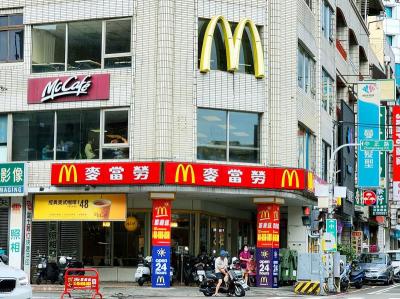
Fast food chain McDonald's is to raise prices by up to NT$5 on some products at its restaurants across Taiwan, starting on Wednesday next week, the company announced today. The prices of all extra value meals and sharing boxes are to increase by NT$5, while breakfast combos and creamy corn soup would go up by NT$3, the company said in a statement. The price of the main items of those meals, if ordered individually, would remain the same. Meanwhile, the price of a medium-sized lemon iced tea and hot cappuccino would rise by NT$3, extra dipping sauces for chicken nuggets would go up

Yangmingshan National Park’s Qingtiangang (擎天崗) nature area has gone viral after a park livestream camera observed a couple in the throes of intimate congress, which was broadcast live on YouTube, drawing large late-night crowds and sparking a backlash over noise, bright lights and disruption to wildlife habitat. The area’s livestream footage appeared to show a couple engaging in sexual activity on a picnic table in the park on Friday last week, with the uncensored footage streamed publicly online. The footage quickly spread across social media, prompting a tide of visitors to travel to the site to “check in” and recreate the

Minister of Digital Affairs Lin Yi-ching (林宜敬) yesterday cited regulatory issues and national security concerns as an expert said that Taiwan is among the few Asian regions without Starlink. Lin made the remarks on Facebook after funP Innovation Group chief executive officer Nathan Chiu (邱繼弘) on Friday said Taiwan and four other countries in Asia — China, North Korea, Afghanistan and Syria — have no access to Starlink. Starlink has become available in 166 countries worldwide, including Ukraine, Malaysia, the Philippines and Vietnam, in the six years since it became commercial, he said. While China and North Korea block Starlink, Syria is not


 RSS
RSS