


Taiwan’s former representative to the US Joseph Wu (吳釗燮) yesterday questioned what was left of Taiwan’s sovereignty following the government’s approach in obtaining World Health Assembly (WHA) observer status via China.
Wu made the statements at a symposium organized by the Taiwan Thinktank on the country’s efforts to participate in international organizations.
Wu told the audience that the reason Taiwan’s past applications for WHA observer status were submitted by its allies was that the government had wanted to avoid falling into the “one China” trap. Wu said that this year Taiwan had accepted the “one China” framework and that when it wants to attend future international meetings it will have to obtain approval and an introduction from Beijing.
After 12 failed attempts, Taiwan was invited to attend this year’s WHA as an observer under the designation “Chinese Taipei.”
The government has said the invitation was the result of President Ma Ying-jeou’s (馬英九) policy of engaging China, but the Democratic Progressive Party contends that Taiwan’s sovereignty was compromised after a reports of a memorandum of understanding between the WHO and Beijing in 2005 stipulating that communication between the WHO and Taiwan only take place with Beijing’s consent.
Wu also disagreed with Ma’s statement that Taiwan’s admittance to the WHA under the designation “Chinese Taipei” did not denigrate Taiwan’s status because Taiwan uses “Chinese Taipei” when participating in other international organizations.
Although Taiwan participates in the Asian Development Bank, the International Olympic Committee and APEC under the name “Chinese Taipei,” Wu said Taiwan does so as an independent member, but the Ma administration had not clearly said whether Taiwan was an independent attendant at the WHA.
Wu said the government’s unwillingness to let the public know who is talking to China, what they are talking about or what agreements have been reached between the WHO and China have led the public to question whether the government has bargained away Taiwan’s sovereignty.
Taiwan Thinktank chairman Chen Po-chih (陳博志) compared the Ma administration’s approach to WHA participation to a variety show, saying that when an actor slipped up, other actors cover up the mistake by cheering and praising the actor’s skills. Chen said that while Taiwan is clearly being belittled, the government hurries to say that it is not.
“Ma may talk about China’s and Taiwan’s ‘mutual non-denial,’ but the correct term should really be ‘mutual non-denial of the other party’s lies,’” he said.
Soochow University political science professor Lo Chih-cheng (羅致政) said that while the government said it had achieved in one year what the previous DPP government could not achieve in eight, the fact was that in one year the Ma administration squandered all previous efforts to safeguard Taiwan’s sovereignty.
Lo also said the effort to gain WHA participation was like a relay race and that by participating in the WHA via China, Department of Health (DOH) Minister Yeh Ching-chuan (葉金川) had compromised past efforts and “dropped the baton.”
“Such a ‘minister of ignorance’ cannot be forgiven,” Lo said.
Former premier Yu Shyi-kun, another speaker at the forum, said that while Yeh calls himself an anti-SARS hero for setting up office at Taipei Municipal Hoping Hospital during the epidemic in 2003, “The people on the front line were the ones worthy of admiration.”
Simply going to the hospital did not qualify anyone to be called a hero, said Yu, who was premier when SARS hit Taiwan.
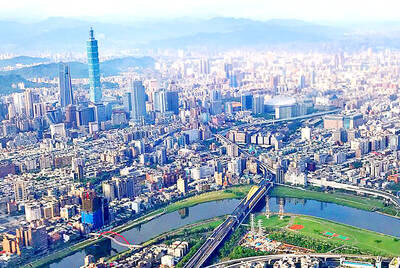
Taipei has once again made it to the top 100 in Oxford Economics’ Global Cities Index 2025 report, moving up five places from last year to 60. The annual index, which was published last month, evaluated 1,000 of the most populated metropolises based on five indices — economics, human capital, quality of life, environment and governance. New York maintained its top spot this year, placing first in the economics index thanks to the strength of its vibrant financial industry and economic stability. Taipei ranked 263rd in economics, 44th in human capital, 15th in quality of life, 284th for environment and 75th in governance,

The Sports Administration yesterday demanded an apology from the national table tennis association for barring 17-year-old Yeh Yi-tian (葉伊恬) from competing in the upcoming World Table Tennis (WTT) United States Smash tournament in Las Vegas this July. The sports agency said in a statement that the Chinese Taipei Table Tennis Association (CTTTA) must explain to the public why it withdrew Yeh from the WTT tournament in Las Vegas. The sports agency said it contacted the association to express its disapproval of the decision-making process after receiving a complaint from Yeh’s coach, Chuang
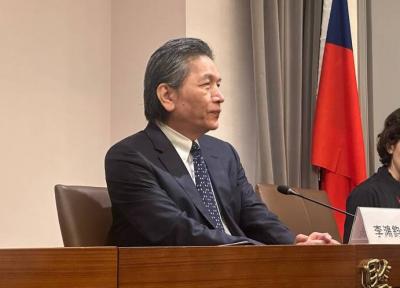
Control Yuan Secretary-General Lee Chun-yi (李俊俋) tendered his resignation last night, admitting that he had misused a government vehicle, as reported by media. His resignation was immediately accepted by the Control Yuan. In a statement explaining why he had resigned, Lee apologized for using a Control Yuan vehicle to transport his dog to a pet grooming salon on May 20. The issue first came to light late last month, when TVBS News reported that Lee had instructed his driver to take the dog to the salon. The news channel broadcast photos that it said were taken by an unnamed whistle-blower, which purportedly showed the
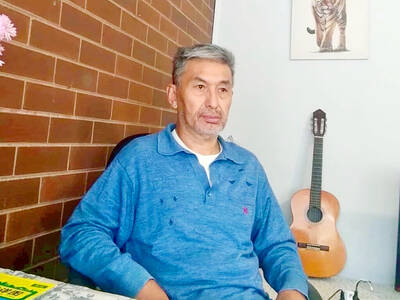
A former officer in China’s People’s Liberation Army (PLA) who witnessed the aftermath of the 1989 Tiananmen Square massacre has warned that Taiwan could face a similar fate if China attempts to unify the country by force. Li Xiaoming (李曉明), who was deployed to Beijing as a junior officer during the crackdown, said Taiwanese people should study the massacre carefully, because it offers a glimpse of what Beijing is willing to do to suppress dissent. “What happened in Tiananmen Square could happen in Taiwan too,” Li told CNA in a May 22 interview, ahead of the massacre’s 36th anniversary. “If Taiwanese students or


 RSS
RSS