


Taiwan should seek to bolster diplomatic ties with developing nations via the “Aid for Trade” initiative espoused by the WTO in 2005, the Council for Economic Planning and Development (CEPD) said yesterday.
Since the initiative was proposed at a WTO ministerial meeting in Hong Kong in December 2005, the world’s major economic powers, including Japan, the US and the EU, have committed to giving financial aid via multilateral mechanisms such as the WTO and the World Bank to help developing or least-developed countries expand business opportunities and trade prospects, a CEPD official said, who declined to be named.
“Taiwan should go with the trend to use this ‘Aid for Trade’ initiative to increase bilateral cooperation and build mutual trust with other nations, whether or not they maintain formal diplomatic relations with the country,” the official said. “By doing so, the nation can also materialize President Ma Ying-jeou’s (馬英九) ‘modus vivendi’ diplomatic strategy.”
Ma, who took office on May 20, has been touting his “modus vivendi” diplomatic strategy to seek more international space for Taiwan. Ma has said the goal of the approach is to safeguard Taiwan’s rights while consolidating diplomatic relations with its allies and restoring mutual trust with countries that heavily influence Taiwan even in the absence of formal diplomatic ties.
Taiwan is a full WTO member.
The WTO-initiated “Aid for Trade” program helps developing countries, and least-developed countries in particular, to build the trade capacity and infrastructure they need to benefit from trade opening.
Part of the program for overall Official Development Assistance (ODA) — grants and concessional loans that key member countries of the Organization for Economic Cooperation and Development (OECD) have been working on over the past several years — “Aid for Trade” targets trade-related programs and projects.
It is designed mainly to help the world’s 40 to 50 least-developed countries to develop convenient and speedy trade systems, including nurturing customs officials and officials for international trade negotiations; lowering cross-border trade barriers and strengthening infrastructure development relevant to international trade, such as the development of port facilities and highways, the official said.
Taiwan has accumulated rich experience and know-how after decades of providing assistance to its diplomatic allies — efforts that include providing consultancy services for small and medium-sized enterprises, vocational training, agricultural and fishery aid and aid to help the country’s allies build their own telecommunication and other high-technology infrastructure, he said.
Taiwan has made significant contributions in the international domain, offering training in trade facilitation and customs procedures to less-developed countries, as well as helping improve their port facilities, he said.
The official also quoted an OECD report from last year as indicating that the amounts that OECD member countries committed to providing to the least-developed countries in trade-related ODA increased to US$67.5 billion from US$51 billion between 2002 and 2005.
OECD data shows that trade-related ODA commitments have been running at about US$25 billion to US$30 billion a year over the past few years, which is around 30 percent of the total ODA.
Meanwhile, figures from the Ministry of Foreign Affairs and the OECD show that Taiwan provided US$515 million in international assistance last year, accounting for 0.13 percent of its GDP, while advanced and developed countries averaged 0.28 percent of GDP in foreign aid expenditures.
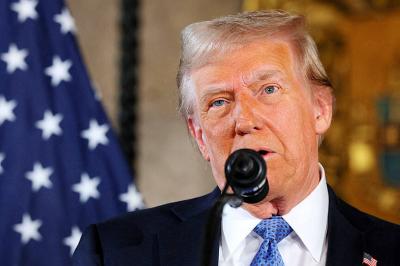
US President Donald Trump said "it’s up to" Chinese President Xi Jinping (習近平) what China does on Taiwan, but that he would be "very unhappy" with a change in the "status quo," the New York Times said in an interview published yesterday. Xi "considers it to be a part of China, and that’s up to him what he’s going to be doing," Trump told the newspaper on Wednesday. "But I’ve expressed to him that I would be very unhappy if he did that, and I don’t think he’ll do that," he added. "I hope he doesn’t do that." Trump made the comments in
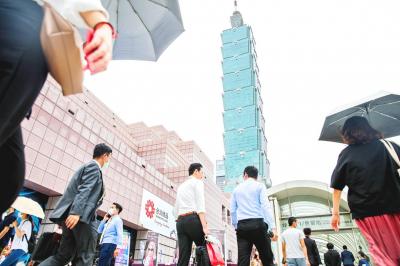
Japanese footwear brand Onitsuka Tiger today issued a public apology and said it has suspended an employee amid allegations that the staff member discriminated against a Vietnamese customer at its Taipei 101 store. Posting on the social media platform Threads yesterday, a user said that an employee at the store said that “those shoes are very expensive” when her friend, who is a migrant worker from Vietnam, asked for assistance. The employee then ignored her until she asked again, to which she replied: "We don't have a size 37." The post had amassed nearly 26,000 likes and 916 comments as of this
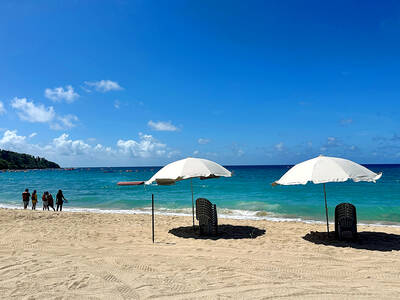
Tourism in Kenting fell to a historic low for the second consecutive year last year, impacting hotels and other local businesses that rely on a steady stream of domestic tourists, the latest data showed. A total of 2.139 million tourists visited Kenting last year, down slightly from 2.14 million in 2024, the data showed. The number of tourists who visited the national park on the Hengchun Peninsula peaked in 2015 at 8.37 million people. That number has been below 2.2 million for two years, although there was a spike in October last year due to multiple long weekends. The occupancy rate for hotels
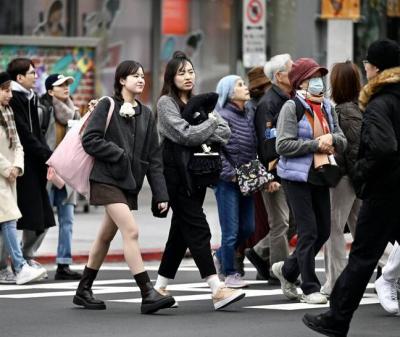
A cold surge advisory was today issued for 18 cities and counties across Taiwan, with temperatures of below 10°C forecast during the day and into tonight, the Central Weather Administration (CWA) said. New Taipei City, Taipei, Taoyuan and Hsinchu, Miaoli and Yilan counties are expected to experience sustained temperatures of 10°C or lower, the CWA said. Temperatures are likely to temporarily drop below 10°C in most other areas, except Taitung, Pingtung, Penghu and Lienchiang (Matsu) counties, CWA data showed. The cold weather is being caused by a strong continental cold air mass, combined with radiative cooling, a process in which heat escapes from


 RSS
RSS