


Suicide is the second most common cause of death among teenagers, the Department of Health said yesterday at a campaign activity to raise public awareness of the issue.
At the activity in Taipei’s Ximen Pedestrian Area, the Taiwan Suicide Prevention Center (TSPC) joined forces with the Sun-yang Social Welfare Foundation and Taipei’s health bureau to raise awareness of the warning signs and how to prevent teen suicides.
The department founded the center three years ago to combat suicide, which had been the ninth most common cause of death in Taiwan for 10 years, TSPC director Lee Ming-been (李明濱) said.
“Compared with the overall suicide rate, which dropped by about 10.7 percent from 2006 to 2007, the suicide rate in the 15 to 24-year age bracket increased by 2.9 percent, showing that attention must be paid to the mental health of this age group,” he said.
Lee, a psychiatry professor at the National Taiwan University College of Medicine as well as a practicing psychiatrist, said that teen suicide should be of particular concern as the nation’s birth rate is dropping.
“Every month, the TSPC receives about 400 suicide attempt calls for teens, 50 percent of which are related to relationship problems, while around 30 percent are due to psychological problems,” Lee said.
Stress experienced by teens can be particularly intense during the months of June and July, Lee said.
Many students graduate around this time and face the challenge of finding employment, which can be daunting and stressful.
“The center has three strategies to reduce the nation’s suicide rate: While those who have attempted suicide are cared for, the center also reaches out to those with anxiety, depression or substance abuse problems, and holds activities like today’s to promote mental health awareness,” he said.
The center also promotes stress management and seeks to spread information through the media, Lee said.
It has also distributed an emotional evaluation scale to primary care physicians, encouraging them to be the “gatekeepers” watching for people in need of help with emotional and psychological problems.
For those with loved ones who may be at risk, Lee said “the APR model should be utilized — ‘A’ for asking, to show that you care, and listen actively; ‘P’ for persuasion by responding appropriately and offering company; and ‘R’ for referring, meaning seeking professional resources and help if needed.”
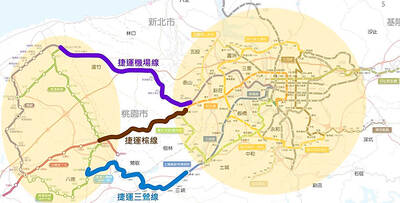
The Executive Yuan yesterday approved a southwestern extension of the Sanying MRT Line from New Taipei to Bade District (八德) in Taoyuan, with a goal of starting construction by late 2026. The 4.03-kilometer extension, featuring three new stations, will run from the current terminus at Yingtao Fude Station (LB12) in New Taipei City to Dannan Station (LB14), where it will connect with Taoyuan’s Green Line, New Taipei City Metro Corp said in a statement. This extension will follow the completion of core Sanying Line, a 14.29-kilometer medium-capacity system linking Tucheng (土城), Sansia (三峽)

CARGO LOSS: About 50 containers at the stern of the ‘Ever Lunar’ cargo ship went overboard, prompting the temporary closure of the port and disrupting operations Evergreen Marine Corp, Taiwan’s largest container shipper, yesterday said that all crew members aboard the Ever Lunar (長月) were safe after dozens of containers fell overboard off the coast of Peru the previous day. The incident occurred at 9:40am on Friday as the Ever Lunar was anchored and waiting to enter the Port of Callao when it suddenly experienced severe rolling, Evergreen said in a statement. The rolling, which caused the containers to fall, might have been caused by factors including a tsunami triggered by an earthquake in Russia, poor winter sea conditions in South America or a sudden influx of waves,

The Ministry of Culture yesterday officially launched the “We TAIWAN” cultural program on Osaka’s Nakanoshima sandbank, with the program’s mascot receiving overwhelming popularity. The cultural program, which runs from Aug. 2 to 20, was designed to partner with and capitalize on the 2025 World Expo that is being held in Osaka, Japan, from April 13 to Oct. 13, the ministry said. On the first day of the cultural program, its mascot, a green creature named “a-We,” proved to be extremely popular, as its merch was immediately in high demand. Long lines formed yesterday for the opening
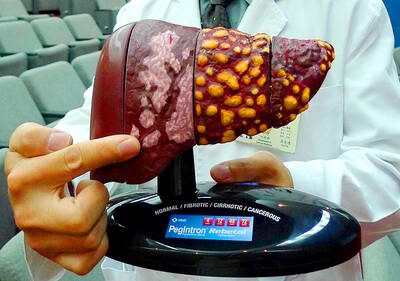
STAY VIGILANT: People should reduce the risk of chronic liver inflammation by avoiding excessive alcohol consumption, smoking and eating pickled foods, the physician said A doctor last week urged people to look for five key warning signs of acute liver failure after popular producer-turned-entertainer Shen Yu-lin (沈玉琳) was reportedly admitted to an intensive care unit for fulminant hepatitis. Fulminant hepatitis is the rapid and massive death of liver cells, impairing the organ’s detoxification, metabolic, protein synthesis and bile production functions, which if left untreated has a mortality rate as high as 80 percent, according to the Web site of Advancing Clinical Treatment of Liver Disease, an international organization focused on liver disease prevention and treatment. People with hepatitis B or C are at higher risk of


 RSS
RSS