


The Ministry of Transportation and Communications (MOTC) is set to present a new version of the airport special zone bill, which clearly states that both the Civil Aeronautics Administration (CAA) and the local government would remain the authorities regulating the development of the zone.
Minister of Transportation and Communications Mao Chi-kuo (毛治國) said the special zone would be located outside the airport facilities, which would be designated as a privileged tariff zone for corporations and be jointly developed by the central and local government.
“It’s like a fried egg. You have the yolk and the egg white,” Mao told reporters on Friday night. “The yolk contains the airport and the special zone.”
Businesses allowed to set up operations in the special zone would be those listed in the Regulations of Installation and Management at Free Trade Ports and Zones (自由貿易港區設置管理條例), Mao said, adding that the ministry was considering allowing other businesses with activities related to airport operations — such as logistics, services, transit hotels, conference halls and exhibition halls — to open there as well.
Businesses that do not need any preferential tariffs could choose to set up operations within the “egg white,” which would also be regulated by the local government, Mao said, adding that at the initial stage, the bill would only apply to the development at Taiwan Taoyuan International Airport.
While both the central and local government would be allowed to outsource the management of the special zone in line with the Act for Promotion of Private Participation in Infrastructure Projects (促進民間參與公共建設法), Mao said management of the airport would not be handled by a private contractor at the initial stage.
Mao said that revenues generated at the airport, such as landing and departure fees, would still go to the Civil Aviation Operation Fund (民航作業基金).
However, additional revenues generated by the Special Zone would be handed to the central government and distributed for other purposes.
As the bill would regulate more than just the business sector, however, the ministry would have to negotiate with other departments, he said.
Mao’s “fried-egg theory” establishes both the conceptual and legal frameworks for the airport special zone, which makes the bill drastically different from the one proposed by Chinese Nationalist Party (KMT) lawmakers.
The bill proposed by KMT lawmakers said that the airport special zone consists of both the airport and land surrounding the airport. The size of the land, however, was unspecified.
The KMT bill states that the zone would be managed by a board of trustees, which would select a chairperson to oversee daily operations. Government resources, including airport facilities, airport police and state-owned land, would be placed under the chairperson’s authority.
Inside the zone, investors would be exempt from following the existing regulations, such as the Labor Standard Laws (勞動基準法) and would rather be subject to the special zone bill.
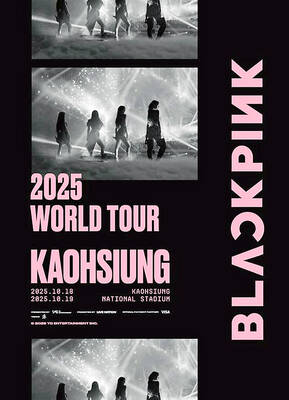
South Korean K-pop girl group Blackpink are to make Kaohsiung the first stop on their Asia tour when they perform at Kaohsiung National Stadium on Oct. 18 and 19, the event organizer said yesterday. The upcoming performances will also make Blackpink the first girl group ever to perform twice at the stadium. It will be the group’s third visit to Taiwan to stage a concert. The last time Blackpink held a concert in the city was in March 2023. Their first concert in Taiwan was on March 3, 2019, at NTSU Arena (Linkou Arena). The group’s 2022-2023 “Born Pink” tour set a

CPBL players, cheerleaders and officials pose at a news conference in Taipei yesterday announcing the upcoming All-Star Game. This year’s CPBL All-Star Weekend is to be held at the Taipei Dome on July 19 and 20.
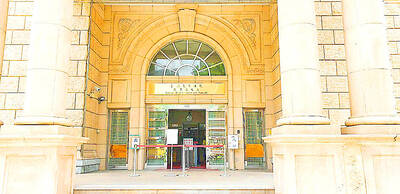
The Taiwan High Court yesterday upheld a lower court’s decision that ruled in favor of former president Tsai Ing-wen (蔡英文) regarding the legitimacy of her doctoral degree. The issue surrounding Tsai’s academic credentials was raised by former political talk show host Dennis Peng (彭文正) in a Facebook post in June 2019, when Tsai was seeking re-election. Peng has repeatedly accused Tsai of never completing her doctoral dissertation to get a doctoral degree in law from the London School of Economics and Political Science (LSE) in 1984. He subsequently filed a declaratory action charging that
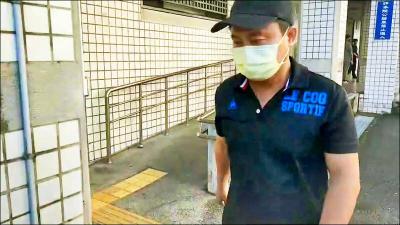
The Hualien Branch of the High Court today sentenced the main suspect in the 2021 fatal derailment of the Taroko Express to 12 years and six months in jail in the second trial of the suspect for his role in Taiwan’s deadliest train crash. Lee Yi-hsiang (李義祥), the driver of a crane truck that fell onto the tracks and which the the Taiwan Railways Administration's (TRA) train crashed into in an accident that killed 49 people and injured 200, was sentenced to seven years and 10 months in the first trial by the Hualien District Court in 2022. Hoa Van Hao, a


 RSS
RSS