

Taipei Times: First of all, can you give a brief introduction to your organization?
Dhondup Dorjee Shokda: When His Holiness [the Dalai Lama] took asylum in India after the failed national uprising in 1959, he was followed by some 80,000 Tibetans.
Having realized that the Tibet issue cannot be resolved in a short time, His Holiness started a Tibetan refugee school to provide modern education.
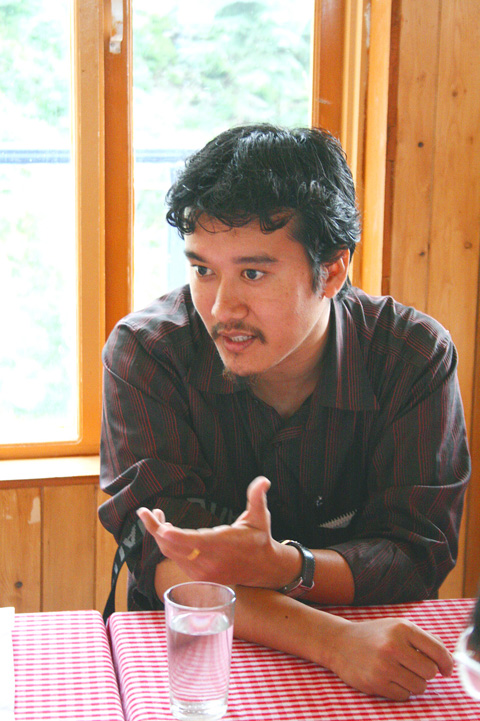
PHOTO: LOA IOK-SIN, TAIPEI TIMES.
Those Tibetans who had a blend of traditional education in Tibet and modern education in India — some even studied abroad — began to gather and discuss the future of Tibet. They felt that they needed a common platform for the freedom movement to move on, so, after several meetings, these youngsters officially established the TYC on Oct. 7, 1970, in Dharamsala.
The TYC’s inauguration was blessed by the Dalai Lama, and all Tibetans were for independence at the time.
From the 1970s to the 1980s, we mainly focused on community works, including community cleanness drives, road construction and repair, building public toilets, to gather support and to be more connected with our communities.
In the 1980s and 1990s, we began our political campaign — we represented the Tibetans at UN conferences and organized demonstrations and hunger strikes.
Today, we have 30,000 registered active members and over 80 regional chapters worldwide, and our funding depends completely on membership fees, regional chapter contributions and a small amount of individual donations — we don’t accept any foreign funding so that we can be free of their influence.
TT: As you mentioned, the Dalai Lama gave his blessing when the TYC was founded in 1970. But how come there are such differences of opinion on Tibetan independence and on the Beijing Olympics?
Dhondup: The Dalai Lama and the exiled government have shifted their position, but we have not. From the beginning, the very existence of this organization is based on the political ideology to seek complete independence [for Tibet].
We understand that he [the Dalai Lama] is trying to compromise and propose a new solution — but he clearly stated that it’s his own solution, and that in the end, it’s the Tibetans who will decide.
Today, His Holiness is not just a leader of Tibetans; he has so many other responsibilities. For example, he is a world leader in promotion of humanitarian values, harmony and peace. We’re not the Dalai Lama.
If China says today that they would give independence to Tibet if the Dalai Lama would kill a dog, he would not kill a dog. But for other Tibetans like me, I’d kill a hundred dogs if Tibet is getting independence.
So, there is a difference but nothing conflicting and contradicting at this point — the bottom line should be understood that whatever the Dalai Lama is demanding today, he’s demanding for 6 million Tibetans, whatever the Youth Congress is doing, we’re also doing it for the 6 million Tibetans.
TT: There are only about two months left before the Beijing Olympics open on Aug. 8. What plans do you have to protest the Olympics?
Dhondup: Many journalists have asked me about TYC activities and I told them we actually don’t need to organize any activities — just look at how the torch relay was carried out in a cage around the world, and many non-Tibetans are introduced to the Tibet issues because of it.
In fact, we’re trying to approach some participants in the Olympics and national Olympic committees. Maybe not to ask them to withdraw from the Games, but at least to make some protest gestures after winning their medals.
I have to stress that we’re not against sports or the Olympics. It’s just that communist China — which doesn’t have the people’s mandate and keeps Tibet under occupation — doesn’t deserve to host the Olympics.
TT: Have any athletes responded positively to your request?
Dhondup: It’s very difficult to get in touch with the athletes. You have to first confirm who have been selected and who are participating. Of course I can’t give you any names, but there are some athletes who are approaching the end of their career, [and] may be playing in the Olympic games for the last time — we’re trying to get hold of some of them to highlight the Tibet issue.
TT: Some media call you a terrorist organization, especially after the TYC president mentioned that suicide bombs could be used for the Tibetan independence movement in the future, in an interview published by the Italian newspaper Corriere della Sera.
Dhondup: The president [of TYC] has responded several times that he never made such a statement, and we’re not sure how it came up in the newspaper. And the [Chinese state-run] Xinhua news agency reported on it — they’ve been waiting for an opportunity since the beginning to dub the TYC a terrorist outlet. Our activities are very open and transparent, we’re not underground. We meet here on the ground and everything is on the table.
Today China is targeting the Dalai Lama and the TYC because they know the TYC has the potential to lead the [Tibetan] people in the coming decade, when the Tibetan movement takes a different shape. This movement can lead the people, even in the absence of the Dalai Lama.
TT: There are many Tibetans living in exile who seem to care more about improving their personal lives than fighting for Tibetan independence. How do you think this situation may impact the Tibetan movement?
Dhondup: Yeah, there are actually some people like that. Today, especially Tibetans in Taiwan and in Western countries, they work jobs that are less than decent and have to support themselves. They may not care, or even they may say they don’t want Tibetan independence, but I guarantee you, once something happens in Tibet, they will not keep quiet.
This was the case when demonstrators in Lhasa were violently cracked down on by Chinese authorities in March — Tibetans around the world just came out without anybody asking them to.
Some Tibetans in Taiwan may have Taiwanese citizenship, but they know that inside, they’re not Taiwanese. Like me, I can get Indian citizenship, get married to an Indian girl and run a hotel — but if the hotel runs too well, the local Indians may not be happy and they can just chase me out.
But if there are Tibetans who really don’t care, then it would be better if they stay out. Rather than having uninterested people in our movement, it’s better not have them at all.
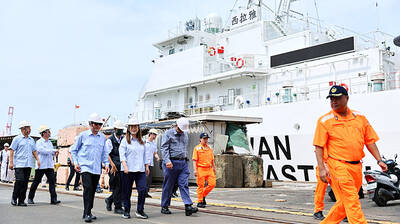
Ocean Affairs Council (OAC) Minister Kuan Bi-ling (管碧玲) on Wednesday said decommissioned coast guard vessels were given to the Philippines to enhance regional rescue capacity and would not affect Taiwanese fishers’ rights and benefits. Kuan made the remarks after confirmation on Tuesday that a 500-tonne Coast Guard Administration (CGA) patrol and rescue vessel would be given to the Philippine Coast Guard. The donation ceremony was reportedly done in Manila, but whether the vessel — previously numbered “CG123” and named Kinmen (金門) — has been handed over has yet to be confirmed. China’s Taiwan Affairs Office (TAO) on Wednesday criticized the donation for “taking
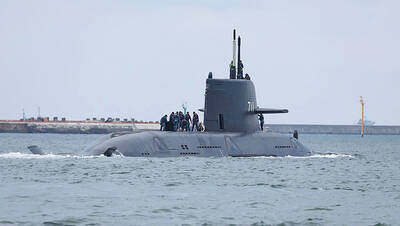
UPDATE: The submarine would need to undergo combined systems testing and crew training for navy personnel before it is ready for mission, an expert said Taiwan’s first domestically built submarine, the Hai Kun (Narwhal, 海鯤), could be delivered to the navy as early as next month, military expert and Taiwan Association for Security and Development chairman Chi Tung-yun (紀東昀) said yesterday. The submarine was yesterday morning observed departing for its 21st sea trial and its 15th submerged test. The vessel missed the initial delivery deadline of November last year due to “testing delays,” its primary contractor, shipbuilder CSBC Corp, Taiwan, said in June. The contractor also cited “political pressure from China” in procuring critical equipment. All testing operations are in the final stages, with the
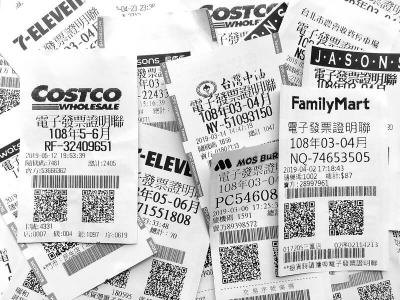
Six NT$10 million (US$315,527) special prizes and seven NT$2 million grand prizes in Taiwan's May-June uniform invoice lottery remained unclaimed as of today, including one NT$10 million winner who spent only NT$10 on an Uber Eats delivery order, the Ministry of Finance said. The ministry said the 13 winners need to claim their prizes by Nov. 5. The eight-digit serial number that won the NT$10 million special prize for May-June was 38548029, with 18 winning receipts in total. The NT$2 million grand prize number was 10138845, of which there were 22 winning receipts, the ministry said. In addition to the receipt issued for an
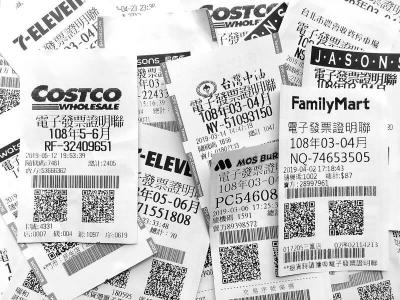
The Ministry of Finance today announced the winning numbers for the July-August uniform invoice lottery. The winning number for the NT$10 million (US$314,663) special prize is 89996565, while the winning number for the NT$2 million grand prize is 91098182. Three numbers were drawn for the NT$200,000 first prize: 54348835, 44991397 and 06595111. Those with receipts matching the last seven digits of any of the first-prize numbers can claim the NT$40,000 second prize, while those matching the last six digits qualify for the NT$10,000 third prize. Those whose receipts match the last five digits of the first-prize numbers are eligible for the NT$4,000 fourth prize,


 RSS
RSS