


Taiwan will soon launch the Pacific Greenhouse Gases Measurement (PGGM) project, an international initiative that will provide valuable insights into the extent of climate change, the National Science Council (NSC) said at a press conference yesterday.
“This is an exciting moment for Taiwan,” said project leader Wang Kuo-ying (王國英), a professor at National Central University’s department of atmospheric sciences.
Global warming is the most serious challenge to the human race this century, Wang said, adding that “observation of the atmosphere would be the first step by which scientists can understand the actual extent and impact of greenhouse gas density increases and the resulting climate change.”
Prior to Taiwan’s participation, Japan and the EU launched separate projects in the early 1990s to observe global greenhouse gas movement patterns, using advanced air monitoring equipment fitted onto commercial airplanes, Wang said.
Taiwan’s PGGM will bridge the two large-scale projects by collaborating with Japan and the EU. The PGGM will therefore become the largest global warming observatory effort in the world and will complement the existing projects in important ways, Wang said.
“Starting next summer, the university will bring the NSC, the Environmental Protection Administration, as well as two commercial partners [China Airlines (CAL) and Evergreen Marine Corp], under the same umbrella to monitor and provide the world with helpful information on the carbon transport cycle in the northern Pacific,” Wang said.
While Europe’s In-service Aircraft for a Global Observing System (IAGOS) and its predecessor, Measurements of Ozone and Water Vapor by Airbus In-Service Aircraft (MOZAIC), have been in operation since 1993, they have lacked data from the northern Pacific Ocean as well as the southern hemisphere, Wang said.
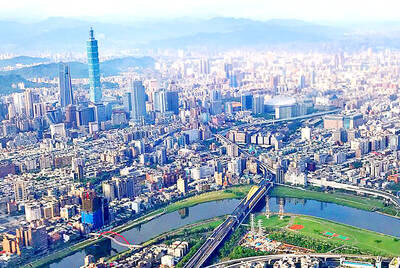
Taipei has once again made it to the top 100 in Oxford Economics’ Global Cities Index 2025 report, moving up five places from last year to 60. The annual index, which was published last month, evaluated 1,000 of the most populated metropolises based on five indices — economics, human capital, quality of life, environment and governance. New York maintained its top spot this year, placing first in the economics index thanks to the strength of its vibrant financial industry and economic stability. Taipei ranked 263rd in economics, 44th in human capital, 15th in quality of life, 284th for environment and 75th in governance,

The Sports Administration yesterday demanded an apology from the national table tennis association for barring 17-year-old Yeh Yi-tian (葉伊恬) from competing in the upcoming World Table Tennis (WTT) United States Smash tournament in Las Vegas this July. The sports agency said in a statement that the Chinese Taipei Table Tennis Association (CTTTA) must explain to the public why it withdrew Yeh from the WTT tournament in Las Vegas. The sports agency said it contacted the association to express its disapproval of the decision-making process after receiving a complaint from Yeh’s coach, Chuang
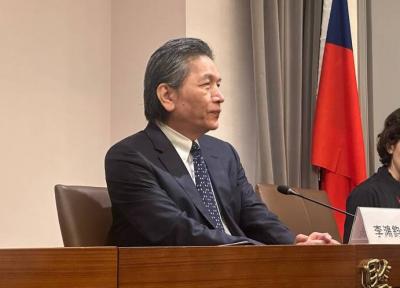
Control Yuan Secretary-General Lee Chun-yi (李俊俋) tendered his resignation last night, admitting that he had misused a government vehicle, as reported by media. His resignation was immediately accepted by the Control Yuan. In a statement explaining why he had resigned, Lee apologized for using a Control Yuan vehicle to transport his dog to a pet grooming salon on May 20. The issue first came to light late last month, when TVBS News reported that Lee had instructed his driver to take the dog to the salon. The news channel broadcast photos that it said were taken by an unnamed whistle-blower, which purportedly showed the

Democratic Progressive Party caucus chief executive Rosalia Wu, front, grabs the pennant in a dragon boat race hosted by Qu Yuan Temple in the Shuanghsi River in Taipei’s Beitou District yesterday.


 RSS
RSS