

Having worked in his native Germany, in Amsterdam and now in Shanghai, the successful executive creative director of Wieden and Kenney, Frank Hahn, spoke in Taipei last Saturday on how to find unique inspiration instead of following advertising trends. He gave the Taipei Times an exclusive interview afterwards.
After studying at the Academy of Fine Arts in Braunschweig, Germany, Hahn began his career as an art director and creative director at various advertising agencies across Germany. But it was his work experience in Amsterdam that turned a new page in his life.
“Going to W[ieden] and K[ennedy] Amsterdam was mind-opening — I worked with the best talents from all over Europe in one spot,” he said. “And we worked hard — but we partied harder.”
The mixture of different cultures, talent and creative minds helped Hahn to see the “firework” of creativity, as he describes it.
After Amsterdam, he became head of a Wieden and Kennedy office in Shanghai.
After beginning with only 15 employees, he now has a full-time team of 100 working in the office.
In his first visit to Taiwan, Hahn observed something about local advertising.
“I like the TV works more than I like the print ones,” he said. “Because TV works are just more [up to] international standards than the print works.”
While saying that local TV commercials were more attractive to him, Hahn said he didn’t feel there was a cultural gap just because he was a Westerner.
“After all, I’ve stayed in China for two-and-a-half years now,” he said.
However, he believed that “just having advertisements tailor-made for a market doesn’t make it a great ad.”
Instead, a good advertising designer should add some international spice to local elements when creating an ad catered to a specific client or audience, he said.
“I’m not ignorant of local sentiment,” he said. “But I understand where a campaign is like another campaign, like another campaign, like another campaign, or it’s slightly different.”
“You want to make an identity — the product is different, the client is different, so you have to give each of your clients its own identity and get inspired by new things,” he said.
Observing life in Shanghai and taking pictures is one of his ways of finding inspiration, Hahn said.
“I photographed an amazingly relaxed dentist molding a denture in the middle of the street. Or a park filled up with wedding couples trying to find their hideaway spot for the picture of the most important day of their lives — only [with] the photographers desperately trying to find an angle to cut out the other couples. Or the pajama people on the streets in Shanghai — a unique example of social behavior in contrast to an amazingly modern China,” he said.
“These are simple life stories on the street. But that’s where the best stories, compositions or colors are hiding,” Hahn said.

A Hualien pomelo farmer refused to sell to China after the country announced it would permit more Taiwanese pomelo imports, prompting widespread support from Taiwanese consumers, who rallied to buy his fruit. China’s Taiwan Affairs Office last month said that China’s General Administration of Customs registered an additional 79 Taiwanese pomelo orchards and packing facilities in Hualien County, allowing more Taiwanese producers to export pomelos to China. “I am a Hualien fruit farmer and I refuse to sell to China,” Liu Tzu-hao (劉子豪) from Ruisui Township (瑞穗) said in an online post. Liu is a well-known farmer in the community and has served
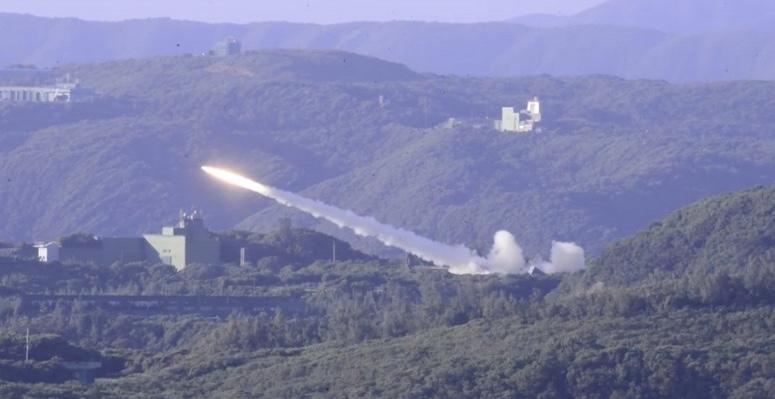
A Chinese military drone was spotted conducting reconnaissance off Taitung County as President William Lai (賴清德) visited Pingtung County this morning to inspect a drill of the armed forces’ precision-strike capabilities, prompting the military to closely monitor its actions. Today was the final day of a three-day military exercise at Jioupeng Base (九鵬基地) to test the joint combat capabilities of the armed forces and coast guard. The exercise began on Wednesday simulating air defense interception and yesterday tested long-range strike capabilities and new air defense weapons. This morning, the military conducted a final exercise involving air defense, anti-ship and drone operations. Military sources said

OCT. 31: The antiviral drugs Tamiflu and Eraflu have been distributed to about 4,000 medical facilities nationwide for people in seven groups who develop flu-like symptoms As the domestic influenza epidemic enters its peak season and continues to escalate, the Centers for Disease Control (CDC) yesterday announced that publicly funded influenza antiviral drugs for seven eligible groups have been extended to Oct. 31, allowing those who develop flu-like symptoms to receive the medication without undergoing a rapid influenza test. The CDC has extended the expanded use of flu antiviral drugs to seven groups: healthcare and influenza-prevention personnel; residents and staff at nursing homes, long-term care facilities and similar institutions; kindergarten and daycare workers and home-based caregivers; students from kindergarten through high school, vocational high school and the

Taiwanese Tsai Chin-shu (蔡金樹), who had been imprisoned in China for engaging in activity that “endangers national security,” said on Facebook on Friday that he has returned to Taiwan. Tsai, chairman of the Southern Taiwan Union of Cross-strait Relations Associations, had traveled frequently between Taiwan and China for years, and at one time ran a trading company in China’s Pingtan. In July 2018, he traveled to Quanzhou, Fujian Province, to attend a cross-strait food trade fair and stayed at a hotel in Xiamen. He checked out the following day and then disappeared. His family had made repeated appeals to the authorities


 RSS
RSS