


Taiwan fell four places to 17th place among 127 economies worldwide and ranked last among the “Four Asian Dragons” in the “networked readiness index (NRI),” a measure of competitiveness in the information, communication and technology (ICT) industry, a report from the the Geneva-based World Economic Forum showed.
The forum yesterday released The Global Information Technology Report 2007-2008, which is considered the world’s most comprehensive and authoritative international assessment of the impact of ICT on the development process and competitiveness of nations.
In the rankings, designed to examine how prepared countries are to use ICT effectively, Taiwan dropped to 17th place among the countries covered by the report, while Korea climbed 10 places to ninth position, overtaking Taiwan for the first time.
Taiwan was also placed behind Singapore, which ranked fifth, and Hong Kong, which ranked 11th.
“Korea offers a textbook example of how to quickly and advantageously join the knowledge economy, by adopting an integrated public-private strategy focused on Information & Communications Technology (ICT), innovation and education,” said Irene Mia, senior economist of the forum’s Global Competitiveness Network, in a press release.
Despite losing some ground this year, the report said, Taiwan is still ranked at a “satisfactory” place overall, showing its resilience as one of the world’s largest ICT exporters and producers and a leading innovator.
Taiwan ranked first place for high-tech exports and third for the number of registered utility patents, the report found.
“Taiwan’s development story is a textbook example of how a resource-poor rural economy can transform itself in the short span of three decades into a ICT powerhouse, thanks to coherent e-leadership from the government,” it said.
Denmark is the most networked economy, followed by Sweden, Switzerland, the US, Singapore, Finland, the Netherlands, Iceland, Korea and Norway.
China improved two places to 57th this year, showing weaknesses in its underdeveloped ICT infrastructure and scarce individual usage rates.
The index featured in the report covers three dimensions: general business as well as the regulatory and infrastructure environment for ICT; the readiness of the three key stakeholder groups — individuals, businesses and governments — to use and benefit from ICT; and their actual usage of the latest information and communication technologies available.

Fast food chain McDonald's is to raise prices by up to NT$5 on some products at its restaurants across Taiwan, starting on Wednesday next week, the company announced today. The prices of all extra value meals and sharing boxes are to increase by NT$5, while breakfast combos and creamy corn soup would go up by NT$3, the company said in a statement. The price of the main items of those meals, if ordered individually, would remain the same. Meanwhile, the price of a medium-sized lemon iced tea and hot cappuccino would rise by NT$3, extra dipping sauces for chicken nuggets would go up

Yangmingshan National Park’s Qingtiangang (擎天崗) nature area has gone viral after a park livestream camera observed a couple in the throes of intimate congress, which was broadcast live on YouTube, drawing large late-night crowds and sparking a backlash over noise, bright lights and disruption to wildlife habitat. The area’s livestream footage appeared to show a couple engaging in sexual activity on a picnic table in the park on Friday last week, with the uncensored footage streamed publicly online. The footage quickly spread across social media, prompting a tide of visitors to travel to the site to “check in” and recreate the

Minister of Digital Affairs Lin Yi-ching (林宜敬) yesterday cited regulatory issues and national security concerns as an expert said that Taiwan is among the few Asian regions without Starlink. Lin made the remarks on Facebook after funP Innovation Group chief executive officer Nathan Chiu (邱繼弘) on Friday said Taiwan and four other countries in Asia — China, North Korea, Afghanistan and Syria — have no access to Starlink. Starlink has become available in 166 countries worldwide, including Ukraine, Malaysia, the Philippines and Vietnam, in the six years since it became commercial, he said. While China and North Korea block Starlink, Syria is not
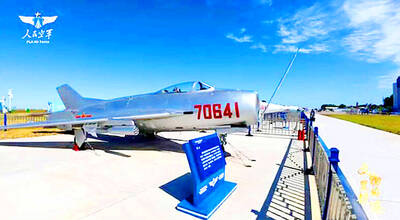
GROUNDED: A KMT lawmaker proposed eliminating drone development programs and freezing funding for counterdrone systems, despite China’s adoption of the technology China has deployed attack drones at air bases near the Taiwan Strait in a strategy aimed at overwhelming Taiwan’s air defense systems through saturation attacks, the Mainland Affairs Council (MAC) said. The council’s latest quarterly report on China said that satellite imagery and open-source intelligence indicate that the Chinese People’s Liberation Army (PLA) had converted retired J-6 fighter jets into J-6W drones, which the PLA has stationed at six air bases near Taiwan, five in China’s Fujian Province and one in Guangdong Province. The report cited J. Michael Dahm, a senior fellow at the US-based Mitchell Institute, as saying that China has


 RSS
RSS