


It is not always convenient to find a bathroom when one is on the road. However, a urologist warned yesterday that holding in your urine for too long can be bad for your health.
Chou Ku (
When the excess urine was removed from his bladder via a catheter, more than a liter was discovered, Chou said.
"There are many reasons for having difficulty passing water, such as bladder stones, a narrow urethra or an enlarged prostate," Chou said.
"However, in some instances, the reason is simply holding in the urine for too long," he said.
The average person feels the need to go to the bathroom when the bladder is filled with more than 150cc of urine. When the amount of urine accumulates to more than 400cc, the average person will begin to feel discomfort, Chou said.
In another case, a 54-year-old male avoided going to the bathroom because of the recent cold temperatures and an illness. Upon finding that he was developing difficulties when urinating, the man went to Chou and found that his inability to pass urine had already caused a urinary tract infection.
Chou said that if an individual persists in holding in urine when the bladder is very full, the inelastic nerves attached to the bladder walls could break, causing the patient to lose control of their bladder. After that happens they may then have difficulty urinating.
Long periods of catheterization and medication, from three to six months, are necessary for the patient recover. If the problem is not caught in time, serious complications such as urinary tract infections and vesicoureteric reflux can occur. The latter, if untreated, can lead to kidney damage, he said.
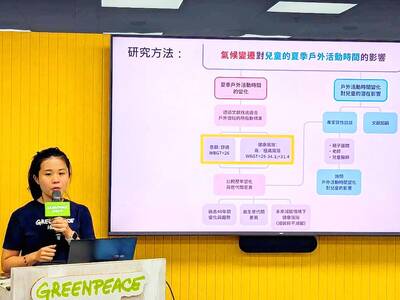
The government should improve children’s outdoor spaces and accelerate carbon reduction programs, as the risk of heat-related injury due to high summer temperatures rises each year, Greenpeace told a news conference yesterday. Greenpeace examined summer temperatures in Taipei, New Taipei City, Taoyuan, Hsinchu City, Taichung, Tainan and Kaohsiung to determine the effects of high temperatures and climate change on children’s outdoor activities, citing data garnered by China Medical University, which defines a wet-bulb globe temperature (WBGT) of 29°C or higher as posing the risk of heat-related injury. According to the Central Weather Administration, WBGT, commonly referred to as the heat index, estimates
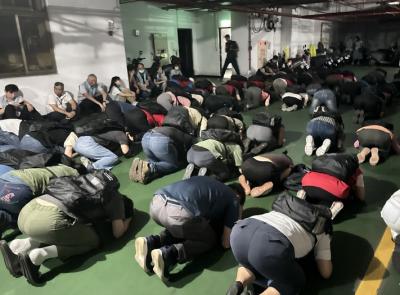
Taipei and other northern cities are to host air-raid drills from 1:30pm to 2pm tomorrow as part of urban resilience drills held alongside the Han Kuang exercises, Taiwan’s largest annual military exercises. Taipei, New Taipei City, Keelung, Taoyuan, Yilan County, Hsinchu City and Hsinchu County are to hold the annual Wanan air defense exercise tomorrow, following similar drills held in central and southern Taiwan yesterday and today respectively. The Taipei Mass Rapid Transit (MRT) and Maokong Gondola are to run as usual, although stations and passenger parking lots would have an “entry only, no exit” policy once air raid sirens sound, Taipei
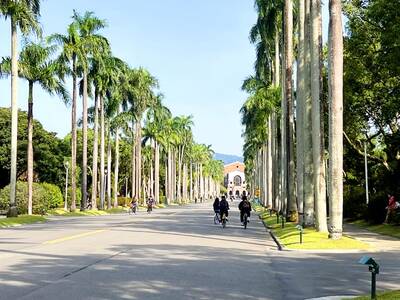
Taipei placed 14th in the Quacquarelli Symonds (QS) Best Student Cities 2026 list, its highest ever, according to results released yesterday. With an overall score of 89.1, the city climbed 12 places from the previous year, surpassing its previous best ranking of 17th in 2019. Taipei is “one of Asia’s leading higher-education hubs,” with strong employer activity scores and students “enjoying their experience of the city and often keen to stay after graduation,” a QS staff writer said. In addition to Taipei, Hsinchu (71st), Tainan (92nd), Taichung (113th) and Taoyuan (130th) also made QS’ list of the top 150 student cities. Hsinchu showed the

Environmental groups yesterday filed an appeal with the Executive Yuan, seeking to revoke the environmental impact assessment (EIA) conditionally approved in February for the Hsieh-ho Power Plant’s planned fourth liquefied natural gas (LNG) receiving station off the coast of Keelung. The appeal was filed jointly by the Protect Waimushan Seashore Action Group, the Wild at Heart Legal Defense Association and the Keelung City Taiwan Head Cultural Association, which together held a news conference outside the Executive Yuan in Taipei. Explaining the reasons for the appeal, Wang Hsing-chih (王醒之) of the Protect Waimushan Seashore Action Group said that the EIA failed to address


 RSS
RSS