


Its largesse may still help prop up the economies of some of the continent's poorest countries, but Taiwan is being slowly squeezed out of Africa as China's presence grows ever stronger.
Malawi last week became the fourth African country to switch diplomatic allegiance to Beijing since the Democratic Progressive Party came to power in 2000, leaving only Burkina Faso, Gambia, Swaziland and Sao Tome and Principe with links to Taipei.
"Malawi was afraid it would be left behind," said Edge Kanyongolo, a political analyst at the University of Malawi. "It was a bandwagon mentality."
Malawian President Bingu wa Mutharika's government has remained tight-lipped on what kind of sweeteners were offered, with some reports saying Beijing would fund a long-talked of waterway linking the landlocked country with the Indian Ocean.
"Malawians should look at the larger picture rather than talking about money because Malawi is not for sale," Malawian Foreign Minister Joyce Banda said.
Banda said the Cabinet had discussed the switch for the past three years and the final decision was made "after considering the socio-economic benefits to Malawi. The country stands to gain more from its relationship with China."
There is little disputing that Malawi, 60 percent of whose 12 million citizens live on less than US$1 a day, has gained much during the 42 years of ties with Taiwan.
Taiwanese cash, for example, paid for the only hospital in the north of the country, serving an estimated 1 million people, as well as underwriting many of the country's major highways and landmark buildings.
In Sao Tome and Principe, with its population of only 140,000, Taiwan's money has helped pay for a US$15 million power plant as well as the construction of a high school in the second city of Trindade.
As Sao Tome President Fradique de Menezes, who recently turned down an invitation to visit China, said: "We have relations with Taiwan which so far we have no reason to call into question."
Gambian President Yahya Jammeh meanwhile flies around in a plane paid for by Taipei, which also picked up the US$3.2 million tab to build a highway between the cities of Essau and Kerewan, known as the Taiwan Road.
As for Swaziland, Foreign Minister Mathendele Dlamini said that: "Taiwan has invested immensely in the development of the country, such that most of our rural people have electricity and water because of the Taiwanese."
"Taiwan has become more of a brother than a diplomatic friend, so it would not make sense for Swaziland to dump Taiwan," he said.
In Burkina Faso, a foreign ministry official described the ties with Taiwan as "exemplary," little wonder perhaps given Taiwan's help in financing a sports stadium and two international conference centers in the capital Ouagadougou.
However, the official also questioned whether the flow of cash from Taiwan could forever be reason enough not to embrace the regime in Beijing.
"At the moment, there are no signs of a break in ties but I have to ask myself how much longer this can go on for," the official said on condition of anonymity.
In return for tranches of aid, Taiwan expects its allies to push its case to join the UN and other international organizations.
Taiwan hosted a summit with the heads of its African allies last September which was perhaps most notable for being only a fraction of the size of a get-together hosted by China in November 2006.
The guests at that summit in Beijing included leaders of Liberia, Senegal and Chad, all of whom had been persuaded into changing alliances since the election of President Chen Shui-bian (陳水扁) in 2000.
The pomp and ceremony of the Beijing summit amply illustrated the importance that China now attaches to Africa, seen as a vital source of raw materials to fuel its economic boom.

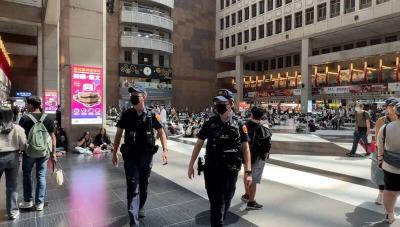
A drunk woman was sexually assaulted inside a crowded concourse of Taipei Railway Station on Thursday last week before a foreign tourist notified police, leading to calls for better education on bystander intervention and review of security infrastructure. The man, surnamed Chiu (邱), was taken into custody on charges of sexual assault, taking advantage of the woman’s condition and public indecency. Police discovered that Chiu was a fugitive with prior convictions for vehicle theft. He has been taken into custody and is to complete his unserved six-month sentence, police said. On Thursday last week, Chiu was seen wearing a white
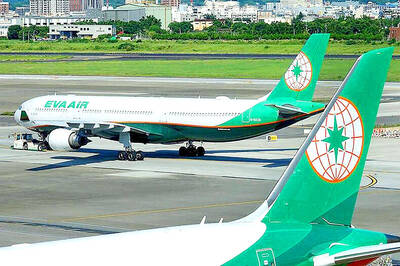
EVA Airways, one of the leading international carriers in Taiwan, yesterday said that it was investigating reports that a cabin crew manager had ignored the condition of a sick flight attendant, who died on Saturday. The airline made the statement in response to a post circulating on social media that said that the flight attendant on an outbound flight was feeling sick and notified the cabin crew manager. Although the flight attendant grew increasingly ill on the return flight, the manager did not contact Medlink — a system that connects the aircraft to doctors on the ground for treatment advice during medical
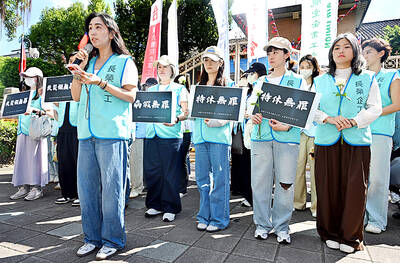
The Taoyuan Flight Attendants’ Union yesterday vowed to protest at the EVA Air Marathon on Sunday next week should EVA Airway Corp’s management continue to ignore the union’s petition to change rules on employees’ leave of absence system, after a flight attendant reportedly died after working on a long-haul flight while ill. The case has generated public discussion over whether taking personal or sick leave should affect a worker’s performance review. Several union members yesterday protested at the Legislative Yuan, holding white flowers and placards, while shouting: “Life is priceless; requesting leave is not a crime.” “The union is scheduled to meet with
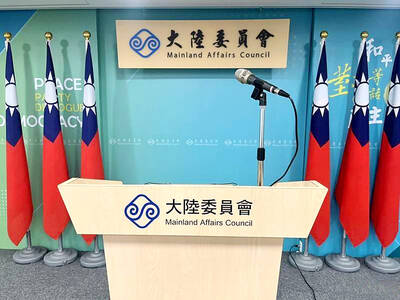
‘UNITED FRONT’ RHETORIC: China’s TAO also plans to hold weekly, instead of biweekly, news conferences because it wants to control the cross-strait discourse, an expert said China’s plan to expand its single-entry visa-on-arrival service to Taiwanese would be of limited interest to Taiwanese and is a feeble attempt by Chinese administrators to demonstrate that they are doing something, the Mainland Affairs Council said yesterday. China’s Taiwan Affairs Office (TAO) spokesman Chen Binhua (陳斌華) said the program aims to facilitate travel to China for Taiwanese compatriots, regardless of whether they are arriving via direct flights or are entering mainland China through Hong Kong, Macau or other countries, and they would be able to apply for a single-entry visa-on-arrival at all eligible entry points in China. The policy aims


 RSS
RSS