


President Chen Shui-bian (陳水扁) yesterday said it was not him but grassroots supporters who wanted former Democratic Progressive Party (DPP) legislator Luo Wen-jia (羅文嘉) to stand in the legislative elections in January.
Chen said his wife was once against his own election bids but in the end "put the interest of the whole above everything else."
Chen said he believed Luo would discuss the matter with his wife, who would also "put the interest of the whole above everything else" and let him stand in the election.
Chen made the remarks in Lujhou City (蘆洲), Taipei County, yesterday morning.
Chen said he realized elections are hard and understood why his and Luo's wife begrudged the toil they had to endure. He said that first lady Wu Shu-jen (吳淑珍) had once asked for a divorce because of his candidaciess but he had thanked her and respected her for "donating" him to the 23 million people of Taiwan.
Chen said he thought the young people the DPP have recruited to run in the legislative elections are outstanding but they should start as city councilors and gradually accumulate political capital.
He said he recognized and respected Luo's courage to stand in the district legislative elections because the constituency has traditionally been a stronghold of the pan-blue alliance led by the Chinese Nationalist Party (KMT).
He also praised Luo's decision to renounce his candidacy for a legislator-at-large as a "great" and "rare" decision.
Luo on Wednesday abandoned his bid for a legislator-at-large seat, but fell short of promising to stand in the district legislative elections.
Luo, who originally revealed on his Web log that he was interested in running for the legislature in Taipei's Da-an District (大安) constituency, said he needed time to discuss the issue with his wife, who is vehemently opposed to the idea.
Chen has invited Luo to replace Kao Chia-yu (高嘉瑜) -- a former aide of Luo's -- in the constituency. The DPP's Central Executive Committee on Wednesday agreed that Kao could withdraw from the election. Kao said that she would endorse Luo if he is interested in the bid and is nominated by the party.

A magnitude 6.1 earthquake struck off the coast of Yilan County at 8:39pm tonight, the Central Weather Administration (CWA) said, with no immediate reports of damage or injuries. The epicenter was 38.7km east-northeast of Yilan County Hall at a focal depth of 98.3km, the CWA’s Seismological Center said. The quake’s maximum intensity, which gauges the actual physical effect of a seismic event, was a level 4 on Taiwan’s 7-tier intensity scale, the center said. That intensity level was recorded in Yilan County’s Nanao Township (南澳), Hsinchu County’s Guansi Township (關西), Nantou County’s Hehuanshan (合歡山) and Hualien County’s Yanliao (鹽寮). An intensity of 3 was
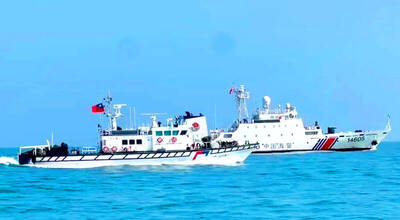
Instead of focusing solely on the threat of a full-scale military invasion, the US and its allies must prepare for a potential Chinese “quarantine” of Taiwan enforced through customs inspections, Stanford University Hoover fellow Eyck Freymann said in a Foreign Affairs article published on Wednesday. China could use various “gray zone” tactics in “reconfiguring the regional and ultimately the global economic order without a war,” said Freymann, who is also a nonresident research fellow at the US Naval War College. China might seize control of Taiwan’s links to the outside world by requiring all flights and ships entering or leaving Taiwan
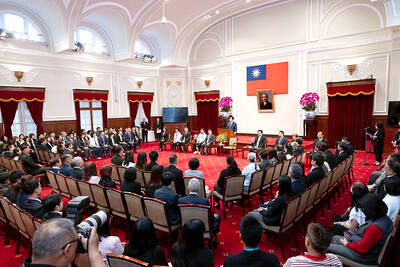
The next minimum wage hike is expected to exceed NT$30,000, President William Lai (賴清德) said yesterday during an award ceremony honoring “model workers,” including migrant workers, at the Presidential Office ahead of Workers’ Day today. Lai said he wished to thank the awardees on behalf of the nation and extend his most sincere respect for their hard work, on which Taiwan’s prosperity has been built. Lai specifically thanked 10 migrant workers selected for the award, saying that although they left their home countries to further their own goals, their efforts have benefited Taiwan as well. The nation’s industrial sector and small businesses lay
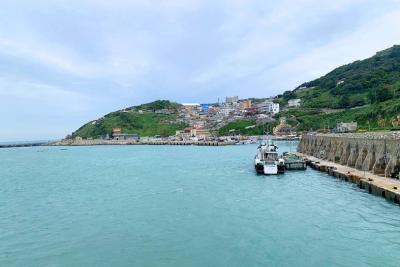
Taiwan has activated backup communications for its northernmost territory, the remote and strategically located island of Dongyin (東引), after poor weather conditions apparently shifted the wreckage of a ship onto an undersea cable causing it to break. The vulnerability of undersea communication cables linking Taiwan with its outlying islands has been a persistent cause of concern for Taipei, whose government has on several occasions blamed Chinese ships for intentionally causing damage. Dongyin, home to about 1,500 people, sits in a strategic position at the top of the Taiwan Strait and the island has a heavy military presence. It does not have an


 RSS
RSS