

The Ministry of Transportation and Communications will hold a public hearing toward the end of this month to discuss the possibility of amending driving regulations to curb the number of drink-related accidents.
Ying Chen-pong (尹承蓬), director general of the ministry's Department of Highways and Railways, said the talks would focus on several issues, including the feasibility of lowering the maximum blood alcohol level from 0.25mg to 0.15mg and stricter punishment for minor-aged drunk drivers.
Ying said they would also consider the possibility of amending the Criminal Law. While some articles could be used to arbitrate cases involving drunk driving, he said, the penalties could be lighter than those stated in the Act Governing the Punishment of Violation of Road Traffic Regulations (道路交通管理處罰條例).
As the Constitution states that Criminal Law supersedes administrative laws, drunk drivers may not be punished as harshly as they should, he said.
Ying noted that participants would also discuss the potential application of a zero-tolerance policy on drunk driving, which some countries have already adopted.
He said the conclusions reached during the hearing could be turned into a proposal within three months.
In related news, the ministry said yesterday it had proposed allowing large-size motorcycles with a cylinder capacity exceeding 550cc to operate on 16 expressways nationwide starting on Nov. 1, unless local governments state otherwise.
The proposal still needs the approval of the Executive Yuan.
Meanwhile, the ministry said laws regulating sedans would be applied to regulate large-size motorcycles.
Starting in November, owners of large motorcycles will be allowed to park in spaces reserved for sedans. They will be charged the same rate.
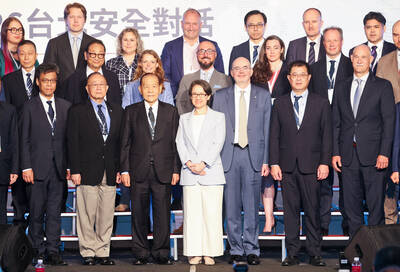
Taiwan’s growing defense preparations might be sending a stronger signal to the US than to Beijing, highlighting the need for Taipei to tailor its deterrence efforts to different audiences, a US security academic said yesterday. Stanford University Freeman Spogli Institute for International Studies fellow Oriana Skylar Mastro made the comment during a Taipei Security Dialogue panel examining lessons Taiwan could draw from the wars in Ukraine and the Middle East. Mastro said she was impressed by Taiwan’s increased defense spending, emphasis on asymmetric capabilities and efforts to prepare society for conflict, but questioned whom those initiatives were influencing. She said when she asked
A total of 400 foreign “high- level” professionals have been naturalized as Republic of China (Taiwan) citizens over the past decade as the government has eased nationality rules to attract talent from a wider range of fields, the Ministry of the Interior said yesterday. The 400th high-level professional, who works in the electronics industry, was approved for ROC citizenship on Aug. 26, the MOI said. The MOI quoted the newly naturalized citizen as saying that Taiwan is a leader in fields such as semiconductors, electronics manufacturing, artificial intelligence development and energy technology. He also said
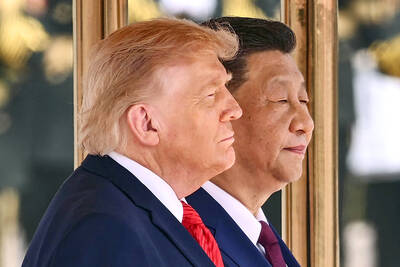
China has warned that it could cancel a planned US-China leaders’ summit if Washington approves new arms sales to Taiwan, a Japanese media outlet quoted sources as saying yesterday. US President Donald Trump, “apparently eager to showcase some diplomatic achievements ahead of November’s midterm congressional elections, places great importance on holding the summit with Chinese President Xi Jinping (習近平),” Japan’s Kyodo News reported. “While preparing for Xi’s upcoming trip, China has restated its position that the Taiwan issue is a ‘red line’ in bilateral relations,” the report said. The report said that when Xi met with Trump in Beijing in May, Xi said
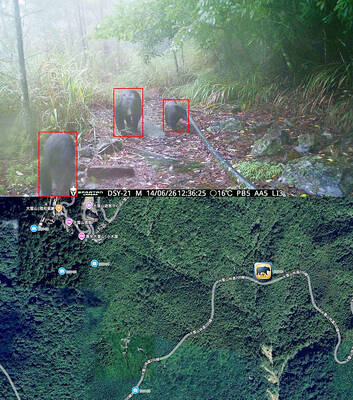
RARE PEEK: The footage released showed one of the bears staying in a cave for as long as 70 days, providing the first record of Formosan black bear’s overwintering The Forestry and Nature Conservation Agency yesterday released tracking records of released Formosan black bears for the first time, showing that they get much closer to human settlements than previously thought. The agency said it had captured two bears, Da Qu-ali (達古阿里) and Aziman (阿里曼), in indigenous villages in Hualien County and began to track them with a camera-mounted satellite collar after releasing them back into the wild. The results confirmed that the bears have moved from deep mountain areas into lowland hills closer to human communities, leading to an increase in human-bear conflicts, it said. The agency has introduced artificial intelligence-assisted early


 RSS
RSS