

The often overlooked problem of snoring could prove deadly on the roads, research conducted by the Council of Labor Affairs' Institute of Occupational Safety and Health shows.
A study targeting professional drivers above the age of 40 found that those who snore are more than twice as likely to become involved in a traffic accident than those who do not snore.
The study also found that one in five older drivers reported snoring.
In response to the study, sleep experts called upon those who snore and suffer from daytime drowsiness to see their doctor, as they could be at increased risk of accidents on the road.
Hsu Jin-huei (
"Known risk-factors such as long shifts and a history of traffic violations showed up in our study too," he said. "But the influence of snoring on traffic accidents should not be underestimated."
Snorers who drive small passenger vehicles are more than 2.33 times more likely to have an accident than non-snorers, while snorers who drive larger buses are 2.18 times more likely to get in an accident, Hsu's research showed.
Chang Gung Hospital's sleep center's chief physician Chen Ning-hung (
In a 1999 study published in the New England Journal of Medicine, snorers were six times more likely to have a traffic accident than the average driver, he said.
"The reason snoring appears to affect road safety is because snoring is associated with sleep apnea, which in turn affects a person's concentration during the day," he said.
One in four snorers suffer from sleep apnea, he said, but most sufferers of sleep apnea are unaware that they suffer from the condition.
Around 22 percent of the drivers in the institute's study reported snoring, yet only 0.3 percent said that they suffered from sleep apnea.
"Advanced countries including the US are very aware of the sleep apnea problem and have safety regulations to deal with the issue," Chen said. "But in this country, we have not addressed this risk at all."
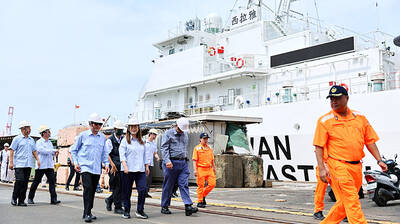
Ocean Affairs Council (OAC) Minister Kuan Bi-ling (管碧玲) on Wednesday said decommissioned coast guard vessels were given to the Philippines to enhance regional rescue capacity and would not affect Taiwanese fishers’ rights and benefits. Kuan made the remarks after confirmation on Tuesday that a 500-tonne Coast Guard Administration (CGA) patrol and rescue vessel would be given to the Philippine Coast Guard. The donation ceremony was reportedly done in Manila, but whether the vessel — previously numbered “CG123” and named Kinmen (金門) — has been handed over has yet to be confirmed. China’s Taiwan Affairs Office (TAO) on Wednesday criticized the donation for “taking
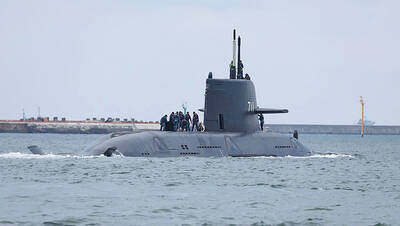
UPDATE: The submarine would need to undergo combined systems testing and crew training for navy personnel before it is ready for mission, an expert said Taiwan’s first domestically built submarine, the Hai Kun (Narwhal, 海鯤), could be delivered to the navy as early as next month, military expert and Taiwan Association for Security and Development chairman Chi Tung-yun (紀東昀) said yesterday. The submarine was yesterday morning observed departing for its 21st sea trial and its 15th submerged test. The vessel missed the initial delivery deadline of November last year due to “testing delays,” its primary contractor, shipbuilder CSBC Corp, Taiwan, said in June. The contractor also cited “political pressure from China” in procuring critical equipment. All testing operations are in the final stages, with the
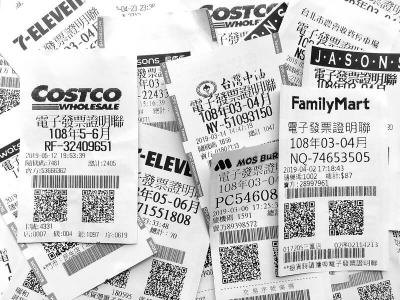
Six NT$10 million (US$315,527) special prizes and seven NT$2 million grand prizes in Taiwan's May-June uniform invoice lottery remained unclaimed as of today, including one NT$10 million winner who spent only NT$10 on an Uber Eats delivery order, the Ministry of Finance said. The ministry said the 13 winners need to claim their prizes by Nov. 5. The eight-digit serial number that won the NT$10 million special prize for May-June was 38548029, with 18 winning receipts in total. The NT$2 million grand prize number was 10138845, of which there were 22 winning receipts, the ministry said. In addition to the receipt issued for an
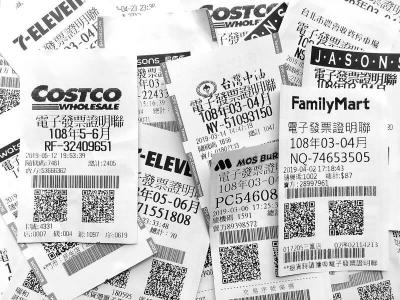
The Ministry of Finance today announced the winning numbers for the July-August uniform invoice lottery. The winning number for the NT$10 million (US$314,663) special prize is 89996565, while the winning number for the NT$2 million grand prize is 91098182. Three numbers were drawn for the NT$200,000 first prize: 54348835, 44991397 and 06595111. Those with receipts matching the last seven digits of any of the first-prize numbers can claim the NT$40,000 second prize, while those matching the last six digits qualify for the NT$10,000 third prize. Those whose receipts match the last five digits of the first-prize numbers are eligible for the NT$4,000 fourth prize,


 RSS
RSS