


The US has a broad interest in the "globalization stakes" of Taiwan's bid to sign a bilateral free trade agreement (FTA) with it, a former official with the American Institute in Taiwan (AIT) said recently.
From a more global perspective, the advantages of a US-Taiwan FTA are particularly decisive, said Merritt (Terry) Cooke, who previously served as a senior foreign commercial service officer with the AIT Taipei Office, in a report carried in the latest issue of Orbis quarterly published by the Philadelphia-based think-tank Foreign Policy Research Institute (FPRI).
Currently a senior fellow at the FPRI, Cooke said that ever since Taiwan's accession to the WTO in January 2002, speculation has increased steadily about the possibility of a US-Taiwan FTA being concluded under the Bush administration.
However, that speculation has little grounding in the reality that matters most -- namely the bureaucratic and political process that determines FTA outcomes in Washington, he said.
A sea change took place in May, however, with the visit to Taiwan by US Deputy Trade Representative Karan Bhatia and the resumption of US-Taiwan Trade and Investment Framework Agreement (TIFA) talks on May 25 and May 26, Cooke said.
"These events cleared a major obstacle from the path and now present Taiwan and the US with their best shot ever at the FTA goal," he continued.
"Prospects for a successful outcome, though, remain in delicate balance: While the merits of a US-Taiwan FTA have never been stronger, the window is closing fast for substantive consideration of an FTA under the Bush administration's Trade Promotion Authority (TPA)," he said.
Cooke said that the starting point for any successful FTA candidacy has to be a strong economic argument based on demonstrable benefits for both signing parties.
Cooke said he sees that the balance sheet of economic gains and losses of a potential US-Taiwan FTA to be "broadly positive for both sides, and the resumption of TIFA talks indicates that the US once again sees Taiwan as contributing to the bilateral trade relationship in terms of its commitment to resolving outstanding trade problems."
In Taiwan's case, he added, three additional considerations were also crucial.
The first consideration was whether Taiwan was espousing free-trade principles and working with the US to further the global trade agenda in Doha, he said.
The second consideration is how broad a degree of domestic support is evident for an FTA with Taiwan's economy. The paradox of Taiwan's position as the indispensable Original Equipment Manufacturing (OEM) partner to the US innovation economy in information technology is a factor, he said.
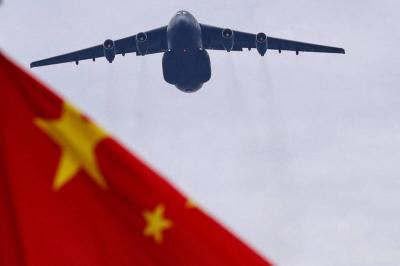
Beijing could eventually see a full amphibious invasion of Taiwan as the only "prudent" way to bring about unification, the US Department of Defense said in a newly released annual report to Congress. The Pentagon's "Annual Report to Congress: Military and Security Developments Involving the People's Republic of China 2025," was in many ways similar to last year’s report but reorganized the analysis of the options China has to take over Taiwan. Generally, according to the report, Chinese leaders view the People's Liberation Army's (PLA) capabilities for a Taiwan campaign as improving, but they remain uncertain about its readiness to successfully seize

Taiwan is getting a day off on Christmas for the first time in 25 years. The change comes after opposition parties passed a law earlier this year to add or restore five public holidays, including Constitution Day, which falls on today, Dec. 25. The day marks the 1947 adoption of the constitution of the Republic of China, as the government in Taipei is formally known. Back then the Chinese Nationalist Party (KMT) governed China from Nanjing. When the KMT, now an opposition party in Taiwan, passed the legislation on holidays, it said that they would help “commemorate the history of national development.” That

Taiwan has overtaken South Korea this year in per capita income for the first time in 23 years, IMF data showed. Per capita income is a nation’s GDP divided by the total population, used to compare average wealth levels across countries. Taiwan also beat Japan this year on per capita income, after surpassing it for the first time last year, US magazine Newsweek reported yesterday. Across Asia, Taiwan ranked fourth for per capita income at US$37,827 this year due to sustained economic growth, the report said. In the top three spots were Singapore, Macau and Hong Kong, it said. South

Snow fell on Yushan (Jade Mountain, 玉山) yesterday morning as a continental cold air mass sent temperatures below freezing on Taiwan’s tallest peak, the Central Weather Administration (CWA) said. Snowflakes were seen on Yushan’s north peak from 6:28am to 6:38am, but they did not fully cover the ground and no accumulation was recorded, the CWA said. As of 7:42am, the lowest temperature recorded across Taiwan was minus-5.5°C at Yushan’s Fengkou observatory and minus-4.7°C at the Yushan observatory, CWA data showed. On Hehuanshan (合歡山) in Nantou County, a low of 1.3°C was recorded at 6:39pm, when ice pellets fell at Songsyue Lodge (松雪樓), a


 RSS
RSS