


Chinese President Hu Jintao (
"Because the US government's stance is firm, President [George W.] Bush did not let China score points on the Taiwan issue during the meeting," Chen said. "President Bush did not say anything to surprise us and for that we are very grateful."
Chen told the Journal that the Bush-Hu meeting highlighted four issues -- human rights, "one China," Taiwan and economics.
First, Chen said, it was a serious concern when a well-educated Chinese woman, Wang Wenyi (
Her protest reflects not only China's suppression of the Falun Gong and religious freedom but also its notorious human-rights record, Chen said.
Second, Chen said he thinks it was not an innocent flub when the White House announcer mixed up the national anthem of the Republic of China (ROC) with that of the People's Republic of China (PRC).
The mistake was made, Chen said, because of the "one China" concept, which confuses the international community.
Third, the US and China have different attitudes toward Taiwan although they both embrace "one China," Chen said.
While China "strongly opposes" Taiwan independence and sets unification as its ultimate goal, Chen said the US government "does not support" Taiwan independence but it does not preset any stance or conclusion for Taiwan's future.
Finally, he said it was debatable whether the Bush-Hu meeting has had any positive impact on the two countries' trade imbalance.
He said people will have to pay attention to China's impact on the global economy when the "sleeping giant" awakens.
Despite China's indifference to Taiwan's goodwill gestures and Beijing's passage of an "Anti-Secession" Law, Chen said his government is still willing to engage in dialogue with Beijing under the principles of sovereignty, democracy, peace and equality.
He said he hopes China would respect and accept the fact that the ROC is an independent, sovereign state and that it would respect the free choice of the 23 million people of Taiwan about the country's future and cross-strait relations.
The president called on Beijing to resolve cross-strait disputes through government-to-government contacts and dialogue, lambasting the Chinese Communist Party (CCP) and Chinese Nationalist Party (KMT) for joining forces to seize power in 2008.
He said that after he was elected in 2000, China waiting for the opposition parties to succeed with their impeachment campaign. After he won re-election in 2004, China waited for him to be unseated by two lawsuits filed by the losing pair, former KMT chairman Lien Chan (連戰) and People First Party (PFP) Chairman James Soong (宋楚瑜).
Now, China is teaming up with the opposition to engage in a "soft decapitation" campaign to vilify his government and its leaders, he said.
"Even if the KMT retakes power in 2008, I don't believe cross-strait relations will improve," he said.
Chen, however, expressed appreciation to KMT Chairman Ma Ying-jeou (
Chen said that he realizes that it may take a while before the legislature gives the arms budget the go-ahead, but if lawmakers keep trying, he anticipates the legislature reaching a consensus on the issue by agreeing to at least part of the project.
Stressing that Taiwan will never launch the first strike and start a war in the Taiwan Strait, Chen said the country must strengthen its national defense capability.
also see story:
Editorial: President Chen, time to fight back
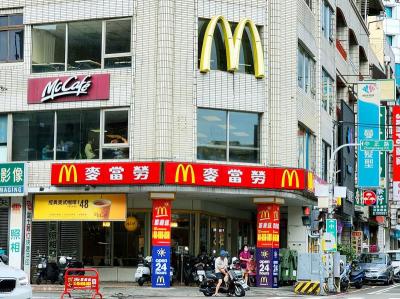
Fast food chain McDonald's is to raise prices by up to NT$5 on some products at its restaurants across Taiwan, starting on Wednesday next week, the company announced today. The prices of all extra value meals and sharing boxes are to increase by NT$5, while breakfast combos and creamy corn soup would go up by NT$3, the company said in a statement. The price of the main items of those meals, if ordered individually, would remain the same. Meanwhile, the price of a medium-sized lemon iced tea and hot cappuccino would rise by NT$3, extra dipping sauces for chicken nuggets would go up
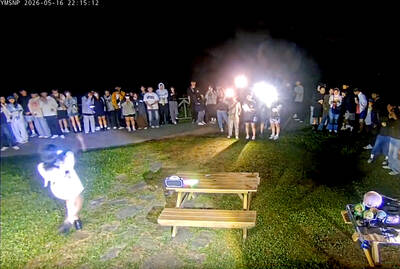
Yangmingshan National Park’s Qingtiangang (擎天崗) nature area has gone viral after a park livestream camera observed a couple in the throes of intimate congress, which was broadcast live on YouTube, drawing large late-night crowds and sparking a backlash over noise, bright lights and disruption to wildlife habitat. The area’s livestream footage appeared to show a couple engaging in sexual activity on a picnic table in the park on Friday last week, with the uncensored footage streamed publicly online. The footage quickly spread across social media, prompting a tide of visitors to travel to the site to “check in” and recreate the

Minister of Digital Affairs Lin Yi-ching (林宜敬) yesterday cited regulatory issues and national security concerns as an expert said that Taiwan is among the few Asian regions without Starlink. Lin made the remarks on Facebook after funP Innovation Group chief executive officer Nathan Chiu (邱繼弘) on Friday said Taiwan and four other countries in Asia — China, North Korea, Afghanistan and Syria — have no access to Starlink. Starlink has become available in 166 countries worldwide, including Ukraine, Malaysia, the Philippines and Vietnam, in the six years since it became commercial, he said. While China and North Korea block Starlink, Syria is not
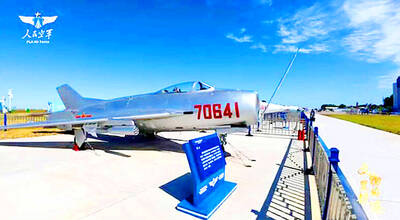
GROUNDED: A KMT lawmaker proposed eliminating drone development programs and freezing funding for counterdrone systems, despite China’s adoption of the technology China has deployed attack drones at air bases near the Taiwan Strait in a strategy aimed at overwhelming Taiwan’s air defense systems through saturation attacks, the Mainland Affairs Council (MAC) said. The council’s latest quarterly report on China said that satellite imagery and open-source intelligence indicate that the Chinese People’s Liberation Army (PLA) had converted retired J-6 fighter jets into J-6W drones, which the PLA has stationed at six air bases near Taiwan, five in China’s Fujian Province and one in Guangdong Province. The report cited J. Michael Dahm, a senior fellow at the US-based Mitchell Institute, as saying that China has


 RSS
RSS