


The Taiwan Solidarity Union (TSU) yesterday called on President Chen Shui-bian (陳水扁) to form an "Anti-Annexation Commission" to mark the 10th anniversary of the 1996 cross-strait missile crisis.
"In order to make the appeal `Annexation, No; Independence, Yes' heard by the international community, the government should set up such a commission," TSU Legislator Tseng Tsahn-deng (曾燦燈) told a press conference at the Legislative Yuan yesterday.
Tseng said that the commission would be charged with the mission of achieving the goal of national independence through peaceful means.
"The president's decision to cause the National Unification Council to cease to function doesn't go far enough," he said.
"We need a new institution and guidelines to deal with cross-strait relations in the next 10 years," Tseng said.
China fired ballistic missiles into the Taiwan Strait in March 1996 to intimidate Taiwanese voters ahead of the nation's first presidential election, he said.
"We can't rule out the possibility that China will have an even more fierce military reaction [this time], as it has recently said that Taiwan is an inseparable part of China's territory," he said.
"In this regard, we have to make `anti-annexation' a clear priority," Tseng said.
He said that the government should also promote an "anti-annexation principle" to counter the "one China" principle, which has gained wide acceptance in the international community.
The TSU also suggested that the government give preference to the expression "Taiwan-China relations," and abandon the term "cross-strait relations." The term "cross-strait relations" is ambiguous, as it does not give a clear indication that Taiwan and China are two separate countries, it said.
Tseng said that the TSU would soon table a draft proposal on the anti-annexation commission in the legislature.
In related news, at a forum on the 1996 crisis held by the Northern Taiwan Society last night in Taipei, former president Lee Teng-hui (
"China is eyeing Taiwan's 2008 presidential election and attempting to help the candidate it wants to become its agent in Taiwan to further deprive Taiwan of its hard-won democracy and freedom," Lee said. "You all know clearly who I am talking about. I don't have to name him."
Looking back at the 1996 missile crisis, Lee said that although China had fired missiles into the Strait Taiwan in an attempt to scare voters in the nation's first presidential election, the people had shown their wisdom and courage and voted anyway.
"The year 1996 was not only a year of darkness but also a year of pride and honor for the people of Taiwan," Lee said.

Taiwanese can file complaints with the Tourism Administration to report travel agencies if their activities caused termination of a person’s citizenship, Mainland Affairs Council Minister Chiu Chui-cheng (邱垂正) said yesterday, after a podcaster highlighted a case in which a person’s citizenship was canceled for receiving a single-use Chinese passport to enter Russia. The council is aware of incidents in which people who signed up through Chinese travel agencies for tours of Russia were told they could obtain Russian visas and fast-track border clearance, Chiu told reporters on the sidelines of an event in Taipei. However, the travel agencies actually applied

New measures aimed at making Taiwan more attractive to foreign professionals came into effect this month, the National Development Council said yesterday. Among the changes, international students at Taiwanese universities would be able to work in Taiwan without a work permit in the two years after they graduate, explainer materials provided by the council said. In addition, foreign nationals who graduated from one of the world’s top 200 universities within the past five years can also apply for a two-year open work permit. Previously, those graduates would have needed to apply for a work permit using point-based criteria or have a Taiwanese company
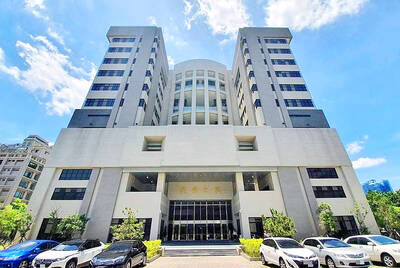
The Shilin District Prosecutors’ Office yesterday indicted two Taiwanese and issued a wanted notice for Pete Liu (劉作虎), founder of Shenzhen-based smartphone manufacturer OnePlus Technology Co (萬普拉斯科技), for allegedly contravening the Act Governing Relations Between the People of the Taiwan Area and the Mainland Area (臺灣地區與大陸地區人民關係條例) by poaching 70 engineers in Taiwan. Liu allegedly traveled to Taiwan at the end of 2014 and met with a Taiwanese man surnamed Lin (林) to discuss establishing a mobile software research and development (R&D) team in Taiwan, prosecutors said. Without approval from the government, Lin, following Liu’s instructions, recruited more than 70 software
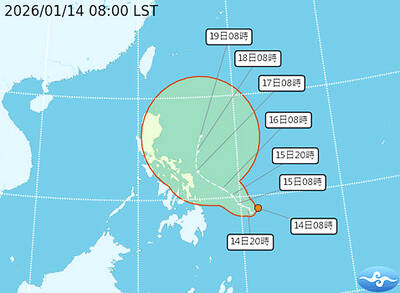
BACK TO WINTER: A strong continental cold air mass would move south on Tuesday next week, bringing colder temperatures to northern and central Taiwan A tropical depression east of the Philippines could soon be upgraded to be the first tropical storm of this year, the Central Weather Administration (CWA) said yesterday, adding that the next cold air mass is forecast to arrive on Monday next week. CWA forecaster Cheng Jie-ren (鄭傑仁) said the first tropical depression of this year is over waters east of the Philippines, about 1,867km southeast of Oluanpi (鵝鑾鼻), and could strengthen into Tropical Storm Nokaen by early today. The system is moving slowly from northwest to north, and is expected to remain east of the Philippines with little chance of affecting Taiwan,


 RSS
RSS