

Video footage of new alleged abuse by US soldiers in Afghanistan -- this time burning the bodies of Taliban militants -- has angered a country increasingly wary about the four-year American presence.
Some religious leaders called for jihad or holy war in retaliation for an act deeply offensive to Islam and ordinary Afghans voiced disgust despite their loathing of the insurgents responsible for unrelenting attacks.
"I think the people and the Muslims should not stay quiet -- if they do, the Americans will become more impudent," said Ghulam Farooq, a mullah at one of the main mosques in the western city of Herat.
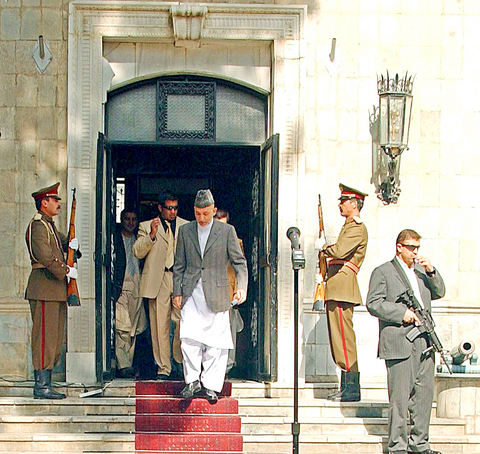
PHOTO: EPA
"Jihad, we should do jihad against the Americans," he said.
Aware of the inflammatory nature of the alleged incident revealed in an Australian television report last Wednesday, the US military was swift to condemn the incident as "unacceptable" and promise a thorough criminal investigation.
But coming after abuse of Afghan prisoners in US custody -- and outrage at reports of the desecration of the Koran at Guantanamo Bay -- with 15 people killed in protests in Kabul, many were in no mood to be placated.
"If those responsible are not punished, I think the Muslim nation of Afghanistan will rise against the Americans -- no Muslim can tolerate such a crime," said Shamsuddin, another mullah in the southern city of Kandahar.
The report on SBS's Dateline program quoted US soldiers saying that they had to burn the bodies because they had been left out in the open for more than 24 hours.
The soldiers then used the incident to try to taunt other Taliban fighters and draw them out of hiding, it said.
Besides breaching the Geneva Conventions, the burning of bodies violates Islamic tradition, which requires the bodies of Muslims to be buried.
"It is good to kill Taliban, but it is very bad to burn their bodies," said Ghulam Farooq, a taxi driver in Kabul.
"We Muslims never burn our bodies. We bury them with respect," he said.
The allegations were particularly shocking because "we were hoping the coalition forces were now keen to repair their already damaged image," said Ahmad Fahim Hakim of the Afghanistan Independent Human Rights Commission.
"At the beginning it was thought they were here to liberate our country and everyone was thankful to them, but it very much depends on how they deal with Afghan authorities," he said.
The US-led coalition force entered Afghanistan in late 2001 after the fundamentalist Taliban regime was toppled in an operation organized by the US when the hardliners did not hand over Osama bin Laden for the Sept. 11 attacks.
It has been helping Afghanistan root out Taliban insurgents and their al-Qaeda allies while training the Afghan security forces, including a 70,000-strong Afghan National Army, some 25,000 of them already on the ground.
While grateful for the support on which his government depends, President Hamid Karzai has spoken out against the heavy-handedness of some US tactics, in particular air raids that have claimed civilian lives and invasive search operations that violate the traditions of this conservative nation.
The Afghanistan Independent Human Rights Commission has also received more than 100 complaints about the coalition force, many from Afghans unable to get information about relatives who have been arrested and about whom even the Afghan authorities have not even been informed, Hakim said.
The coalition said it would be unfair for its hard work in Afghanistan to be undermined by the alleged actions of a few soldiers.
"The deeds of our armed forces speak for themselves and this one event, while it is unacceptable, should not in any way hinder people's belief of what we have done over the past couple of years," coalition spokesman Colonel Jim Yonts said.
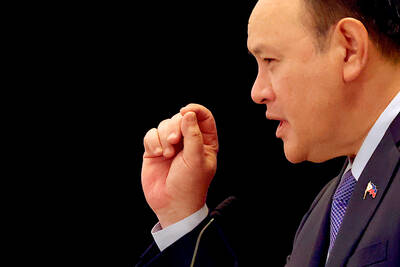
Philippine Secretary of National Defense Gilberto Teodoro Jr on Tuesday hit out at China at an international forum after a memo asserting Beijing’s position over their longstanding maritime dispute was delivered to him while he was speaking on stage. The unusual incident was captured on video at the Seoul Defense Dialogue as the secretary was responding to a question about “gray zone” coercion in the South China Sea. The video shows what appears to be a conference staffer placing it on the table next to him while speaking. “I have a note here, I think this is from China,” he said, describing
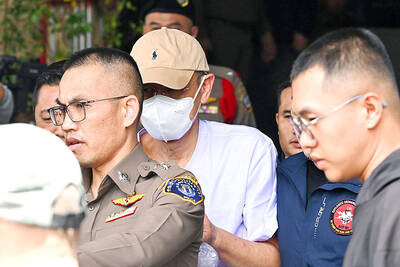
Thai police yesterday said that they arrested a senior Buddhist monk on suspicion of embezzling US$2.8 million intended for his monastery, alongside a suspected female accomplice he was having sex with. The case is the latest scandal to hit the clergy in Buddhist-majority Thailand after a sex and extortion case involving senior monks last year prompted public outrage and calls for greater scrutiny of temple finances. Phra Wachirayan Wi, the 66-year-old abbot of the 14th-century Wat Phutthaisawan in the ancient capital of Ayutthaya, was arrested on Thursday on charges including embezzlement and money laundering, lead police investigator Pattanasak Bupphasuwan said. A 47-year-old woman

SECRET FOOTAGE: A 17-year-old girl told British broadcaster Channel 4 that she had been approached by a man who covertly recorded her and their interaction Calls are growing louder in Europe for action against “pervert” smart glasses after secretly filmed footage of girls and women appeared online — with a petition in Britain demanding a ban on their sale. Anyone wearing smart glasses can take photos, film videos, listen to music, make phone calls, translate text or interact with an artificial intelligence (AI) assistant, with sales now hitting millions. The devices grabbed attention this summer after a marketing tie-up between Kylie Jenner, beauty mogul and member of the Kardashian dynasty, and tech giant Meta. Since smartphones are now embedded in daily life, “big tech” is
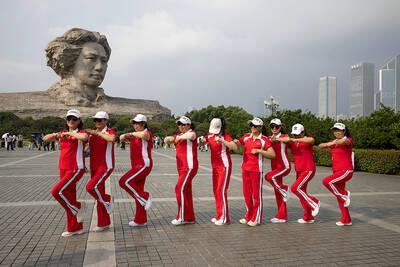
China yesterday marked half a century since the death of Mao Zedong (毛澤東), founder of the People’s Republic, who brought roughly one-quarter of the world’s population under communist rule and whose specter still haunts China’s future. Mao’s death on Sept. 9, 1976, at age 82, mourned by many and welcomed by some who suffered under his nearly three-decade rule, also hastened the end of the Cultural Revolution, a frenzied mass movement he launched in 1966. The party later condemned the Cultural Revolution as a grave error for which Mao bore primary responsibility, but still reveres him, saying his achievements outweigh his mistakes. Mao’s


 RSS
RSS