


Reacting to the passage of China's anti-secession law yesterday, the pan-blue camp said that holding to the Constitution, name and concept of the Republic of China (ROC) is the best way for Taiwan to avoid escalating cross-strait tensions and provoking China to military action.
The pan-blue parties yesterday urged China to respect the sovereignty of the ROC and called for peaceful cross-strait negotiations and a resolution to the cross-strait issue, while stressing yesterday that Taiwanese independence is neither an option nor the mainstream will of the Taiwanese people.
"The Republic of China is foundation of the consolidated view of all the nation's people's and is the key to avoiding a military showdown across the Strait," Chinese Nationalist Party (KMT) spokesman Chang Jung-kung (張榮恭) said during a KMT press conference.
"The Republic of China is not only the greatest common denominator [of the ruling and opposition camps'], but it is also the greatest common denominator in cross-strait peace," People First Party (PFP) Chairman James Soong (
Since the ROC has always been a sovereign nation, it and the status quo maintained under its name do not conflict with China's anti-secession law, the pan-blue camp said. Rather, it is the recent activities of pro-independence factions and of the administration, such as the rectification of Taiwan's name in the titles of government agencies and the government's push for constitutional reforms that has provoked China into drafting the "anti-secession" legislation and has escalated cross-strait tensions.
While the pan-blue parties agreed that holding to the ROC is the best way for Taiwan to avoid a military confrontation with China in the future, their views on Taiwan's future path of action and the significance of the anti-secession law were mixed.
Soong credited his meeting last month with President Chen Shui-bian (
"Since the 10-point joint consensus from the Feb. 24 Chen-Soong summit was released, we have seen a rare softening in the cross-strait situation. In the 10 points of the joint resolution, Chen Shui-bian agreed not to call for the rectification of Taiwan's name or to hold a referendum on Taiwanese independence. On China's side, it has also expressed its respect for the divided cross-strait situation on a certain level," Soong said.
The alterations to the text of the anti-secession law and China's proposals to Taiwan for cross-strait negotiations, Soong said, should be taken as a sign of China's flexibility and of its acknowledgement of the divided state of affairs, both of which are improvements to the current situation.

Taipei has once again made it to the top 100 in Oxford Economics’ Global Cities Index 2025 report, moving up five places from last year to 60. The annual index, which was published last month, evaluated 1,000 of the most populated metropolises based on five indices — economics, human capital, quality of life, environment and governance. New York maintained its top spot this year, placing first in the economics index thanks to the strength of its vibrant financial industry and economic stability. Taipei ranked 263rd in economics, 44th in human capital, 15th in quality of life, 284th for environment and 75th in governance,

The Sports Administration yesterday demanded an apology from the national table tennis association for barring 17-year-old Yeh Yi-tian (葉伊恬) from competing in the upcoming World Table Tennis (WTT) United States Smash tournament in Las Vegas this July. The sports agency said in a statement that the Chinese Taipei Table Tennis Association (CTTTA) must explain to the public why it withdrew Yeh from the WTT tournament in Las Vegas. The sports agency said it contacted the association to express its disapproval of the decision-making process after receiving a complaint from Yeh’s coach, Chuang
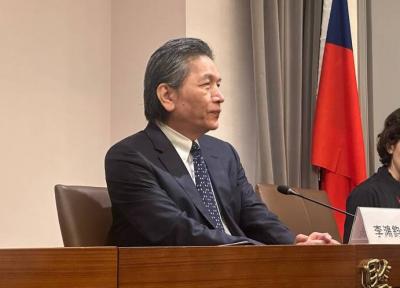
Control Yuan Secretary-General Lee Chun-yi (李俊俋) tendered his resignation last night, admitting that he had misused a government vehicle, as reported by media. His resignation was immediately accepted by the Control Yuan. In a statement explaining why he had resigned, Lee apologized for using a Control Yuan vehicle to transport his dog to a pet grooming salon on May 20. The issue first came to light late last month, when TVBS News reported that Lee had instructed his driver to take the dog to the salon. The news channel broadcast photos that it said were taken by an unnamed whistle-blower, which purportedly showed the

Democratic Progressive Party caucus chief executive Rosalia Wu, front, grabs the pennant in a dragon boat race hosted by Qu Yuan Temple in the Shuanghsi River in Taipei’s Beitou District yesterday.


 RSS
RSS