


Government officials here have mixed views about whether China would ask US Vice President Dick Cheney for promises on Taiwan as he begins a three-day visit to Beijing and Shanghai today.
Cheney's visit would be the highest-level official exchange between China and the US since President Chen Shui-bian (
Taiwan, human rights, trade and North Korea are expected to top Cheney's agenda in Beijing. He is scheduled to meet with Chinese President Hu Jintao (
US Deputy Defense Secretary Paul Wolfowitz, who earlier this month defended the US' sale of advanced radar systems to Taiwan, is among the officials in Cheney's entourage. Beijing says Washington is breaking its promises by selling high-tech weapons to Taiwan.
Mainland Affairs Council Vice Chairman Alexander Huang (黃介正) said Wolfowitz is visiting China for several reasons, but explaining the US arms sales to Taipei would not be part of his mission.
Two US China experts, David Lampton and Kenneth Lieberthal, in their article "Heading Off the Next War" published in the Washington Post yesterday said Cheney is likely to reiterate the traditional American stance on cross-strait relations.
"It appears he will follow the traditional American path of recommending cross-strait dialogue and warning of severe consequences should military conflict flare," the article said.
Cheney will also assure Beijing that Washington opposes unilateral independence for Taiwan, according to the article.
"While voicing these essential elements of a prudent message, the vice president also should signal both Beijing and Taipei that America is prepared for new thinking in the search for peace and growth in the region," the article said.
Democratic Progressive Party Legislator Chen Chung-hsin (陳忠信), head of the DPP's mainland affairs department, said he believed North Korea, not Taiwan, would be the focus of Cheney's trip.
The way the China-Taiwan-US trilateral relations, he said, have operated remains basically unchanged since before the election.
Although China expected more promises from the US, Cheney would stick to Washington's "one China" policy by reiterating the three communiques and the Taiwan Relations Act, the lawmaker said.
Chinese Nationalist Party (KMT) Legislator Chang Rong-kung (張榮恭) believes Beijing may demand stronger pledges on Taiwan from the US after hosting the second round of six-way talks on North Korea.
However, Chang said Beijing has to face the fact that the Taiwan issue has been internationalized.
China's respect for Taiwanese people's mainstream opinion will play a critical part in seeking peace and stability in the Taiwan Strait, Chang said.
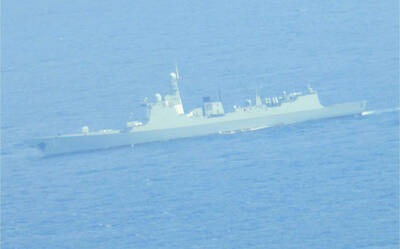
The military has spotted two Chinese warships operating in waters near Penghu County in the Taiwan Strait and sent its own naval and air forces to monitor the vessels, the Ministry of National Defense (MND) said. Beijing sends warships and warplanes into the waters and skies around Taiwan on an almost daily basis, drawing condemnation from Taipei. While the ministry offers daily updates on the locations of Chinese military aircraft, it only rarely gives details of where Chinese warships are operating, generally only when it detects aircraft carriers, as happened last week. A Chinese destroyer and a frigate entered waters to the southwest
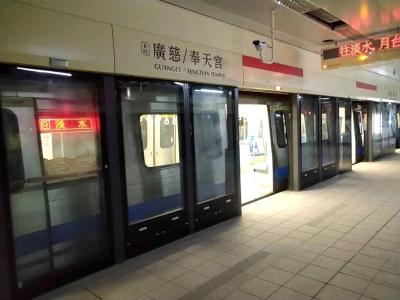
The eastern extension of the Taipei MRT Red Line could begin operations as early as late June, the Taipei Department of Rapid Transit Systems said yesterday. Taipei Rapid Transit Corp said it is considering offering one month of free rides on the new section to mark its opening. Construction progress on the 1.4km extension, which is to run from the current terminal Xiangshan Station to a new eastern terminal, Guangci/Fengtian Temple Station, was 90.6 percent complete by the end of last month, the department said in a report to the Taipei City Council's Transportation Committee. While construction began in October 2016 with an
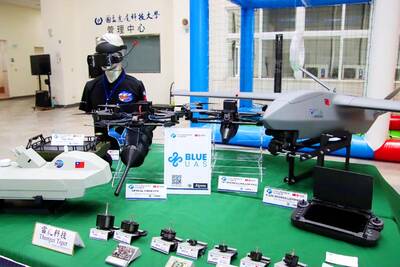
NON-RED SUPPLY: Boosting the nation’s drone industry is becoming increasingly urgent as China’s UAV dominance could become an issue in a crisis, an analyst said Taiwan’s drone exports to Europe grew 41.7-fold from 2024 to last year, with demand from Ukraine’s fight against Russian aggression the most likely driver of growth, a study showed. The Institute for Democracy, Society and Emerging Technology (DSET) in a statement on Wednesday said it found that many of Taiwan’s uncrewed aerial vehicle (UAV) sales were from Poland and the Czech Republic. These countries likely transferred the drones to Ukraine to aid it in its fight against the Russian invasion that started in 2022, it said. Despite the gains, Taiwan is not the dominant drone exporter to these markets, ranking second and fourth
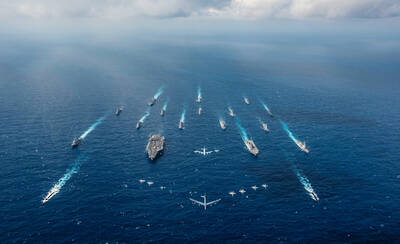
Japanese Prime Minister Sanae Takaichi’s comment last year on Tokyo’s potential reaction to a Taiwan-China conflict has forced Beijing to rewrite its invasion plans, a retired Japanese general said. Takaichi told the Diet on Nov. 7 last year that a Chinese naval blockade or military attack on Taiwan could constitute a “survival-threatening situation” for Japan, potentially allowing Tokyo to exercise its right to collective self-defense. Former Japan Ground Self-Defense Force general Kiyofumi Ogawa said in a recent speech that the remark has been interpreted as meaning Japan could intervene in the early stages of a Taiwan Strait conflict, undermining China’s previous assumptions


 RSS
RSS