


The top US naval commander in the Pacific has told Congress that US forces are well-positioned to deal with any Chinese military activity aimed at Taiwan, but says that the US has not seen any indication of an immediate military threat in the period surrounding Taiwan's presidential election.
Admiral Thomas Fargo, the Navy Commander of the US Pacific Command, made his comments in testimony on Wednesday before a House Armed Services Committee hearing on defense budget issues and US security concerns in the Pacific region.
Asked about US forces' ability to deal with a miscalculation that could be "catastrophic" for Taiwan, Fargo said, "I'm pretty confident of our deterrent capability. Certainly, we're well-postured right now. We understand the problem. Our forces are well-trained. So our ability to dissuade and deter China, I think, is really very good."
He also noted that "we maintain a force posture and readiness and an ability to respond to contingencies that will ensure that should the president ask us, we can meet those responsibilities under the [Taiwan Relations Act]."
This act, enacted 25 years ago today, commits the US among other things to "maintain the capacity ... to resist any resort to force of other forms of coercion that would jeopardize the security ... of the people of Taiwan."
Fargo said that the Taiwan Strait is "a place where miscalculation could result in terrible destruction and poses a possibility of expanding into a wider regional confrontation," calling cross-strait issues "the largest friction point in the relationship between China and the United States."
He said his forces continue to watch closely the developments associated with the March 20 election.
"To date, we've seen no indication of an imminent military crisis," he said.
Fargo was asked whether Taiwan's desire for "increased autonomy and eventual independence" could spark a military confrontation between Washington and Beijing.
He refused to speculate on Taiwan's actions, but said "the most important thing is that we have to meet our responsibilities with respect to the Taiwan Relations Act as well as provide good advice to Taiwan as to how they improve their capability to defend themselves. And we're certainly doing that."
Committee chairman Duncan Hunter, a Republican, made Taiwan a central issue in the hearing, with an opening statement pointing to the March 20 election.
"The situation across the Taiwan Strait deserves our special attention because it's long been recognized as an international flashpoint," he said.
"The balance of power is changing across the Taiwan Strait" with China's continued military modernization, he said.
"Taiwan, on the other hand, continued cutting its defense budget," he said.
"These diverging military trends highlight a political problem in which China constantly seeks to strangle more assertive demonstrations of Taiwanese democracy lest the people of Taiwan decide that they don't want to surrender their rights in order to become part of greater China.
"Those trends are accelerating, undermining the fragile standoff that has secured peace across the Strait for most of the last 50 years," he said.

Taipei has once again made it to the top 100 in Oxford Economics’ Global Cities Index 2025 report, moving up five places from last year to 60. The annual index, which was published last month, evaluated 1,000 of the most populated metropolises based on five indices — economics, human capital, quality of life, environment and governance. New York maintained its top spot this year, placing first in the economics index thanks to the strength of its vibrant financial industry and economic stability. Taipei ranked 263rd in economics, 44th in human capital, 15th in quality of life, 284th for environment and 75th in governance,

The Sports Administration yesterday demanded an apology from the national table tennis association for barring 17-year-old Yeh Yi-tian (葉伊恬) from competing in the upcoming World Table Tennis (WTT) United States Smash tournament in Las Vegas this July. The sports agency said in a statement that the Chinese Taipei Table Tennis Association (CTTTA) must explain to the public why it withdrew Yeh from the WTT tournament in Las Vegas. The sports agency said it contacted the association to express its disapproval of the decision-making process after receiving a complaint from Yeh’s coach, Chuang
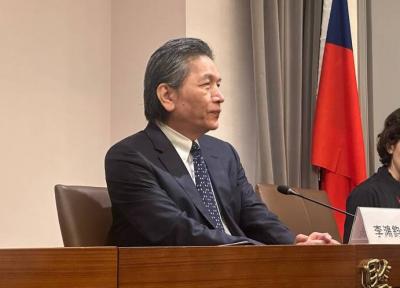
Control Yuan Secretary-General Lee Chun-yi (李俊俋) tendered his resignation last night, admitting that he had misused a government vehicle, as reported by media. His resignation was immediately accepted by the Control Yuan. In a statement explaining why he had resigned, Lee apologized for using a Control Yuan vehicle to transport his dog to a pet grooming salon on May 20. The issue first came to light late last month, when TVBS News reported that Lee had instructed his driver to take the dog to the salon. The news channel broadcast photos that it said were taken by an unnamed whistle-blower, which purportedly showed the

Democratic Progressive Party caucus chief executive Rosalia Wu, front, grabs the pennant in a dragon boat race hosted by Qu Yuan Temple in the Shuanghsi River in Taipei’s Beitou District yesterday.


 RSS
RSS