


A Taipei Municipal Hoping Hospital staff member tried to jump from one of the hospital's windows yesterday as those under quarantine inside continued to vent their frustrations to the outside world.
The apparent suicide attempt failed after two other people dragged the person back inside.
Others inside the facility hung more protest signs on the outside of the hospital to press their case to be released. Many expressed fears about being in such close quarters with those who had been confirmed as having severe acute respiratory syndrome (SARS).
"We are healthy people, we want separation from SARS patients. We want to get out of Hoping Hospital and we don't want to wait for death," one sign read.
Via a videoconferencing system set up for those under quarantine to contact their families, the dean of the hospital's radiation department, Dr. Fang Ying-jen (
"There is no proper quarantine equipment ... in the hospital. It is possible that everyone who is in the hospital is infected with SARS," she said.
"Right now it is likely that any medical staff who have contracted SARS are still caring for non-SARS patients. A chain reaction may be inevitable.
"If we do not do anything about the situation, in the end it may be that everyone will contract SARS," she said.
She also said that those sleeping in the hospital's Alternative Service Training Center were at grave risk of catching the disease because there were six people sleeping in each room.
"So far there have already been three cases of high fever among those staying at the center," she said.
"I strongly urge the government to help quarantine the Hoping staff with a room for each person. There are many locations in Taipei suitable for this kind of confinement.
"The most important thing now is to try and save all the patients," she said.
Outside the hospital, family members of those under quarantine gathered to protest the treatment of their loved ones. A man surnamed Yang carried a banner criticizing Taipei Mayor Ma Ying-jeou's (馬英九) handling of the affair.
"Please step up to save us innocent people," the banner urged central government officials.
Yang's mother was admitted into the hospital with intestinal problems and his sister was inside visiting her when the quarantine order was enacted.
"Earlier it was heard inside the hospital that those who had no SARS could be released soon, but it never happened," he said. "Those without SARS should not be confined for such a long time. I will be relieved only when my family is sent to somewhere safe."
His story was corroborated by a man surnamed Chen, whose sister is a nurse working on the 7th floor of the B building, where a number of people are thought to have caught the disease. Chen said his sister told him that the authorities had agreed to release those without SARS. But that the decision was reversed a day later, he said, with SARS patients being removed and those without symptoms remaining at the hospital.
"Now the staff inside are not in a mood to work anymore," he said.
At a press conference yesterday morning, a relative of someone inside the hospital angered Deputy Taipei Mayor Ou Chin-der (
"Do not spread any more rumors," Ou shouted. "The important thing now is to help the people inside. We will always tell the public the truth and we need public support too."
Meanwhile, the Taipei City Government moved to monitor how SARS cases were being handled in the hospital. US Centers for Disease Control and Prevention (USCDC) epidemiologist Jim Lando and the former director of the city's Bureau of Health, Yeh Chin-chuan (
"The separation policy has been in place for a few days. Now Yeh and Lando will be inside to see whether it is running smoothly."
Also yesterday, 18 people suspected of having SARS were transferred from Hoping Hospital to Air Force Sung Shan Hospital. Another 40 possible cases will also be moved to Sung Shan Hospital today, while 16 possible cases will be moved to other municipal hospitals, with each taking two patients.
As of press time last night, according to the Taipei City Government, there were three deaths related to SARS.

The military has spotted two Chinese warships operating in waters near Penghu County in the Taiwan Strait and sent its own naval and air forces to monitor the vessels, the Ministry of National Defense (MND) said. Beijing sends warships and warplanes into the waters and skies around Taiwan on an almost daily basis, drawing condemnation from Taipei. While the ministry offers daily updates on the locations of Chinese military aircraft, it only rarely gives details of where Chinese warships are operating, generally only when it detects aircraft carriers, as happened last week. A Chinese destroyer and a frigate entered waters to the southwest
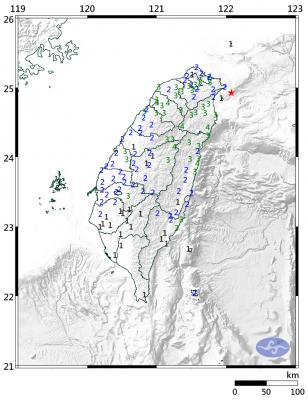
A magnitude 6.1 earthquake struck off the coast of Yilan County at 8:39pm tonight, the Central Weather Administration (CWA) said, with no immediate reports of damage or injuries. The epicenter was 38.7km east-northeast of Yilan County Hall at a focal depth of 98.3km, the CWA’s Seismological Center said. The quake’s maximum intensity, which gauges the actual physical effect of a seismic event, was a level 4 on Taiwan’s 7-tier intensity scale, the center said. That intensity level was recorded in Yilan County’s Nanao Township (南澳), Hsinchu County’s Guansi Township (關西), Nantou County’s Hehuanshan (合歡山) and Hualien County’s Yanliao (鹽寮). An intensity of 3 was

Japanese Prime Minister Sanae Takaichi’s comment last year on Tokyo’s potential reaction to a Taiwan-China conflict has forced Beijing to rewrite its invasion plans, a retired Japanese general said. Takaichi told the Diet on Nov. 7 last year that a Chinese naval blockade or military attack on Taiwan could constitute a “survival-threatening situation” for Japan, potentially allowing Tokyo to exercise its right to collective self-defense. Former Japan Ground Self-Defense Force general Kiyofumi Ogawa said in a recent speech that the remark has been interpreted as meaning Japan could intervene in the early stages of a Taiwan Strait conflict, undermining China’s previous assumptions
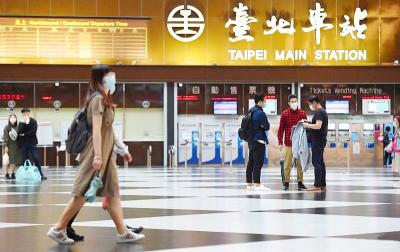
Taiwan Railways Corp (TRC) today announced that Shin Kong Mitsukoshi has been selected as the preferred bidder to operate the Taipei Railway Station shopping mall, replacing the current operator, Breeze Development Co Ltd. Among eight qualified firms that delivered presentations and were evaluated by a review committee, Shin Kong Mitsukoshi was ranked first, while Breeze was named the runner-up, the rail company said in a statement. Contract negotiations are to proceed in accordance with regulations, it said, adding that if negotiations with the top bidder fail, it could invite the second-ranked applicant to enter talks. Breeze in a statement today expressed doubts over


 RSS
RSS