


Chen Kuo Chin-tsai (
Throughout the DPP's rise from opposition party to ruling party, the Ilan Gang has been like the German soccer team, one of Europe's soccer powerhouses that has been dubbed the "German tank."
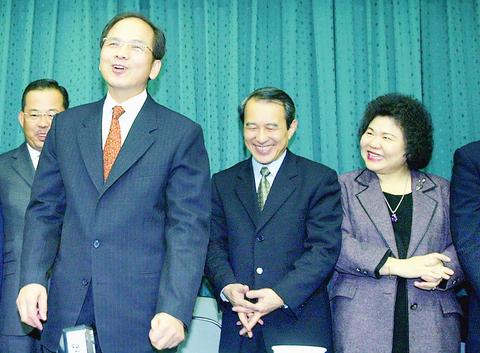
PHOTO: GEORGE TSORNG, TAIPEI TIMES
With its long-standing democratic tradition and by upholding the spirit of solidarity and flexible strategies, the "Ilan tank" has constantly been able to subdue enemies and take up important posts on its way from membership in local governments to ruling the central government.
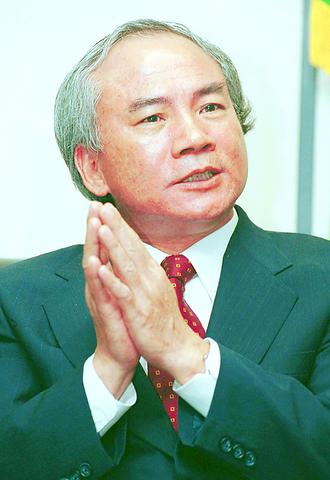
PHOTO: CHIANG YING-YING, TAIPEI TIMES
The foundation of the Ilan tank began with the pioneers of the tangwai (
The highly respected and well-known "three grandpas and one grandma" (
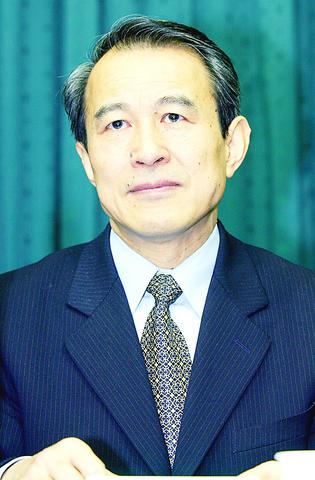
PHOTO: GEORGE TSORNG, TAIPEI TIMES
Among the four, Lin made a great contribution to Taiwan's first transfer of political power by helping Chen Shui-bian (
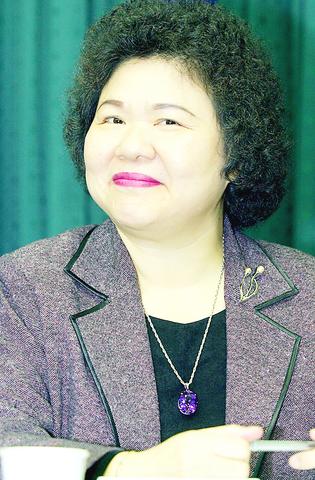
PHOTO: GEORGE TSORNG, TAIPEI TIMES
Meanwhile, the other three "gang leaders" are holding important posts in the central government.
These four people have walked their own different paths after the DPP took the nation's helm. Their relationships with each other, which seem to be competitive and cooperative at the same time, date back to the time they shared in Ilan.
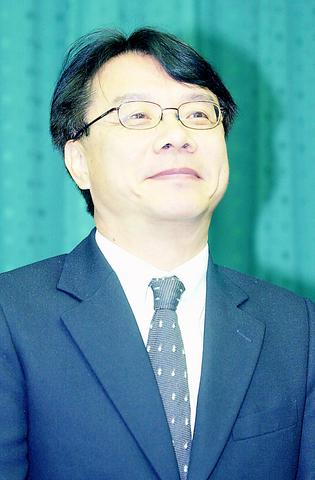
PHOTO: CHIANG YING-YING, TAIPEI TIMES
Roots of a movement
At the age of 18, Yu joined the Youth Party (
After working under Kuo for a period of time, Yu decided to run in the Taiwan Provincial Assembly elections. However, born into a poor family, Yu was only a graduate from an evening college course. He simply could not compete with another candidate, Lin I-hsiung, who was a law graduate from the prominent National Taiwan University, served as Kuo's legal adviser, and helped Kuo deal with lawsuits in 1975 after he lost in the legislative elections due to vote-rigging.
With all his credentials inferior to Lin's, Yu accepted the advice of tangwai elder Huang Hsin-chieh (
During the 1981 elections for county commissioners and Taiwan Provincial Assembly deputies, the DPP planned to field Yu as their Ilan candidate for the position of Provincial Assembly deputy. At the same time, the political novice -- Chen Ding-nan -- was to run in the Ilan County commissioner race.
Initially, Chen was unwilling to accept the arrangement because he felt that he was being sacrificed as a "suicide candidate" in an area where the KMT had a strong power base. Unexpectedly, he was elected and went on to perform brilliantly during his term. Therefore, Chen at one point surpassed Yu in terms of fame and publicity although he entered politics later than Yu. After Chen, Yu also took part in the commissioner race and was elected as Ilan County chief.
The three grandfathers and one grandmother's support for each other during the past tangwai movements have won the Ilan Gang a place on the political stage. Thanks to their guidance, the Ilan tank has gradually cultivated an elite in government positions.
Among the Ilan Gang members, Yu has the most abundant administrative resources at his disposal and his political track record is highlighted by his experience as a local government chief and as a premier. For this reason, the "Yu clan" (
In central government agencies, Minister Without Portfolio Chen Chi-nan (
During his term as deputy chairman of the Council for Cultural Affairs (文建會), Chen Chi-nan put all his effort into "holistic community building" (社區總體營造) and thus interacted well with Yu, who also attached great importance to the concept during his term as commissioner. This has paved the way for their cooperation today.
Lin Sheng-feng, head of the Department of Architecture at Tamkang University, assisted then Ilan County Commissioner Yu to construct the renowned Ilan Tungshan River Park (冬山河親水公園) and the Luotung Sports Park (羅東運動公園) in his capacity as chief advisor to the Ilan County government. Lin also participated in planning the impressive Children's Folklore and Folk Game Festival (童玩節) in Ilan. He is also the mastermind behind the "Ilan experience" that Yu has been very proud of. No wonder that, after he climbed higher, Yu did not forget to promote Lin's talent.
Since Chen Chi-nan and Lin Sheng-feng followed Yu into the Cabinet, Yu has entrusted the two with many significant and complex state affairs that require long-term planning.
Recently, when Yu flew to Orchid Island (
Chen and Lin also jointly planned Premier Yu's prime policy -- the "Challenging 2008" program, a six-year plan to build Taiwan into a regional economic and technological powerhouse.
Another member of the Yu clan who is currently serving in the central government's agencies is Lin Te-fu, chairman of the National Council for Physical Fitness and Sports. With a masters degree in public administration from National Chengchi University, Lin once quit his job as a civil servant in Ilan to work as a pig farmer. His cooperative relationship with Yu started when Yu, the county commissioner of Ilan at that time, invited him to serve as director of Ilan's cultural center.
Lin's successes in Ilan include the "Joy of Ilan" Festival (
What few people have noticed, is that the usually low-key council actually has the greatest concentration of the Yu clan's members. Apart from Council Chairman Lin Te-fu, Deputy Chairman Wu Shou-chian (
During Yu's tenure as county commissioner, Wu was in charge of organizing the Taiwan Regional Games in Ilan. Council advisor Lin Ta-yi (
Yu has installed his clan members in the central government agencies. Chuang Ho-hsiung (
The power of the Yu clan, as part of the Ilan Gang, is also increasing at the local level of government. Lin Hsi-yao (
Because of his Ilan-based experience under Yu, Ilan's former construction bureau chief, Lee Wen-liang (李文良), was also recruited by Hsieh to oversee Kaohsiung City's development bureau, plan Kaohsiung's transformation projects and organize major international events.
A very interesting development is that Chiu Shu-ti (
Yu's leadership created the potential power of the Yu clan, but the fearsomeness of the "Ilan tank" does not depend entirely on this group.
Apart from Chen Ding-nan and Yu, the current county commissioner of Ilan, Liu Shou-cheng (
In the central-level legislative branch, there is Chang Chuan-tien (
The "Ilan tank" is launching an all-out offensive at both the central and local levels of government. Even in the military, Ilan people are rising with leaps and bounds.
The Ilan background of Pan Ai-chu (
Apart from their abundant talent, the "Ilan tank" is made even stronger by their ability to cultivate alliances.
In the legislature's New Tide faction -- which has the DPP's best warriors -- Chen Chu, Liu Shou-cheng, Lin Hsi-yao, Chen Chin-te and Li Kun-tse all belong to the "Ilan Gang." This layer of connections have glued the New Tide faction and the "Ilan Gang" together. When Lin I-hsiung and Yu were in charge of the DPP's party headquarters, they depended on the New Tide faction to maintain half of their turf. Meanwhile, Liu Shih-fang (
Special superior-subordinate relationships and blood relations are also one secret behind the Ilan Gang's extraordinary solidarity.
For example, lawmaker Chen Chin-te served as Yu's personal secretary at one point. Lee Kun-tse once served as an assistant to Chen Ding-nan. Such close relationships and the practice of one generation promoting the next has contributed to their political cooperation.
As for blood relations within the Ilan Gang: Yu's wife, Yang Pao-yu (
Connections, connections
Hsia Tsu-yan (
The criss-crossed web of family relations has also strengthened the resilience of relationships within the Ilan Gang.
Today, under Yu's leadership, the Ilan tank is riding on the past performances of pioneers such as Lin I-hsiung, Chen Ding-nan, Chen Chu and Yu himself, carrying along the ethics and coalescence built through patronage and family relations. In addition, there is strong support from allies, as well as ongoing recruitment and evaluation of new members by the top leaders.
The Ilan tank, like the soccer world's "German tank," upholds tradition and enforces strict discipline. Its power is likely to rise even further.
This article first appeared in the Journalist magazine.
Translated by Francis Huang and Jackie Lin.

FUKUOKA SITUATION: Japanese media reported that the pathogen is expected to be identified by the summer, while the CDC downplayed the idea that it was hMPV A “mysterious cold-like illness” reported in Japan’s Fukuoka Prefecture does not seem to be a new disease, but Japanese authorities have been asked about the situation, the Centers for Disease Control (CDC) said yesterday. The Fukuoka Prefectural Medical Association on Wednesday told a news conference that a “mystery cold” that has become a hot topic on social media is “highly likely to be caused by some kind of viral infection,” Japan’s KBC News reported. “Many people are experiencing symptoms starting with a sore throat, followed by a runny nose, phlegm and a severe cough,” KBC News reported, citing association officials. Health authorities are

Nvidia Corp CEO Jensen Huang (黃仁勳) arrived in Taiwan yesterday ahead of upcoming AI and technology events, saying he plans to meet with clients and Taiwan Semiconductor Manufacturing Co Chairman C.C. Wei (魏哲家) during his visit. After landing at Taipei Songshan Airport, Huang posed for photos with fans and handed out Yakult drinks to reporters and supporters waiting at the scene, saying he has “a lot to do” during the trip. Asked about reports that Nvidia’s planned headquarters site in Taipei’s Beitou Shilin Technology Park could break ground on May 27, Huang said that if the company holds an event, he would

Carrefour Taiwan is to begin using a new name from the start of July, but it cannot divulge the name until then, the chairman of the supermarket chain's parent company said today. President Chain Store Co chairman Lo Chih-hsien (羅智先) was asked by reporters after a shareholders' meeting to confirm whether the company has settled on a new name for the supermarket brand. In March, the government-registered name of two Carrefour Taiwan branches was quietly changed to "Le Chia Kang" (樂家康) in Chinese, raising speculation that has been selected as the name. Lo said that because of local regulations and contractual obligations, the

The Philippines would likely be involved in any conflict over Taiwan due to its proximity to the democracy claimed by China, President Ferdinand Marcos Jr said, reiterating a stance that risks angering Beijing. “In the Philippines, we do not have a choice because Taiwan is so close to the Philippines and we have almost 200,000 Filipino nationals living and working in Taiwan,” Marcos said in an interview with Japanese media in Manila on Monday. The Philippine leader’s comments come ahead of a state visit to Japan next week, where he is to meet with Japanese Prime Minister Sanae Takaichi to discuss security


 RSS
RSS