

In his autobiography, Lee Byung-chull, the founder of South Korea's Samsung Group, describes his experience of founding the Joong-ang Daily in 1965. He said of this: "Use the best facilities, the best talent and offer the best salaries to make the best product. These four bests are the promise we make with the Joong-ang Daily."
I was the translator for the Chinese version of this autobiography. As a media professional, this passage made a deep impression on me. The Joong-ang Daily has now been recognized as the Wall Street Journal of South Korea. The promise made many years ago has been fulfilled.
Five years ago, when I first became involved in preparing the Taipei Times for publication, I silently made Lee's promise the benchmark for this newspaper. Although I dare not claim the Taipei Times is a newspaper of the first rank, over the past five years, we have worked toward making it a first-rate product.
We have the ideal conditions to produce a first-rate product. We use the printing press of the Liberty Times, which is the best in Asia, and the wages we pay are the highest of any newspaper in Taiwan (including Chinese-language newspapers), and we are therefore able to attract some of the most talented people.
If, with these advantages, we still cannot produce a first-rate product, then clearly we are not working hard enough; and naturally, there is still plenty we can do to improve. But I firmly believe high wages are the only way to ensure that our reporters have adequate financial guarantees, which is a precondition for their maintaining high ethical standards.
In addition to nurturing conscientious journalists and lifting the quality of the paper, we face an even greater challenge. Taiwan's media face the challenges of muddled values, debased ethical standards and a failure to distinguish right from wrong. It is a worrying situation. Since the lifting of the ban on new newspapers' publication in 1988 and the deregulation of electronic media in 1994, the past decade has seen the nation's media descend into what can only be described as decadence.
It is hard for people outside the region to imagine to what extent Taiwan is a victim of false media reporting that results from the threatening presence of a powerful neighbor, China. The sort of false reporting I am talking about is very different from the sort of thing that was uncovered with reports of award-winning journalists in the US making up stories.
The mendacity of Taiwan's media has reached a level at which news organizations are willing to serve as the mouthpieces of our enemy. The so-called "pro-unification media" are a channel for unificationist propaganda from Beijing, which aims to alarm Taiwanese and create civil unrest through the spread of disinformation. This should not be the case in a mature democracy.
I've often said that there is no need for the Government Information Office to restrict the circulation of the People's Daily in Taiwan, for that newspaper has no market here. If it were distributed here it would soon be forced to fold. In any case, it hardly matters anymore because Taiwan has newspapers that maintain the views of the People's Daily with even greater vehemence and circulate Beijing's views. Moreover, up to 80 percent of Taiwan's media can be considered "pro-China."
Moreover, Taiwan has a group of pro-China politicians who openly support Beijing, serving as little more than running dogs for that government.
They even instruct Beijing regarding ways to manipulate Taiwan's media to achieve the greatest propaganda benefit. On May 17, when China's Taiwan Affairs Office made its first harsh criticism of the elections, the speech was released at midnight, the deadline for all Taiwan newspapers, ensuring that the speech could only be printed on the front page and in its totality, without the benefit of comment or analysis.
But Taiwanese should be used to this kind of trickery by now. In the run-up to the 2000 presidential election, when the Chung Hsing Bills scandal erupted, James Soong (宋楚瑜), a former head of the Government Information Office and a master of media manipulation, would regularly hold press conferences at midnight to ensure that his words would be published in totality without time for assessment or judgment. It hasn't taken Beijing long to learn this trick.
I often regret that under the fierce and hungry gaze of China, Taiwan has been able to develop only an abnormal and unsound democracy. As a result, press freedom is malformed and confused. Much of the iniquity of Taiwan's media practices hides behind the banner of freedom of speech. Not only do media organizations demand exemption from legal liability for their reports, but even claim protection under the law.
Even convicted criminals such as Chen Yu-hao (陳由豪) can become "gods of righteousness" in the media. If the government intervenes, then these paparazzi take their case to overseas media watchdogs, and these, not fully understanding the issues at hand, make accusations against the government for interfering with press freedom. Using false accusations to gain protection has proven to be effective.
But our government seems to have no recourse. It hasn't the courage to prohibit media reports that take no notice of the law or to press charges. Democratic Progressive Party officials have a love-hate relationship with the media. Prior to winning power, each and every one of them was a media darling and benefited from favorable reports. Now they are silent in the face of execrable media quality.
Members of President Chen Shui-bian's (陳水扁) government must busily work to put out the fires of media-instigated rumors. How much time remains for the serious work of government is not hard to imagine.
Unfortunately, Taiwan has long been a fragile society lacking a sense of security. It is unusually sensitive to rumor and intimidation. This is reflected in the stock market. Oddly enough, it is always the government that people blame for any fall in the market. They never blame Beijing.
Faced with a chaotic internal and external environment in which professional ethics and values have become muddled, we continue to uphold a position of "Taiwan first" and defend mainstream values.
The fifth anniversary of this paper coincides with the beginning of Chen's second term. Before the election, we strongly supported Chen's campaign.
He faced great challenges in his first term -- there where many obstacles and much garbage from the old era to clear away. And his performance has left much to be desired -- a first-time government without much experience and with few outstanding individuals. Therefore, we feel it only fair to give him a second chance. We do not wish to criticize too harshly the mistakes he made during his first term.
But things are different now that he has entered into his second term. "Lack of experience" and "obstruction by the opposition" can no longer serve as excuses.
We have a responsibility to monitor the government's performance, and this time round our assessment will be more stringent and our attitude more critical. As we exist in a world of distorted media values, the Taipei Times has an arduous task ahead of it.
On my wall hangs a motto written in Chinese calligraphy. It was given to me when I began working at the Taipei Times five years ago by a close Korean friend well versed in the Chinese classics. It reads: "Record the annals of our time with honesty, condemn evil and praise righteousness" (春秋直筆, 破邪顯正).
As we embark on a second five-year period, we are up against many demons and goblins both within our society and from China. We have many difficult battles ahead. I believe that the outstanding staff at the Taipei Times will perform better than ever, and will not disappoint our readers.
Rick Chu (
TRANSLATED BY Ian Bartholomew
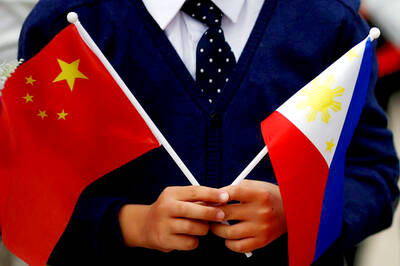
The Philippine Coast Guard yesterday said it has deployed its largest vessel and an aircraft to challenge a Chinese research ship operating off northern Batanes near Taiwan, adding that a Chinese coast guard vessel had also moved in. The Philippine operation “disrupted the vessel’s unauthorized marine scientific research and compelled it to leave its loitering position,” said Jay Tarriela, Philippine Coast Guard spokesperson on South China Sea issues. The Philippine Coast Guard said the BRP Teresa Magbanua and an aircraft were deployed to counter the Chinese vessel, which it said had remained about 37 nautical miles northwest of Itbayat Island since Monday. The
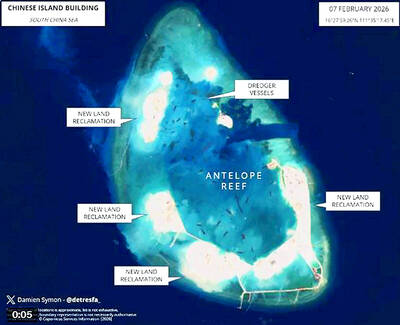
RUNWAY: Analysts said the first aircraft landing is expected by the middle of next year, while Chinese state media said it would serve civilian needs Chinese construction of a runway on Antelope Reef (Lingyang Reef, 羚羊礁) in the Paracel Islands (Xisha Islands, 西沙群島), is well under way with analysts estimating it could be completed by the middle of next year, strengthening Beijing’s military control over the disputed South China Sea. Satellite images reviewed by Reuters show grading work, piles of gravel and concrete, and compaction cranes in operation to build a full-scale runway that military attaches and security analysts say could be one of China’s most important offshore bases in the region. The images, taken on Friday last week by commercial satellite imagery provider Vantor, also show
SHIFTING COOPERATION: With the new arrangement, US representatives would be able to participate directly in defense discussions, including weapons procurement Taiwan-US military cooperation is deepening, with the Pentagon expected to station personnel at the Ministry of National Defense (MND), sources said. The NT$470 million (US$14.77 million) joint program is scheduled to run from this year through 2028, under which the Pentagon would dispatch representatives from the Office of the Under Secretary of Defense for Policy and the Institute for Defense Analyses, a senior military official said on condition of anonymity, adding that one representative from each organization would be stationed at the ministry’s headquarters. The Office of the Under Secretary of Defense for Policy is one of the US’ bodies responsible for
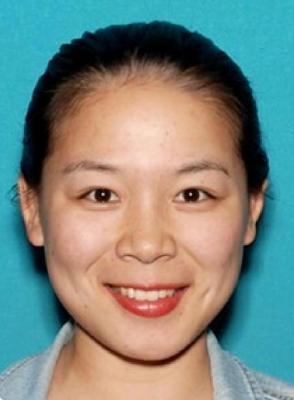
The Presidential Office today condemned China's transnational repression after an alleged Chinese foreign agent was arrested in California yesterday on suspicion of surveilling President William Lai's (賴清德) son, Lai Ting-yu (賴廷與), the FBI said. The 34-year-old woman, named Wanying Heather Zhang (張婉瑩), was arrested on suspicion of acting as an unregistered foreign agent, US news agency CBS reported. She was apprehended at Los Angeles International Airport yesterday attempting to fly to Shanghai, it said. This represents a “typical case” of China’s transnational repression, Presidential Office spokeswoman Karen Kuo (郭雅慧) said today. "Our country expresses the strongest condemnation of such barbaric conduct that


 RSS
RSS