


Hosts Brazil will face Japan in the opening match of next year’s Confederations Cup in Brasilia on June 15 although FIFA were left red-faced following a chaotic draw on Saturday.
The draw should have been simple as hosts Brazil and world champions Spain were automatically placed at the head of the two Groups, A and B, with the six other contestants placed in the remaining slots.
The only proviso was that Italy be kept apart from Spain, to separate the two European countries, and Uruguay kept apart from Brazil, to separate the two South American ones.
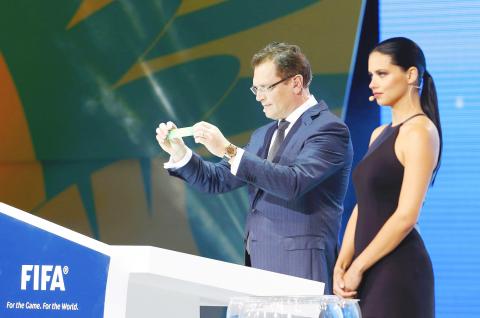
Photo: Reuters
Italy were to be in Group A with Brazil, while Uruguay were going to be placed in Group B with Spain.
However, when Uruguay’s name was drawn, Alex Atala, Brazil’s top chef who was helping FIFA general secretary Jerome Valcke make the draw, put his hand in the Group A bowl and drew out position A3.
Valcke placed Uruguay in B3, but Tahiti were later paired in the same position.
“That doesn’t go at all, Tahiti must be in B3,” Valcke said when he realized the mistake.
Tahiti were then placed in position B3 and Uruguay moved to place B2, meaning they would face Spain in their opening match.
“It was a bit of a chaotic draw, sorry for that,” Valcke told a packed auditorium, which included Brazilian President Dilma Rousseff and FIFA president Sepp Blatter.
“It’s sad these things happen in life, this is my first time,” he said afterwards.
The completed draw placed Brazil, who have won the last two tournaments, with Japan, CONCACAF champions Mexico and Italy, runners-up to Spain in this year’s European Championship.
Spain, the world and European champions, will open their campaign against South American champions Uruguay in Recife, Brazil, on June 16. Oceania champions Tahiti and the African champions, who will be decided on Feb. 10, complete the quartet.
The final takes place in Rio de Janeiro on June 30.
Belo Horizonte, Brasilia, Fortaleza, Recife, Rio de Janeiro and Salvador will host matches in the eight-team tournament, which is seen as a major organizational test ahead of the 2014 World Cup.
Stadiums in Fortaleza and Belo Horizonte are scheduled to be ready this month, while the other four are expected to be ready in March.
The six stadiums together cost US$2 billion, making it the most expensive Confederations Cup since the tournament took its current shape in 1997.
Brazil won the right to host the World Cup in 2007, but delayed a whole year before deciding which 12 cities would be chosen to hold matches.
Most of the stadiums are on schedule although many are also over budget and the government’s own Court of Audits says at least four of the 12 will be white elephants after the tournament.
A more worrying issue is transport infrastructure. Brazil’s airports are old and rundown and few cities have adequate public transport networks.
Authorities promised to modernize airports and build new bus and metro lines, but so far little work has been done.
The Confederations Cup competition has already captured the public’s imagination, with FIFA reporting 132,000 tickets sold before Saturday’s draw.
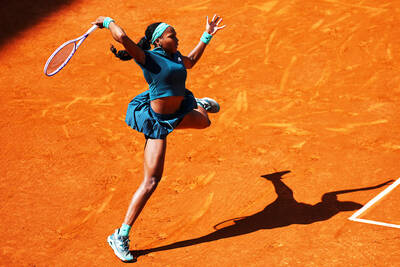
Jannik Sinner continued his quest to become the first man in history to win five Masters 1000 tournaments in a row with a 6-2, 6-3 victory over Danish qualifier Elmer Moller at the Madrid Open on Sunday. The world leader extended his winning streak to 19 matches, a run that began early March in Indian Wells, and he has captured 24 consecutive victories at the Masters 1000 level, dating back to the Paris Masters last October. Searching for a maiden title at this level on clay, Sinner advanced to the round of 16 at the Caja Magica with a 77-minute performance against
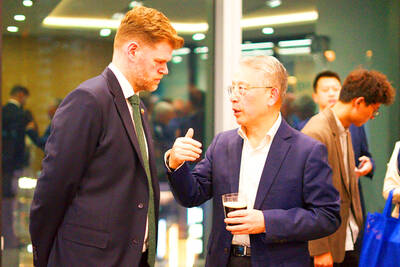
When Paddy Dwyer arrived in China in 1976, crowds jostled to catch a glimpse of him and his companions — the first Western soccer team to play in the country. China was emerging from the chaos of the Cultural Revolution, and on the brink of market reforms that would take the country from economic stagnation to explosive growth. “All we could see was lines of people running beside our bus, trying to look in the windows, to see their first visual of a white person,” he said. “It was all bicycles,” he said. “There were very few cars to be seen.” Dwyer,
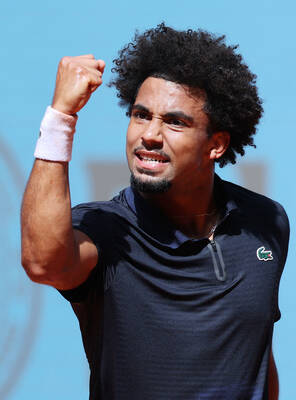
Tennis players are facing an unexpected opponent at the Madrid Open. A stomach virus or food poisoning has affected Iga Swiatek, Coco Gauff, Marin Cilic and others, raising concerns. World No. 1 Aryna Sabalenka avoided an upset by Naomi Osaka on the court on Monday and said she is trying to avoid illness by sticking to a diet of chicken breasts, rice and salad. The rumor among the players was bad shrimp tacos were to blame. Sabalenka knocked on wood for luck and said, “So far, so good. I heard that I have to avoid those tacos,” she laughed, adding “I stick to the

Some of Clearlake Capital Group’s largest investors are growing increasingly concerned about how much time the company’s co-founders are spending on sports investments as they have struggled to complete the fundraising for the private equity firm’s latest flagship fund. One of Clearlake’s co-founders, Behdad Eghbali, has been spending what some investors described as a disproportionate amount of time on the firm’s investment in Chelsea Football Club in recent months. Now, co-founder Jose E. Feliciano and his wife, Kwanza Jones, are nearing a record US$3.9 billion deal to acquire the San Diego Padres. That personal investment by Feliciano has set off the latest


 RSS
RSS