


Gary Kirsten survived a crisis on 99 in his 99th test to reach 137 and solidify South Africa's control of the first cricket test against New Zealand on the second day yesterday
Kirsten, 36, began what may be the last series of his 10-year career with his 21st test century, guiding South Africa to a commanding 459 in its first innings.
New Zealand was 102-2 in its first innings at stumps Thursday.
South Africa made a critical breakthrough nine overs before the close of play when it removed New Zealand's captain and best batsman Stephen Fleming for 27.
Fleming, who fell playing back to off-spinner Paul Adams, was among four of eight batsmen dismissed Thursday who fell lbw on a pitch notable for its slow pace and low bounce.
Scott Styris was 16 not out at stumps and opener Michael Papps, who was dropped at slip early in his innings, reached 50 on debut just before the close.
The loss of two New Zealand wickets, balanced by Papps' half century, left the match carefully poised.
"Tomorrow is the key to the match," said New Zealand coach John Bracewell.
"If we are still batting at the end of the day then, yes, we have a chance. If we're not then they probably hold the trump card."
South Africa resumed yesterday at 279-4, having laid the foundation of a controlling total but having been rocked a few overs before stumps on day one by the loss of Jacques Kallis for 92.
Kirsten anchored the second half of South Africa's innings, patiently nurturing partnerships, achieving the century Kallis was denied and finally adding valuable runs to the South African total.
His best partnership was 59 with Mark Boucher, who made 22, but the stands which most frustrated New Zealand, and most hurt the home side, were those with tailenders Makhaya Ntini and Andre Nel which jointly produced 80 runs.
Kirsten batted in total for seven minutes more than five hours, faced 213 balls and hit 18 fours and one six in an chanceless innings which mixed grace and patience.
Many of his runs came through or behind point and he relished the opportunity to lean back and cut both the spinners and medium pacers through the unguarded portions of the offside field.
Later in innings, he unleashed a number of superb drives past cover and through midoff including the last, straight-hit six which crowned his innings.
Kirsten's authority at the start and near the end of his innings contrasted with a prolonged period of uncertainty when he reached 99.
Bangladesh versus Zimbabwe
Bangladesh won its first one-day international cricket match in five years on Wednesday, beating Zimbabwe by eight runs after Habibul Bashar and Rajin Saleh hit a 114-run partnership to set the home team a target of 238.
The lowest-ranked team in international one-day cricket, Bangladesh had previously only ever won three one-day games. They had suffered 10 consecutive defeats against Zimbabwe.
Bashar and Saleh, who scored 61 and 57 respectively, hit the bulk of the visitors' runs in a crucial third-wicket partnership.
Mohammad Ashraful, named man of the match, then slammed the Zimbabwe bowlers for 51 runs in 32 balls. He was given aggressive support by Khaled Mahmud who made a quick-fire 22 as Bangladesh chalked up a total of 238 for seven.
In Dhaka, hundreds of jubilant Bangladeshi fans poured into the streets, blasting firecrackers, blaring car horns and singing and dancing to celebrate the win.
"The tension in the dressing room cannot be described. It was a really great day for us," said Bashar, the team captain.
The visitors had struggled early in their innings, with an average of only three runs an over. After 15 overs, they were at 39 for two.
Bashar and Saleh needed to consolidate and they did so with careful, quality strokes. Eighty-nine runs came off the last 10 overs of Bangladesh's innings.

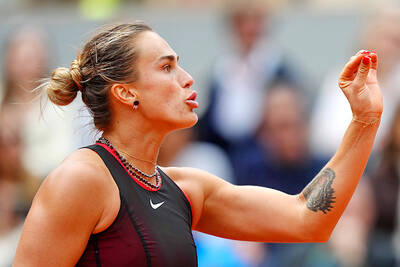
After letting another big lead slip with an error-strewn performance at the French Open on Wednesday, top-ranked Aryna Sabalenka felt like getting as far away from the courts as possible. “Just want to quit tennis right now,” Sabalenka said after wasting a lead of a set and two breaks in a 3-6, 7-5, 6-0 loss to Diana Shnaider in the women’s singles quarter-finals. “We’ll see in few days. Hopefully I’ll get back on track mentally.” Sabalenka’s wait for a first French Open title continues despite the four-time major winner leading 4-1 in the second set and being two points from victory while
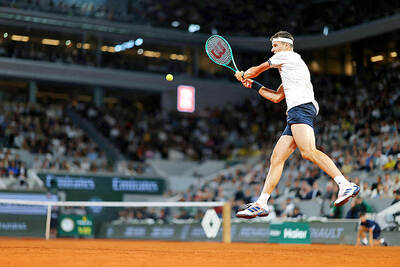
BIG NAMES GONE: Zverev is the clear favorite for a maiden Grand Slam title, reaching semi-finals for the fifth time in six years and finishing second on three occasions Alexander Zverev on Tuesday breezed past Rafael Jodar to stay on course for an elusive Grand Slam title at the French Open, while Jakub Mensik halted Joao Fonseca’s scintillating run in the quarter-finals. Zverev, the highest-ranked player left in the men’s draw, put an end to Spanish teenager Jodar’s impressive Roland Garros debut, easing into the semi-finals with a 7-6, (7/3), 6-1, 6-3 win. The 29-year-old Zverev is the clear favorite for a maiden Grand Slam title. He has finished runner-up on three occasions, including at the 2024 French Open. “I want to win the matches that are ahead of
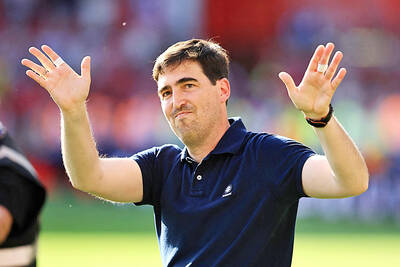
Liverpool are in advanced talks with former AFC Bournemouth manager Andoni Iraola as they seek a replacement for Arne Slot, reports said on Tuesday. Iraola has emerged as Liverpool’s top target to replace Slot, who was sacked on Saturday last week after a turbulent second season in charge. Liverpool have reportedly agreed a deal in principle to bring the Spaniard, who left Bournemouth at the end of this season, to Anfield. Sporting director Richard Hughes was heavily involved in hiring Iraola during his time at Bournemouth and is again spearheading the recruitment of the highly rated coach. The Reds are
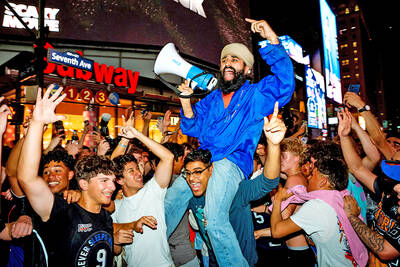
US President Donald Trump said he would attend Game 3 of the NBA Finals on Monday at Madison Square Garden, but said he does not have much sympathy for ordinary basketball fans who cannot afford sky-high ticket prices to do the same. “They can watch it on television,” Trump said aboard Air Force One on Friday as he flew to Wisconsin for an event with farmers, after he was asked about tickets that have climbed as high as US$8,000 each when the New York Knicks and San Antonio Spurs square off in Manhattan for the first time in the series. “It’s sorta


 RSS
RSS