


A VCD account of Taiwan during the Dutch colonial period of the 17th century was released yesterday as part of a private foundation's ambitious plan to explain the island's history through images -- instead of text -- in the hopes of kindling the curiosity of the younger generation.
The project is based on the book The General History of Taiwan (
The 48-minute long VCD was put together by a group of historians and specialists funded by the Lien Chentung Foundation (
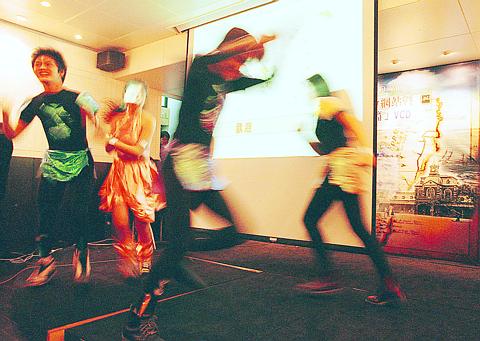
PHOTO: CHIANG YING-YING, TAIPEI TIMES
Arlene Hui-hsin Lien (連惠心), the foundation's executive who also is the great-granddaughter of the author and Lien Chan's daughter , said the digital format was chosen because "The General History of Taiwan is not that accessible to [modern] readers because it was written in classical Chinese. So we decided to use images to represent the content of the book."
Taiwan was first colonized by Dutch forces who landed on the island in 1622, followed by the Spanish in 1626. In 1642 the Spanish settlements succumbed to Dutch forces and Taiwan was then ruled by the Dutch East India Company until the 1660s.
"We hope that this method of presenting history will allow people to transgress the barriers of space and time to know more about Taiwan's history," Lien said at a news conference yesterday.
People receiving free copies of the VCD at yesterday's launch said although the timing was "politically sensitive" given Lien Chan's presidential candidacy, they preferred to concentrate on how history was interpreted in the VCD.
"Maybe some people will associate the occasion with the presidential election campaign, but I don't care about it," said a university student surnamed Wang (
"I see the VCD as a reference, one of the many sources through which I can gain knowledge about Taiwan's history," he added.
While refusing to detail costs, Lien told the Taipei Times that a lack of sufficient historical materials in Taiwan had jeopardized the project, forcing the team to look abroad.
"Taiwan has not done a good enough job in conserving historical materials. So we had to use old maps and dramas to represent history ... We also went to Europe to search for materials," she said.
Participants at the news conference had high expectations of the overall project.
"I am looking forward to seeing the completion of other VCDs on Taiwan's history," said Huang Teh-fu (
Lien said the team would start work at the end of this year on the period of immigration in the Ching Dynasty (1644-1911).
The next two projects will focus on Taiwan under Japanese colonial rule (1895-1945) and under KMT rule, she said.

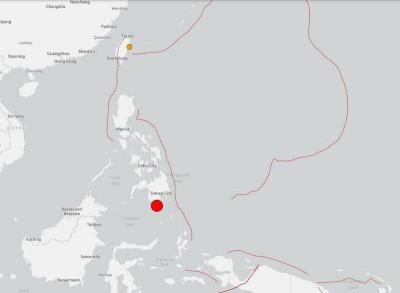
A magnitude 7.8 earthquake struck off the southern coast of Mindanao in the Philippines at 7:38am today, prompting the US Tsunami Warning System to issue an alert for neighboring countries, including Taiwan. The system issued a purple alert indicating a "tsunami threat." The potential threat zone includes Taiwan, the Philippines, Papua New Guinea, Yap and Palau. A spokesperson for Indonesia disaster mitigation agency said there were no reports of damage so far. Arlene Hollero, disaster chief of Maasim town in the Philippines' Sarangani Province, said their evacuation was underway in coastal villages and there were no reported casualties so far. DZBB radio, broadcasting from the
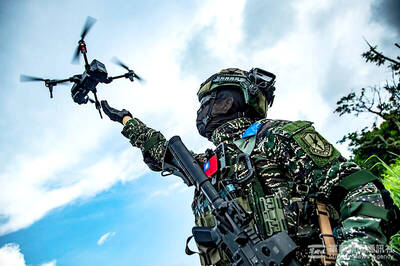
RESILIENCE: Taiwan plays a key role in semiconductors, energy, information infrastructure and advanced manufacturing, AIT Director Raymond Greene said Taiwan’s continued investment in deterrence and resilience remains vital, especially in uncrewed systems and other emerging technologies, American Institute in Taiwan (AIT) Director Raymond Greene said yesterday. Greene made the remarks at the annual National Strategic Summit on Supply Chain Resilience held by the Research Institute for Democracy, Society and Emerging Technology (DSET), a government-backed think tank. As Taiwan last year became the US’ fourth-largest trading partner and supply chain security is becoming more important, cooperation in emerging technologies continues to deepen between the two countries, he said. The US is committed to accelerating innovation, building key infrastructure, strengthening cooperation

The National Chungshan Institute of Science and Technology yesterday showcased its locally developed variants of the Vision 60 robotic patrol dog, which it plans to deploy on the nation’s outlying territories in the South China Sea. The variants were produced under the Joint Lab project — created by the institute and domestic companies — and assembled with domestically produced motors, lenses and artificial intelligence (AI) systems alongside licensed tech from the US, Missile and Rocket Systems Research Division deputy director Jen Kuo-kang (任國光) told the media event at a military base in Taipei’s Dazhi (大直) area. Taiwan has built up its strengths

RIGHT DIRECTION: Taiwan’s efforts to prevent forced labor include a proposal to ‘fully prohibit’ employers from withholding workers’ documents, an official said Taiwan is to establish a mechanism to restrict imports of goods linked to forced labor, the Executive Yuan said yesterday, after the US proposed imposing additional tariffs on Taiwanese goods over labor concerns. “The Ministry of Labor and the Ministry of Economic Affairs are to establish an interministerial review procedure,” Executive Yuan spokesperson Michelle Lee (李慧芝) said at a news briefing in Taipei. “The government is to use the Foreign Trade Act [貿易法] as the legal basis to restrict imports of goods produced with forced labor” and bring its supply chain governance more in line with international standards on human rights, resilience


 RSS
RSS