


A Taiwanese man with eight “wives” and 32 children said last week he was over the moon at the prospect of collecting NT$147,600 (US$4,500) in consumer vouchers. This would make his family the largest beneficiary of the new scheme.
“It seems that my family will benefit the most from the program. I am very grateful, it will help us a lot,” a smiling Liu Ho-mu told local television.
Liu, a self-proclaimed “spiritual teacher,” has for more than 20 years lived with eight women who have borne him 32 children in central Chang-hua county.

PHOTO: AFP
He attracted attention four years ago when women’s rights groups urged prosecutors to look into his multiple relationships, as bigamy is a criminal offense in Taiwan punishable with a maximum five-year prison term.
But Liu has claimed that all his wedding ceremonies were presided over by “gods, ghosts and Buddha” and that he broke no law because he did not officially register any of the relationships as formal marriages.
His 41-member family is entitled to the money under a consumer vouchers scheme unveiled by the government last week in a bid to stimulate spending and boost the economy.
Under the scheme, the country’s 23 million people regardless of age or wealth will be given NT$3,600 Taiwan dollars. The program is expected to cost some NT$82 billion and contribute a 0.64 percent increase to the 2009 GDP, officials said.(AFP)
一名娶了八個老婆、育有三十二名子女的台灣男子上週表示,他非常高興自己有機會領到新台幣十四萬七千六百元(四千五百美元)的消費券。他們一家將是這項新計畫的最大受惠者。
劉和穆笑著對當地電視台記者說:「我們家應該是這個政策的最大受益者。我非常感激,這對我們幫助很大。」
住在中台灣彰化縣、自詡為「心靈導師」的劉先生和八個老婆同住一個屋簷下二十多年,共育有三十二名子女。
四年前,女權團體曾要求檢察官調查他一夫多妻的婚姻關係,因為台灣的刑法規定,重婚依法可處最高五年的有期徒刑。
但劉先生說,他都是在「神、鬼和佛」的見證下完婚的,因為他沒有正式登記結婚,所以並不構成違法行為。
政府上週宣佈,為刺激消費及促進經濟活絡,計畫發放消費券;他家的四十一位成員都可領到這筆錢。
依照該計畫,台灣兩千三百萬人民不論年齡、貧富,都將領到新台幣三千六百元。官員表示,這項計畫預計花費新台幣八百二十億元左右,估計將提高二OO九年的國內生產毛額零點六四個百分點。
(法新社�翻譯:袁星塵)

Taiwan Travelogue, the novel by Taiwanese author Yang Shuang-zi and translated into English by Lin King, won the prestigious International Booker Prize in London on May 19. It marks the first time a Taiwanese literary work has received the International Booker Prize, setting a historic milestone both for Taiwanese literature and for the award itself. Prior to this achievement, Taiwan had only once appeared on the Booker radar, when Taiwanese author Wu Ming-yi was longlisted for the Booker Prize in 2018 with The Stolen Bicycle. The International Booker Prize honors works of fiction translated into English and published in the UK or Ireland.

A: While Taiwan is celebrating the 7th anniversary of legalizing same-sex marriage, a poll shows that the support rate for same-sex marriage rose sharply from 37.4 percent seven years ago to 69.9 percent last year. B: Actually, I’m a bit curious about the size of Taiwan’s LGBT population. A: I’m not sure. But if we take a Gallup poll in the US as an example, 9.3 percent of American adults identified as LGBT in 2024. B: Wow, is it because the Americans are relatively open? In many other countries, the figures hover around 5 percent. A: Based on this,
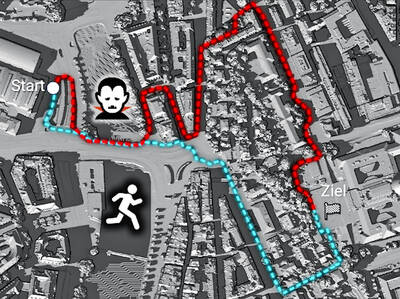
As climate change and urbanization push city temperatures higher, walking outdoors is becoming increasingly uncomfortable in many parts of the world, especially when prolonged time spent in sunlight is involved. As a result, outdoor lovers are now seeking cooler, shaded walking routes. However, most mainstream map apps still do not __1__ shaded footpaths. Enter routing.osm.ch — a Swiss web-based route planner that introduces a novel solution to this problem. Its “Vampire mode,” named after the legendary creatures’ fear of being __2__ natural light, was developed by a Swiss research team led by Professor Stefan Keller. The platform combines open data from

Cities around the world are testing “robotaxis,” hoping that autonomous vehicles will ease traffic and reduce emissions. However, recent analyses suggest these expectations may be overly optimistic. According to consulting firm Kearney, robotaxis could actually make congestion worse rather than better. Because self-driving rides are expected to be cheaper and more convenient than traditional taxis, more people may choose them over walking, biking, or using public transportation. This shift would put more cars on already crowded roads. Another concern is “deadheading,” which refers to robotaxis traveling without passengers between rides. Since autonomous fleets need to reposition themselves throughout the day, these


 RSS
RSS