


People who are scared of flying can control their fear with the right breathing exercise. Just before takeoff, they should take a deep breath, immediately exhale, then hold their breath for six to 10 seconds.
That is the advice of the Professional Association of German Psychiatrists (which is abbreviated BVDP because of its German name), which said that the technique relaxed muscles and took one's mind off one's fears.
Christa Roth-Sackenheim of the BVDP said that people who are scared of flying should "refrain from alcohol and caffeinated drinks like coffee, black tea and cola so as not to heighten the body's state of agitation."
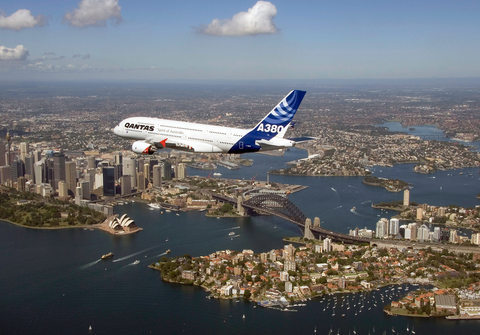
PHOTO: AFP
People who are afraid of flying can become nervous, have an unusually fast heartbeat, sweat heavily and start to feel sick.
People who repeatedly show these symptoms should see a doctor. "People should admit to themselves that they have a fear of flying, especially business people who have to fly a lot," said Roth- Sackenheim.
She added that fear was a serious symptom of a disorder, and not something that people should be embarrassed about.
She said that with practice and education, people can learn to control their fear without having to use unhealthy methods, such as drinking alcohol.
It is estimated that one-third of airline passengers are afraid of flying. According to a survey by the German Fear-of-Flying Center, most of these people fly very often. Many have experienced a scary situation during flight, while others suddenly become afraid of crashing for no particular reason. (DPA)
害怕搭飛機的人可以利用呼吸練習來控制恐懼。飛機快起飛前,他們應該深深吸一口氣,馬上吐氣,再住呼吸六到十秒。
這是德國精神病學家職業協會(德文縮寫為BVDP)的建議。協會表示,這個技巧會讓肌肉放鬆,驅離內心的恐懼。
此協會的克麗絲塔.羅絲薩肯漢表示,害怕搭機的人應該「避免酒精與含咖啡因的飲料,像是咖啡、紅茶與可樂等,才不會提高身體的焦慮狀態」。
害怕搭飛機的人可能會變得緊張,有不尋常的心跳加速,大量流汗,開始感到不適。
一再出現這些症狀的人們應該去看醫生。羅絲薩肯漢說:「人們應該承認自己有搭機恐懼症,尤其是時常搭飛機的商人。」
她也提到,恐懼是一種失調的嚴重症狀,人們不應該因此感到尷尬。
她說,運用練習與教育,人們可以學習控制自己的恐懼,避免借助飲酒等不健康的方式。
估計有三分之一的飛機乘客害怕搭飛機。根據德國搭機恐懼症中心的調查,這些人大多是飛機常客。許多人搭機時曾經歷到恐懼的狀態,而其他人則是無緣無故就開始害怕會墜機。 (德通社/翻譯:賴美君)

Taiwan Travelogue, the novel by Taiwanese author Yang Shuang-zi and translated into English by Lin King, won the prestigious International Booker Prize in London on May 19. It marks the first time a Taiwanese literary work has received the International Booker Prize, setting a historic milestone both for Taiwanese literature and for the award itself. Prior to this achievement, Taiwan had only once appeared on the Booker radar, when Taiwanese author Wu Ming-yi was longlisted for the Booker Prize in 2018 with The Stolen Bicycle. The International Booker Prize honors works of fiction translated into English and published in the UK or Ireland.
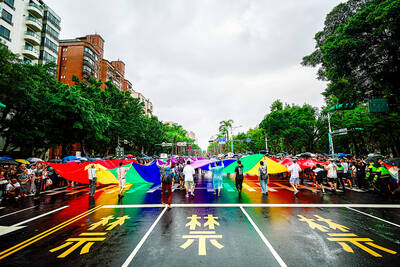
A: While Taiwan is celebrating the 7th anniversary of legalizing same-sex marriage, a poll shows that the support rate for same-sex marriage rose sharply from 37.4 percent seven years ago to 69.9 percent last year. B: Actually, I’m a bit curious about the size of Taiwan’s LGBT population. A: I’m not sure. But if we take a Gallup poll in the US as an example, 9.3 percent of American adults identified as LGBT in 2024. B: Wow, is it because the Americans are relatively open? In many other countries, the figures hover around 5 percent. A: Based on this,
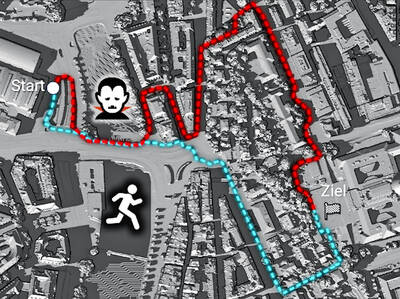
As climate change and urbanization push city temperatures higher, walking outdoors is becoming increasingly uncomfortable in many parts of the world, especially when prolonged time spent in sunlight is involved. As a result, outdoor lovers are now seeking cooler, shaded walking routes. However, most mainstream map apps still do not __1__ shaded footpaths. Enter routing.osm.ch — a Swiss web-based route planner that introduces a novel solution to this problem. Its “Vampire mode,” named after the legendary creatures’ fear of being __2__ natural light, was developed by a Swiss research team led by Professor Stefan Keller. The platform combines open data from
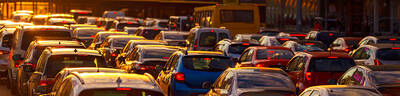
Cities around the world are testing “robotaxis,” hoping that autonomous vehicles will ease traffic and reduce emissions. However, recent analyses suggest these expectations may be overly optimistic. According to consulting firm Kearney, robotaxis could actually make congestion worse rather than better. Because self-driving rides are expected to be cheaper and more convenient than traditional taxis, more people may choose them over walking, biking, or using public transportation. This shift would put more cars on already crowded roads. Another concern is “deadheading,” which refers to robotaxis traveling without passengers between rides. Since autonomous fleets need to reposition themselves throughout the day, these


 RSS
RSS