


The Atomic Energy Council (AEC) yesterday said that it would file a complaint with the Japanese government if Tokyo decides to discharge radioactive waste water from the Fukushima Dai-ichi nuclear power plant into the Pacific Ocean.
It has been eight years since the earthquake and tsunami that damaged the plant, and storage for the 1 million tonnes of radioactive water used to cool the ruined reactors is projected to run out by 2022.
The Japanese government and Tokyo Electric Power Co are reportedly mulling a plan to release the waste water into the ocean, drawing criticism from neighboring countries Taiwan and South Korea.
Responding to local media reports about certain Japanese officials supporting the plan, the council said in a statement that the Japanese government has not yet made a formal decision.
However, if Tokyo decides to discharge the radioactive water into the ocean, the council would express its concern through a Taiwan-Japan nuclear power regulation platform, it said.
If the plant’s radioactive water enters the Pacific Ocean from Fukushima’s coast, the polluted water would first be carried by sea currents to the coastline of North America, the council said.
The radioactive waste water would then move southward and reach waters near Taiwan after three to six years, the council said, citing analyses by the US National Oceanic and Atmospheric Administration and the Germany-based Helmholtz Centre for Ocean Research Kiel.
By the time the polluted water reached the nation’s coastline, the radioactive pollutants would have been diluted to a concentration of nearly one in 10 thousand, compared with the original concentration, the council said, adding that the water’s radioactive risk would also have been reduced.
“Sea water, beach sand and fishery products in nine ports across Taiwan are regularly sampled to test their radioactivity, without having any abnormal findings so far,” it added.
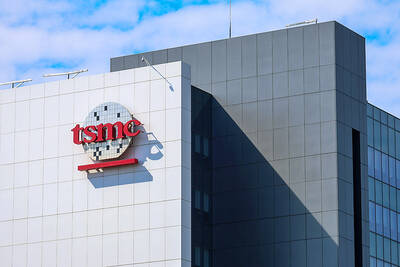
Taiwan Semiconductor Manufacturing Co (TSMC, 台積電), the world’s largest foundry service provider, yesterday said that global semiconductor revenue is projected to hit US$1.5 trillion in 2030, after the figure exceeds US$1 trillion this year, as artificial intelligence (AI) demand boosts consumption of token and compute power. “We are still at the beginning of the AI revolution, but we already see a significant impact across the whole semiconductor ecosystem,” TSMC deputy cochief operating officer Kevin Zhang (張曉強) said at the company’s annual technology symposium in Hsinchu City. “It is fair to say that in the past decade, smartphones and other mobile devices were
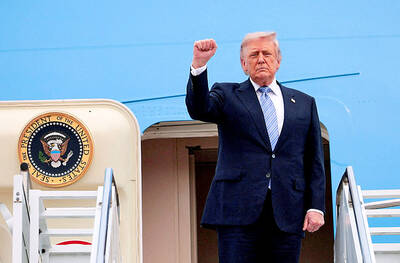
US-CHINA SUMMIT: MOFA welcomed US reassurance of no change in its Taiwan policy; Trump said he did not comment when Xi talked of opposing independence US President Donald Trump yesterday said he has not made a decision on whether to move forward with a major arms package for Taiwan after hearing concerns about it from Chinese President Xi Jinping (習近平). Trump’s comments on Taiwan came as he flew back to Washington after wrapping up critical talks in which both leaders said important progress was made in stabilizing US-China relations even as deep differences persist between the world’s two biggest powers on Iran and Taiwan. “I will make a determination,” Trump said, adding: “I’ll be making decisions. But, you know, I think the last thing we need right
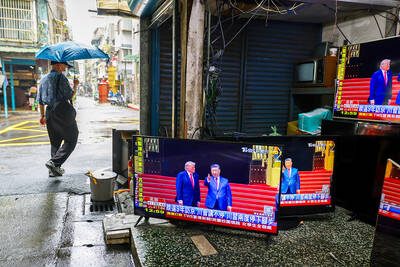
TAIWAN ISSUE: US treasury secretary Scott Bessent said on the first day of meetings that ‘it wouldn’t be a US-China summit without the Taiwan issue coming up’ There were no surprises on the first day of the summit between US President Donald Trump and Chinese President Xi Jinping (習近平), the Mainland Affairs Council (MAC) said yesterday, as the government reiterated that cross-strait stability is crucial to the Asia-Pacific region, as well as the world. As the two presidents met for a highly anticipated summit yesterday, Chinese state media reported that Xi warned Trump that missteps regarding Taiwan could push their two countries into “conflict.” Trump arrived in China with accolades for his host, calling Xi a “great leader” and “friend,” and extending an invitation to visit the White House
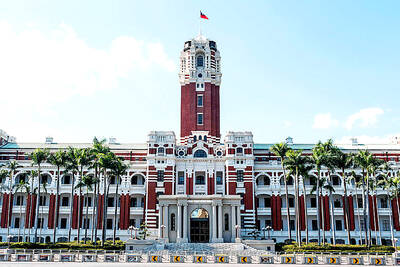
SECURITY: Taipei presses the US for arms supplies, saying the arms sales are not only a reflection of the US security commitment to Taiwan but also serve as a mutual deterrent against regional threats Taiwan is committed to preserving the cross-strait “status quo” and contributing to regional peace and stability, the Presidential Office said yesterday. “It is an undeniable fact that the Republic of China is a sovereign and independent democratic nation,” Presidential Office spokeswoman Karen Kuo (郭雅慧) reiterated, adding that Beijing has no right to claim sovereignty over Taiwan. The statements came after US President Donald Trump warned against Taiwanese independence. Trump wrapped up a state visit to Beijing on Friday, during which Chinese President Xi Jinping (習近平) had pressed him not to support Taiwan. Taiwan depends heavily on US security backing to deter China from carrying


 RSS
RSS