


The US Department of State on Friday said that China’s campaign to lure Taiwan’s allies to switch recognition to Beijing has been “harmful” to regional stability.
“China’s active campaign to alter the cross-strait status quo, including by enticing countries to discontinue diplomatic ties with Taiwan, are harmful and undermine regional stability,” a department spokesperson said in an e-mail.
“They undermine the framework that has enabled peace, stability and development for decades,” the spokesperson said.

Photo: EPA-EFE/DAVID CHANG
Earlier in the day, Taiwan announced that it was cutting diplomatic ties with Kiribati.
The announcement came after the central Pacific nation switched diplomatic allegiance from Taipei to Beijing.
Kiribati was the second diplomatic ally Taiwan lost to China this week, after the Solomon Islands on Monday switched ties. Taiwan now has 15 diplomatic allies left.
The department expressed disappointment over Kiribati’s decision.
“Countries that establish closer ties to China primarily out of the hope or expectation that such a step will stimulate economic growth and infrastructure development often find themselves worse off in the long run,” the spokesperson said.
The statement described Taiwan as a democratic success story, a reliable partner and a force for good in international society.
The spokesperson said that Washington supports the “status quo” regarding relations across the Taiwan Strait, as well as Taiwan’s diplomatic ties and international space.
A senior White House official said that Kiribati’s decision is unlikely to contribute to peace and stability in the Indo-Pacific region, and “will not help the I-Kiribati as they work to build a sustainable and sovereign future for their country.”
Former American Institute in Taiwan (AIT) director Douglas Paal said that China’s latest campaign matches its strategy for Taiwan, as it has imposed pressure on the nation economically, militarily and politically.
Paal, who is vice president for studies at the Carnegie Endowment for International Peace, said it seems as if Beijing has a “perverse logic,” believing that such diplomatic maneuvering would help the Chinese Nationalist Party (KMT) and hurt the Democratic Progressive Party.
“But it does not translate across the Strait. It hurts all Taiwanese,” Paal said, adding that China’s actions showed the ineffectiveness of US and Australian policy toward Pacific island nations, urging US policymakers to regroup and rethink their policies.
President Tsai Ing-wen (蔡英文) accused China of trying to interfere in next year’s elections by convincing Kiribati to switch ties.
Tsai said that China would continue to suppress and coerce Taiwan ahead of the elections to influence their outcome.

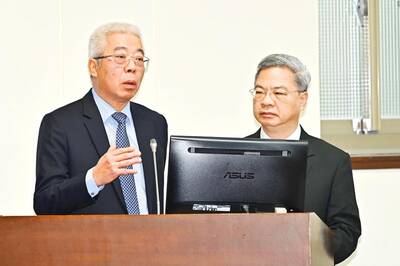
Taiwan has arranged for about 8 million barrels of crude oil, or about one-third of its monthly needs, to be shipped from the Red Sea this month to bypass the Strait of Hormuz and ease domestic supply pressures, CPC Corp, Taiwan (CPC, 台灣中油) said yesterday. The state-run oil company has worked with Middle Eastern suppliers to secure routes other than the Strait of Hormuz, through which about 20 percent of the world’s oil and liquefied natural gas typically passes, CPC chairman Fang Jeng-zen (方振仁) said at a meeting of the legislature’s Economics Committee in Taipei. Suppliers in Saudi Arabia have indicated they
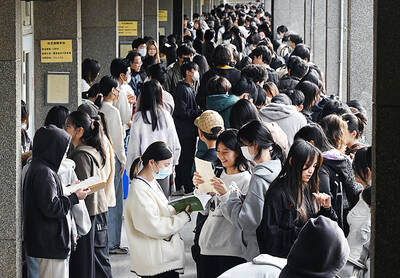
A global survey showed that 60 percent of Taiwanese had attained higher education, second only to Canada, the Ministry of the Interior said. Taiwan easily surpassed the global average of 43 percent and ranked ahead of major economies, including Japan, South Korea and the US, data from the Organisation for Economic Co-operation and Development (OECD) for 2024 showed. Taiwan has a high literacy rate, data released by the ministry showed. As of the end of last year, Taiwan had 20.617 million people aged 15 or older, accounting for 88.5 percent of the total population, with a literacy rate of 99.4 percent, the data

CCP ‘PAWN’? Beijing could use the KMT chairwoman’s visit to signal to the world that many people in Taiwan support the ‘one China’ principle, an academic said Chinese Nationalist Party (KMT) Chairwoman Cheng Li-wun (鄭麗文) yesterday arrived in China for a “peace” mission and potential meeting with Chinese President Xi Jinping (習近平), while a Taiwanese minister detailed the number of Chinese warships currently deployed around the nation. Cheng is visiting at a time of increased Chinese military pressure on Taiwan, as the opposition-dominated Legislative Yuan stalls a government plan for US$40 billion in extra defense spending. Speaking to reporters before going to the airport, Cheng said she was going on a “historic journey for peace,” but added that some people felt uneasy about her trip. “If you truly love Taiwan,

NEW LOW: The council in 2024 based predictions on a pessimistic estimate for the nation’s total fertility rate of 0.84, but last year that rate was 0.69, 17 percent lower An expected National Development Council (NDC) report expects the nation’s population to drop below 12 million by 2065, with the old-age dependency ratio to top 100 percent sooner than 2070, sources said yesterday. The council is slated to release its latest population projections in August, using an ultra-low fertility model, the sources said. The previous report projected that Taiwan’s population would fall to 14.37 million by 2070, but based on a new estimate of the total fertility rate (TFR) — the average number of children born to a woman over her lifetime — the population is expected to reach 12 million by


 RSS
RSS