


Global warming is happening gradually in Taiwan and the government should establish a dedicated office to address it, WeatherRisk Co weather director Chia Hsin-hsing (賈新興) said yesterday.
Taiwan saw its warmest winter last year and extreme rain in recent years demonstrates the impact of global warming, so the government should see climate change as a threat to national security and show its determination to handle it, Chia said.
The most significant impact on Taiwan is increasing temperatures, regardless of season, he said.
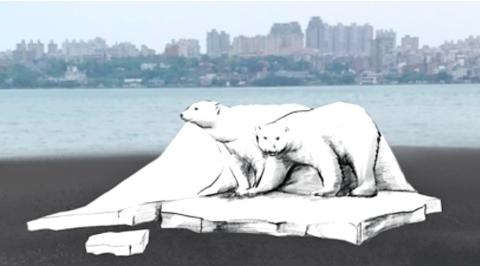
Photo courtesy of the New Taipei City High Riverbank Construction Management Office
Global warming caused more frequent heavy rain in short periods in the past three years, with afternoon thundershowers often bringing more than 70mm per hour, leading to serious flooding, he said.
Studies in other countries suggest that rising global temperatures would lead to reduced productivity, affecting economic growth, he said.
Global warming can also cause public health problems, with studies showing that rising temperatures can lead to increased mosquito breeding at higher latitudes, which might result in dengue fever spreading farther, he said.
The average sea level is rising and seawater is acidifying due to increased carbon dioxide, which also affects coral growth and shellfish, he said.
Climate change is mainly caused by increased greenhouse gas emissions, especially from the energy industry, Chia said.
While many countries have adopted stricter emissions regulations, Taiwan still has a lot of room for improvement, he said.
For Taiwan to better adapt to the changing climate, the government should reduce greenhouse gas emissions and improve spatial planning.
It should also place more emphasis on the Intergovernmental Panel on Climate Change, which would show greater determination to deal with the threat, he said.
Alexandra Bilak, director of the Switzerland-based Internal Displacement Monitoring Center, said that hazards caused by extreme weather events are expected to become more frequent and intense, the New York Times reported last week.
Extreme weather events would also cause more harm to countries with high poverty rates and low adaptability to climate change, such as the Bahamas, and even those that have lower greenhouse gas emissions might sustain greater damage, Bilak said.
Global warming is said to directly affect human health, with a study published last year in The Lancet saying that flooding and drought cause crop failure, food shortages and even famine, while rising temperatures might increase the risk of disease transmission.
UN High Commissioner for Human Rights Michelle Bachelet has said the world is facing its greatest-ever threat, with hunger, climate-driven migration, economic growth and political instability problems that need to be addressed.
Additional reporting by Lo Chi
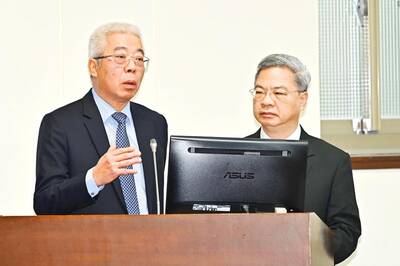
Taiwan has arranged for about 8 million barrels of crude oil, or about one-third of its monthly needs, to be shipped from the Red Sea this month to bypass the Strait of Hormuz and ease domestic supply pressures, CPC Corp, Taiwan (CPC, 台灣中油) said yesterday. The state-run oil company has worked with Middle Eastern suppliers to secure routes other than the Strait of Hormuz, through which about 20 percent of the world’s oil and liquefied natural gas typically passes, CPC chairman Fang Jeng-zen (方振仁) said at a meeting of the legislature’s Economics Committee in Taipei. Suppliers in Saudi Arabia have indicated they

South Korea has adjusted its electronic arrival card system to no longer list Taiwan as a part of China, a move that the Ministry of Foreign Affairs said would help facilitate exchanges between the two sides. South Korea previously listed “Taiwan” as “Taiwan (China)” in the drop-down menus of its online arrival card system, where people had to fill out where they came from and their next destination. The ministry had requested South Korea make a revision and said it would change South Korea’s name on Taiwan’s online immigration system from “Republic of Korea” to “Korea (South),” should the issue not be

CCP ‘PAWN’? Beijing could use the KMT chairwoman’s visit to signal to the world that many people in Taiwan support the ‘one China’ principle, an academic said Chinese Nationalist Party (KMT) Chairwoman Cheng Li-wun (鄭麗文) yesterday arrived in China for a “peace” mission and potential meeting with Chinese President Xi Jinping (習近平), while a Taiwanese minister detailed the number of Chinese warships currently deployed around the nation. Cheng is visiting at a time of increased Chinese military pressure on Taiwan, as the opposition-dominated Legislative Yuan stalls a government plan for US$40 billion in extra defense spending. Speaking to reporters before going to the airport, Cheng said she was going on a “historic journey for peace,” but added that some people felt uneasy about her trip. “If you truly love Taiwan,
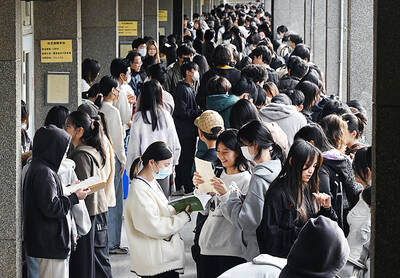
A global survey showed that 60 percent of Taiwanese had attained higher education, second only to Canada, the Ministry of the Interior said. Taiwan easily surpassed the global average of 43 percent and ranked ahead of major economies, including Japan, South Korea and the US, data from the Organisation for Economic Co-operation and Development (OECD) for 2024 showed. Taiwan has a high literacy rate, data released by the ministry showed. As of the end of last year, Taiwan had 20.617 million people aged 15 or older, accounting for 88.5 percent of the total population, with a literacy rate of 99.4 percent, the data


 RSS
RSS